The Aha! Framework template
Build a clear, repeatable product development process for your team
Use template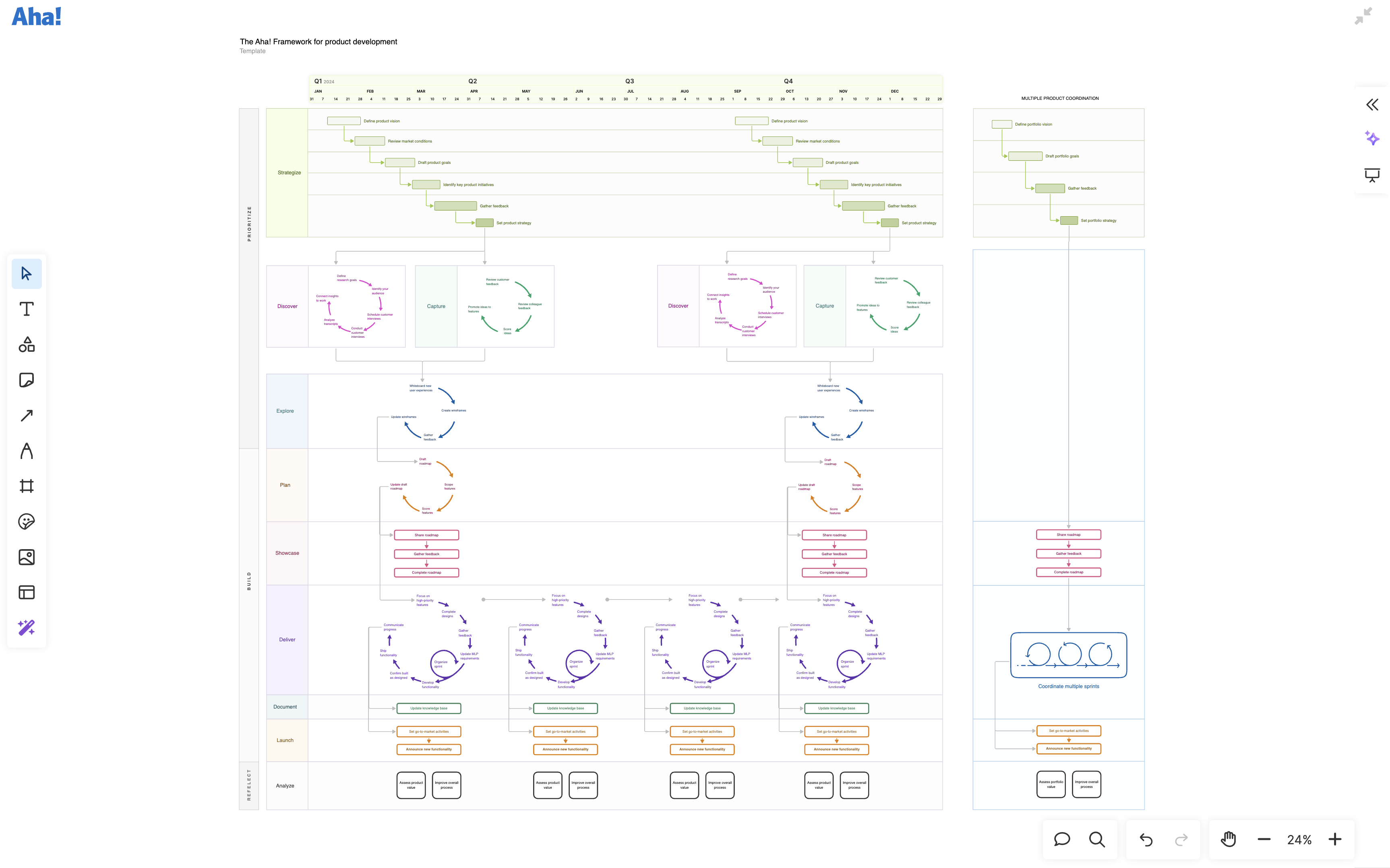
About The Aha! Framework template
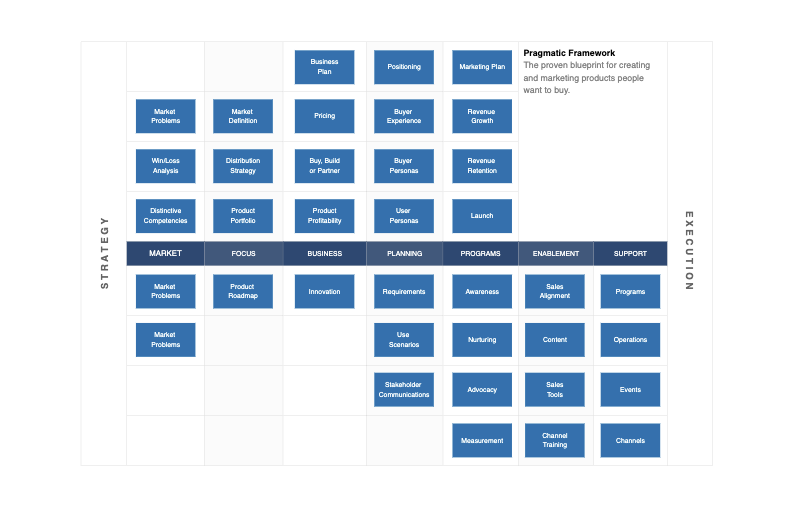
Every product team needs a dependable way to manage work from strategy to launch, but processes often become informal or inconsistently understood. Maybe your team moves fast but lacks visibility into long-term goals, or planning feels disconnected from what happens in sprints. The Aha! Framework is the process our company has built, refined, and evolved over years of experience — it captures best practices from real product teams and breaks product development into repeatable stages that blend strategic planning with agile delivery.
This template gives you a visual starting point for defining how your team works. Each stage includes example activities and guidance so you can tailor the framework to your own cadence, responsibilities, and rituals. Customize the layout to reflect your workflow, then use it as a shared reference to keep everyone aligned on what comes next — no matter where you are in the product development cycle.
Included in The Aha! Framework template
This Aha! Framework template includes built-in capabilities such as:
A pre-formatted diagram covering the 10 core stages of product development
Example activities and guidance on frequency to help you define your own processes
Color-coded frames and sticky notes to capture inputs, outputs, and handoffs
Collaboration tools for team alignment (such as inline comments and shared frames)
Guidance prompts to help you adapt the framework to your team's workflow
An AI assistant to summarize discussions and refine stage definitions
How to use The Aha! Framework template
Begin by reviewing each of the framework stages. Use the expert guidance as inspiration, then adjust the names, activities, and cadence so they match how your team actually works. Add sticky notes to define what should happen at each stage, who is involved, and what outputs must be produced before moving forward. Color-code related activities or create sections for product, engineering, design, or operations to clarify responsibilities.
Next, invite the team to collaborate. Ask stakeholders to comment directly on the whiteboard, suggest improvements, and confirm shared expectations. This exercise often uncovers gaps — like unclear decision points or missing customer inputs — and helps ensure the process works for everyone.
Once the framework reflects your workflow, start using it to guide real planning. Reference it during strategic cycles, sprint kickoffs, and retrospectives. If you use Aha! Roadmaps, you can map stages to actual work items so your methodology and execution stay connected. Keep refining the framework as your team and product evolve.
Best practices
Establish a repeatable way of working that adapts as your product grows.
Start with strategy, not tactics: Confirm the goals and initiatives that define downstream activities. A clear strategy ensures that every stage supports defined outcomes rather than just keeping the team busy.
Define responsibilities explicitly: Ambiguity about ownership is one of the most common causes of delayed decisions and inconsistent execution across teams. So be sure to identify who leads, who contributes, and what inputs everyone needs.
Build discovery into the process: Create recurring research and feedback activities so customer insights inform your work continuously. This avoids dependence on one-off projects that happen when someone remembers to schedule them.
Document key decisions within the framework: Capture important choices and rationale as you go. This helps new team members quickly understand how and why work flows the way it does.
FAQs about the Aha! Framework template
How do you know if your process needs a framework?
If planning feels inconsistent, delivery work overshadows strategy, or teams interpret the product process differently, a defined framework brings clarity. It gives everyone a shared mental model of how work moves from big ideas to shipped value.
How detailed should each stage be?
Start simple. Capture the essential activities, roles, and outputs for each stage, then add detail only where it helps. The goal is clarity — not a rigid checklist that slows teams down.
How do you get alignment across departments?
Invite cross-functional partners to comment directly on the template. Reviewing the framework together reveals mismatched expectations and helps teams agree on how decisions get made and when handoffs happen.
Can I use this framework if my team already follows agile?
Yes. The Aha! Framework incorporates both agile delivery and longer-term strategic planning. Think of it as a higher-level structure that helps agile teams stay connected to goals, outcomes, and cross-functional work.
Is this template free to use?
Yes. To use this Aha! Framework template, sign up for a free 30-day trial of Aha! Whiteboards. (You can also try this template in Aha! Roadmaps if you need a complete product management solution.) Customize the template to suit your needs, then share it with as many people as you want (for free) to streamline collaboration.