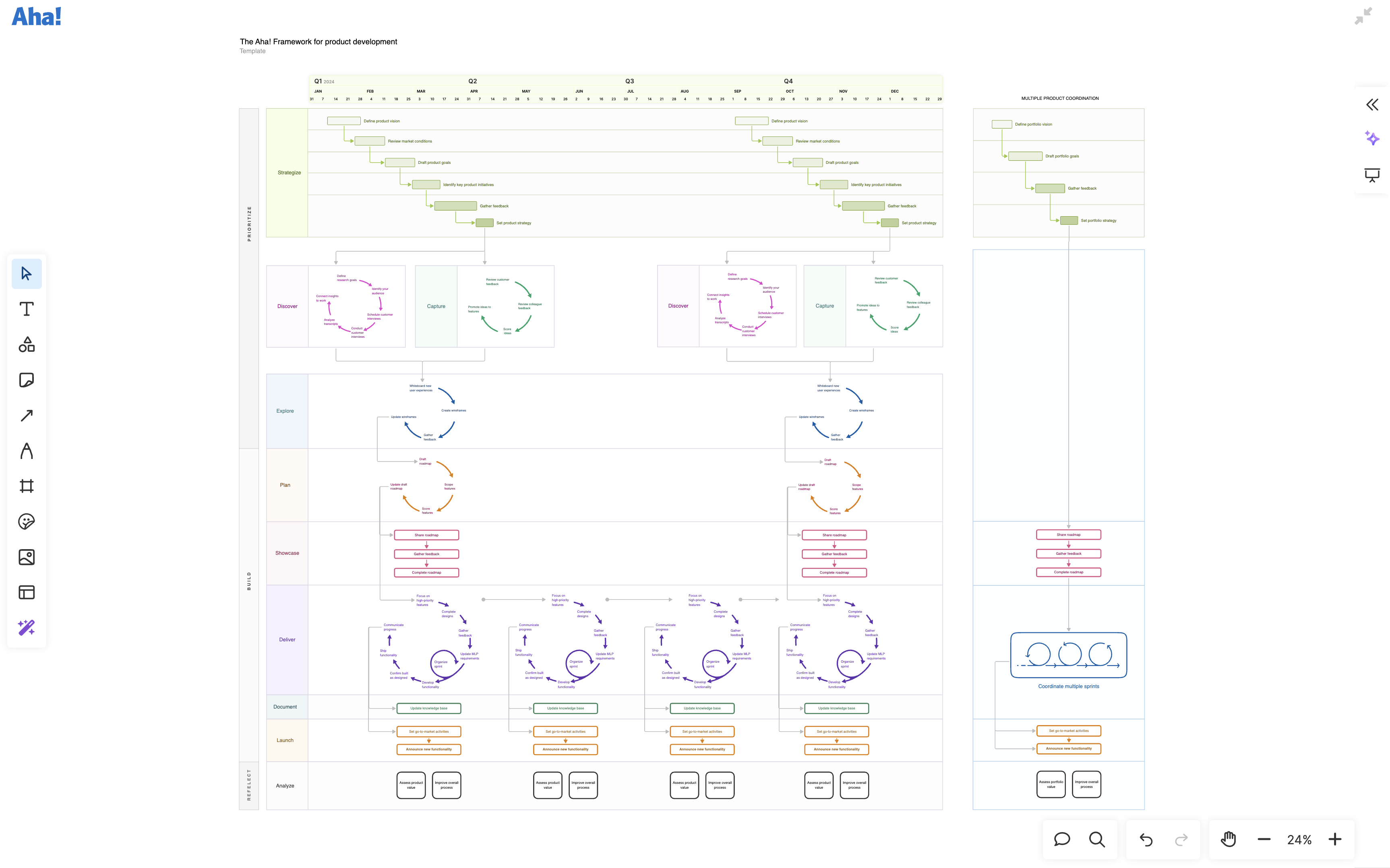
The Aha! Framework for software built by product teams
A complete process for established product, UX, and engineering groups that defines discovery to delivery
Updated: August 2026
The Aha! Framework is a flexible product development process. It has multiple versions depending on the type of team you work with and what you are trying to build. Traditional teams: Use the approach described below if you are working with a traditional team to update an application or create a new one. Independent product manager and emerging teams: If you are a solo product manager or working independently to create a prototype, internal application, or even exploring a new product offering, you should use this lighter-weight version of the framework. You should also know that we built a separate product for exactly that. Aha! Builder is purpose-built for creating robust prototypes and business tools using AI — without the overhead of a traditional development cycle. If that is the work you are trying to do, start there.
Editor's note: The contents of this guide refer to The Aha! Framework for software built by product teams. We also have a more lightweight approach to product development suited to delivering AI-driven prototypes and applications — read about it here.
The Aha! Framework for software built by product teams promotes a strategic approach to agile work. It is a flexible model that product organizations can leverage to improve efficiency and increase value delivered to customers.
It was pioneered by Aha! and gives product teams a way to set strategy, prioritize work, and achieve quickly — balancing long-term planning with agile delivery. This balance is especially critical in the new era of product development. As AI integrates into every stage of work, product managers are increasingly becoming product builders themselves. But moving faster only matters if you are building the right things. Use this guide to explore the complete framework and see how AI integrates into all of your activities.
The Aha! Framework ensures prescribed biannual strategic alignment while supporting ongoing sprints with continuous deployment. That is what makes it unique. We developed and have used the framework for more than a decade — it continues to power our product success.
Our goal when we founded Aha! in 2013 was to help organizations set clear strategy and connect it to the work of building products that customers love. We pioneered a new category with our first and now flagship product, Aha! Roadmaps. And our software currently serves more than 1 million product builders at many of the world’s most innovative and well-known companies. (If you have not yet tried Aha! software, you can start a free 30-day trial.)
But we did not explicitly share our own product development methodology for many years. It is time to change that. The content below is organized logically for folks who are new to the method. If you know what you are most interested in, you can also jump ahead to any section:
Why standardize work with a product development methodology?
Why a strategic approach to product development is better for most teams
What is The Aha! Framework for software built by product teams?
What are the activities in The Aha! Framework for software built by product teams?
Why standardize work with a product development methodology?
Before we get into what we believe is the best way to develop products, it is worth reviewing why you need a way to do so at all. Remember that breakthroughs are rare. And despite the mythologies that exist about flashes of insight or “eureka” discoveries, real innovation is almost always the result of careful research and planning.
Product development is inherently complex. Setting strategy, discovering what customers want, brainstorming, planning, building, and measuring success requires close collaboration and tight coordination.
Over the past few years, AI has added a new dynamic to this complexity by fundamentally shifting how product teams work.
Product roles are consolidating. PMs are increasingly acting as "full-stack" builders — synthesizing massive bodies of user research, creating wireframes and prototypes, and even building the applications they need themselves. AI speeds up discovery and compresses planning cycles, pushing the pace of work even faster.
It is tempting to think that because technology allows you to move so fast, you can abandon structured processes and just start building. But the opposite is true. When you have the power to build instantly, a lack of shared methodology quickly leads to chaos.
You choose a product development methodology because it gives the team a process for achieving repeatable success.
Adopting a new way of working is a major investment. Very few companies adopt a methodology before building anything, so you have the added challenge of integrating it with entrenched habits. But with expectations mounting and PMs taking on fresh responsibilities, having a strategic framework is what ensures your speed actually results in meaningful value. The discipline required to build what matters does not change — it just becomes more urgent.
Related:
Why a strategic approach to product development is better for most teams
Almost everyone today dismisses old-school waterfall approaches as too outdated and rigid for software development. Agile methods — like scrum, kanban, and the Scaled Agile Framework® (SAFe®) — are celebrated instead because they promise total flexibility, giving more control to the people doing the work.
But in practice, teams often get lost in agile because there are no clear strategic goals to guide that work. Some end up with painstakingly complex methodologies where the process becomes the work. Others cobble together a homegrown approach.
After working with hundreds of product development teams, we can confidently let you in on a secret — no one is strictly adhering to any of these legacy methodologies anyway.
Instead, folks try to force-fit agile practices onto legacy workflows. And when they do, we hear the exact same complaints:
There is no strategic alignment.
It is difficult to uncover and implement customer insights.
Processes are not clearly documented.
The team does not fully embrace the process.
Different groups work differently.
There is too much bureaucracy.
Too much time is spent in meetings talking about work vs. just doing it.
Transparency into team efficiency and value created is impossible.
The reality is that most folks benefit from an agile-ish approach that is grounded in strategy. You need defined goals to work toward, clear processes and work ownership, the flexibility to improve over time, and the responsibility to measure the value of what you deliver.
Why faster product development requires stronger product decisions
For years, engineering effort forced teams to be selective. Many ideas dropped away because they were simply too expensive to pursue. AI makes more of those ideas viable and gives PMs more room to test them before committing.
The pressure has shifted toward choosing well and choosing often. This has practical implications for the methodology you use:
Start with strategy: Many product frameworks focus on rituals — sprints, backlogs, and ceremonies — but say little about how teams actually decide what to build. A larger set of feasible ideas makes strategy more valuable as a filter. Clear goals and initiatives give PMs a basis for deciding which customer problems deserve further discovery and which proposed features should stay out of the plan.
Keep discovery continuous: Most methodologies treat discovery as a distinct phase that happens before delivery. That cadence is increasingly hard to sustain. If engineering finishes the work sooner than expected, the PM should already have current customer evidence to draw on for the next set of decisions. Regular conversations and ongoing feedback analysis keep that evidence close at hand.
Resolve product decisions before development: AI gives PMs a much quicker way to test an idea before engineering starts. Build a prototype with AI and click through the proposed experience. Look for missing states, unclear behavior, or decisions you have not made yet. Use the prototype to answer those questions before development begins.
Prototyping gives PMs a concrete way to examine an idea in more detail before committing to it.
What is The Aha! Framework for software built by product teams?
The Aha! Framework has powered our product development for more than a decade. We built it because we needed something that balanced long-term strategic planning with the pace of agile delivery — nothing we found did both well.
The philosophy starts with a concept we introduced in 2013: the Minimum Lovable Product (MLP). The MLP is a direct challenge to the minimum viable product. Where the MVP asks what customers will tolerate, the MLP asks what will make them love what you built. That distinction drives every prioritization decision we make.
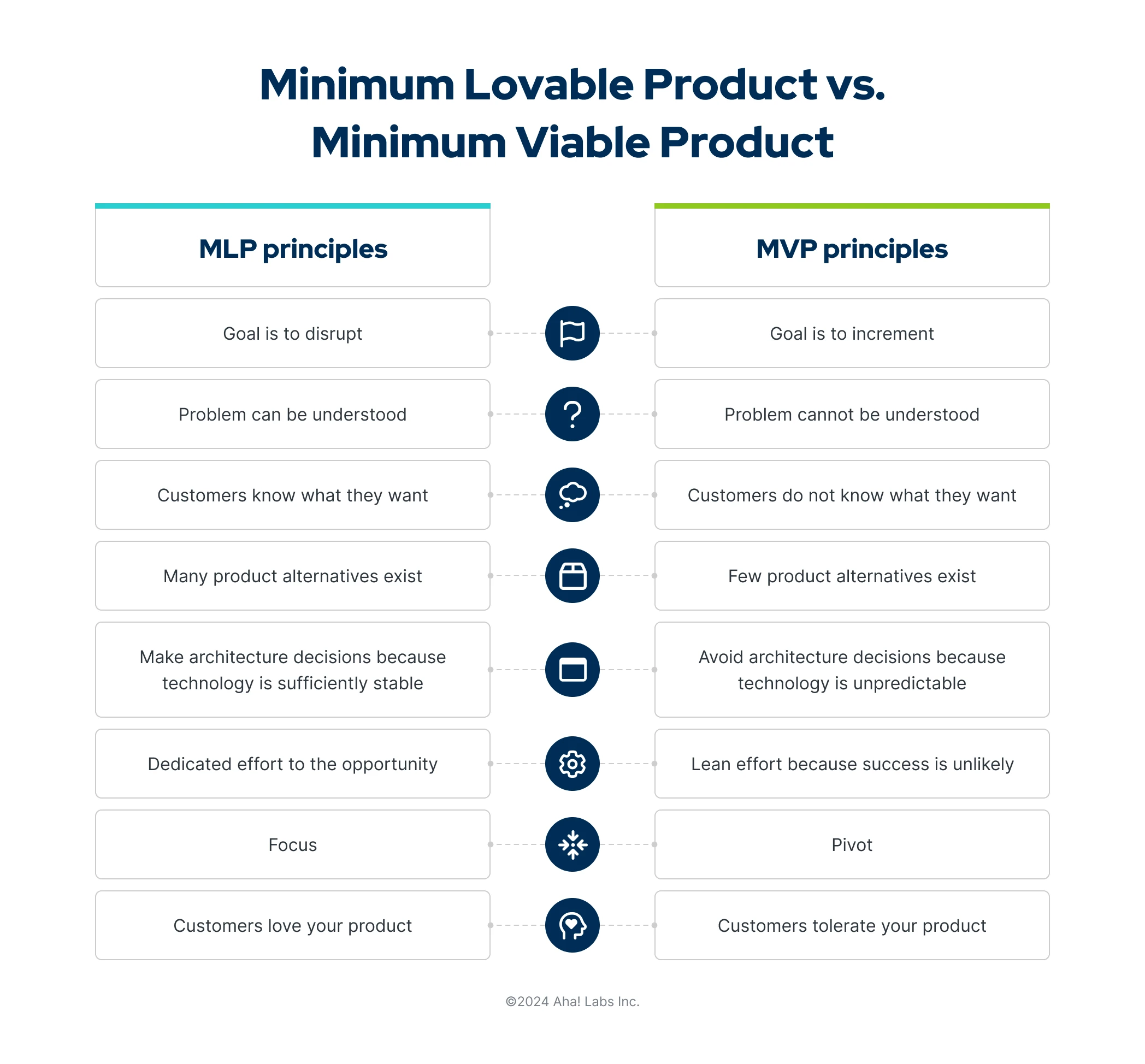
A year after introducing MLP, we codified a broader framework for how we work: The Responsive Method (TRM), centered on the belief that urgency in every interaction — with customers, colleagues, and the work itself — is what propels organizations forward. Brian de Haaff expanded on this in his bestselling book, Lovability.
Company leaders frequently come to us asking how we approach product development. They are often running a methodology designed for predictability that is not producing the value they hoped for. This guide is our answer. The framework is also built directly into Aha! Roadmaps, so teams can define how they work and connect it to everything they are building — across the entire Aha! suite: Aha! Roadmaps, Aha! Discovery, Aha! Ideas, Aha! Whiteboards, Aha! Builder, Aha! Develop, Aha! Teamwork, and Aha! Knowledge.
What are the activities in The Aha! Framework for software built by product teams?
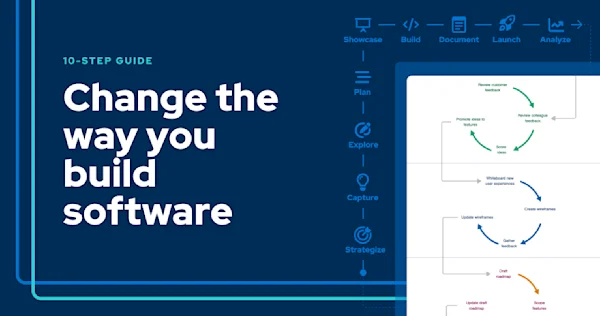
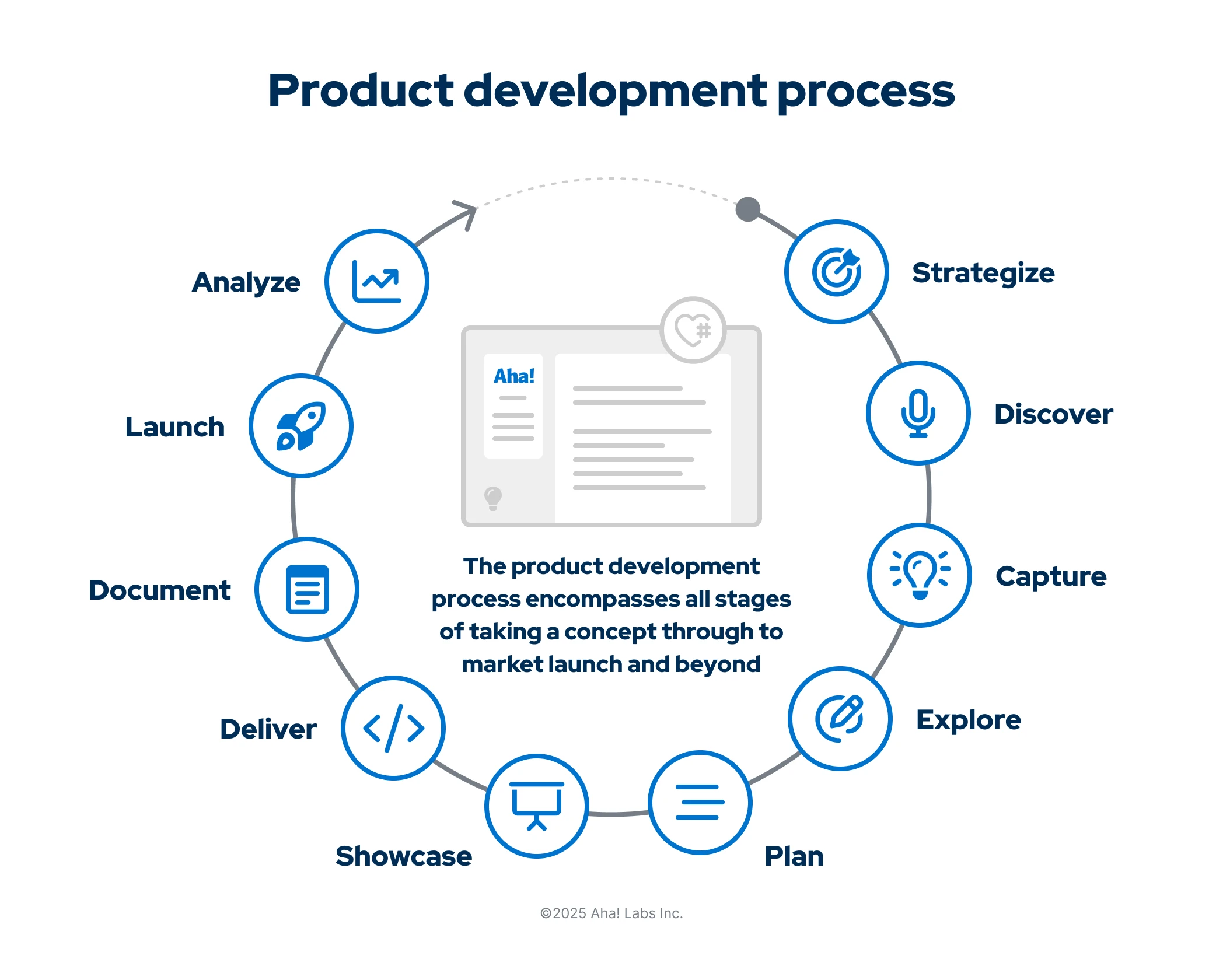
The Aha! Framework is organized around what we have defined as the 10 core stages of product development. Within each stage, there are discrete activities that support positive progress throughout the product development process. It starts with biannual strategic alignment and includes ongoing delivery.