What is the role of a product manager in The Aha! Framework?
From vision to value at every stage of product development
Last updated: April 2026
The Aha! Framework for product development centers product managers on delivering customer value — connecting strategy, discovery, planning, and delivery into a cohesive, repeatable flow. This guide covers how product management fits, core responsibilities, team roles, and templates to implement it.
Editor's note: The contents of this guide refer to The Aha! Framework for software built by product teams. We also have a more lightweight approach to product development suited to delivering AI-driven prototypes and applications — read about it here.
"Designed for product teams, by product teams." If we were to give The Aha! Framework for product development a tagline, this would certainly be a contender.
The Aha! Framework is different from other product development methods in a few ways. It suggests prescribed biannual strategic planning while supporting ongoing sprints with continuous deployment. But perhaps most importantly (at least for the purpose of this guide), The Aha! Framework was created by product development experts for fellow product teams.
The framework is informed by the Aha! team's decades of experience building successful products and working with thousands of product development folks. It is the engine that has powered our company's growth, and it is core to our position as the market leader for product management software.
You might be exploring The Aha! Framework for the first time. Or, you might be stepping into a product management role at an organization that already follows pieces of it. This guide provides an overview of best practices for product managers in either scenario. Keep on reading, or use the following links to jump ahead:
How product management fits into The Aha! Framework
Unlike other approaches that focus primarily on the "deliver" phase, The Aha! Framework takes the entire product development process into consideration. It is focused on the core activities needed to successfully deliver value rather than rigid workflow processes.
This holistic view of product development makes product management essential within the framework. Even the way the activities are described in The Aha! Framework makes it clear that product management is the nucleus of any organization's product development function.
Many product development teams toil in frustration because they are confined by methodologies that prioritize how work gets done. You end up spending more time trying to remember trademarked terminology, staying up to date with expensive certifications, and scheduling endless meetings than you do on actual product development — all so you can follow the process.
The Aha! Framework prioritizes why you do that work in the first place. The intention is not to put product management on a pedestal. It is to put the emphasis on value delivery over process pedantry.
Related:
Responsibilities of a product manager in The Aha! Framework
We might be a little biased, but we think being a product manager is the best job in the world. It is a dynamic and challenging role that will push you to learn and grow at every stage of your career.
Product managers are responsible for what gets built. That responsibility extends from setting the strategic vision for your product to measuring the realized value of what you prioritized. You also have those responsibilities without holding explicit authority over the folks who work alongside you to create that value.
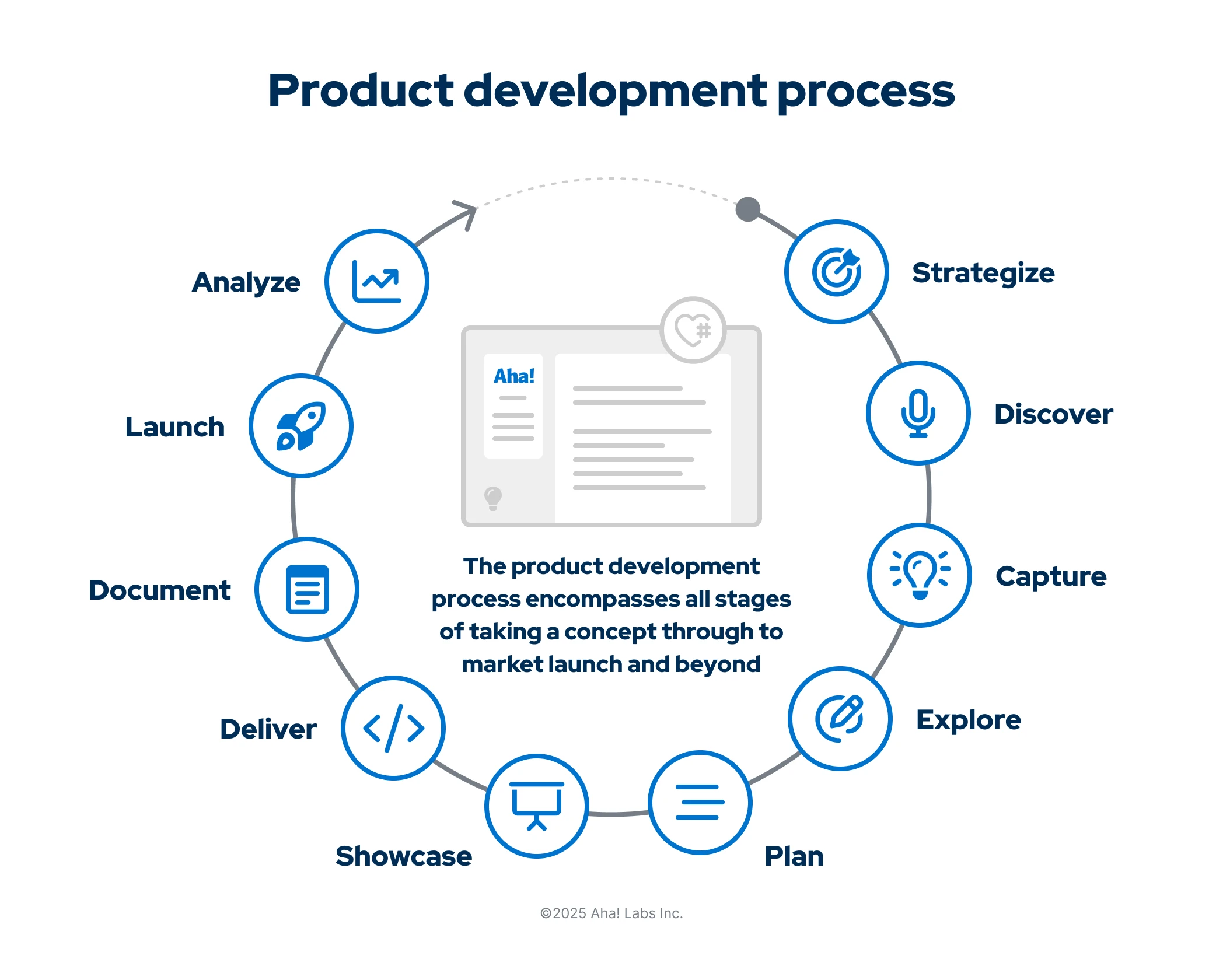
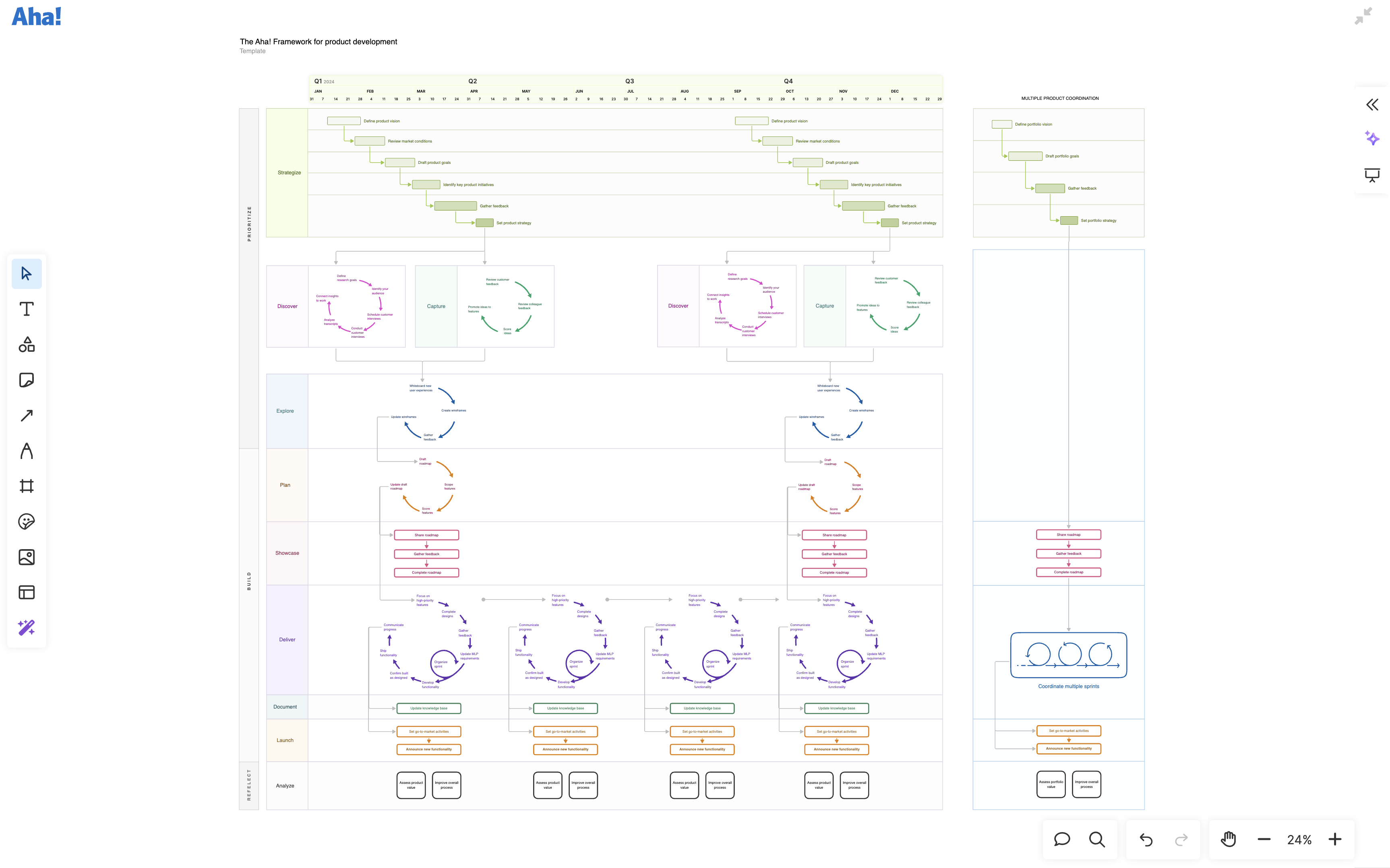
The Aha! Framework is organized around the core stages of product development. There are activities within each stage where product managers complete discrete action items to further positive progress.
In our detailed guide about the activities, we suggest how often each of the activities should take place — but many occur concurrently and are ongoing depending upon how often you release new functionality.
The table below offers a checklist for product managers who follow The Aha! Framework. If it looks like a lot to do, well … that is because it is. Value-based product development is a real commitment. But remember: For a product manager, some of the activities are more about coordination and monitoring than performing the associated task.
As you go through the checklist below, make note of the folks in your organization (such as engineering + operations, IT, or marketing) you will partner with to complete each phase.
The Aha! Framework: Checklist for product managers | |
Stage 1: Strategize | □ Define product vision □ Review market conditions □ Draft product goals □ Identify key product initiatives □ Gather stakeholder feedback □ Set product strategy |
Stage 2: Discover | □ Define research goals □ Establish a participant research database □ Conduct customer interviews □ Analyze transcripts □ Connect insights to the roadmap |
Stage 3: Capture | □ Review customer feedback □ Review colleague feedback |
Stage 4: Explore | □ Whiteboard new user experiences □ Gather stakeholder feedback □ Update wireframes |
Stage 5: Plan | □ Update draft roadmap |
Stage 6: Showcase | □ Complete roadmap |
Stage 7: Deliver | □ Focus on high-priority features □ Complete designs □ Gather team and stakeholder feedback □ Update Minimum Lovable Product requirements □ Develop functionality □ Confirm built as designed □ Ship functionality and supporting work across teams □ Communicate progress |
Stage 8: Document | |
Stage 9: Launch | □ Announce new functionality |
Stage 10: Analyze | □ Improve overall process |
AI has also made it possible for product managers to take on some design and building tasks themselves — creating sophisticated, fully functional prototypes and even building and improving applications. If you are exploring a more AI-driven approach, we recommend looking into The Aha! Framework for software built by product managers. It is a condensed form of the framework we cover in this guide, but with guidance on how product managers can harness AI for coding tasks.
Product development team roles in The Aha! Framework
Many product development methodologies include a defined team structure. Scrum and the Scaled Agile Framework® (SAFe®), for example, both outline exactly how to organize teams and detail specific role titles (and descriptions) that must be active in order to fully follow each method.
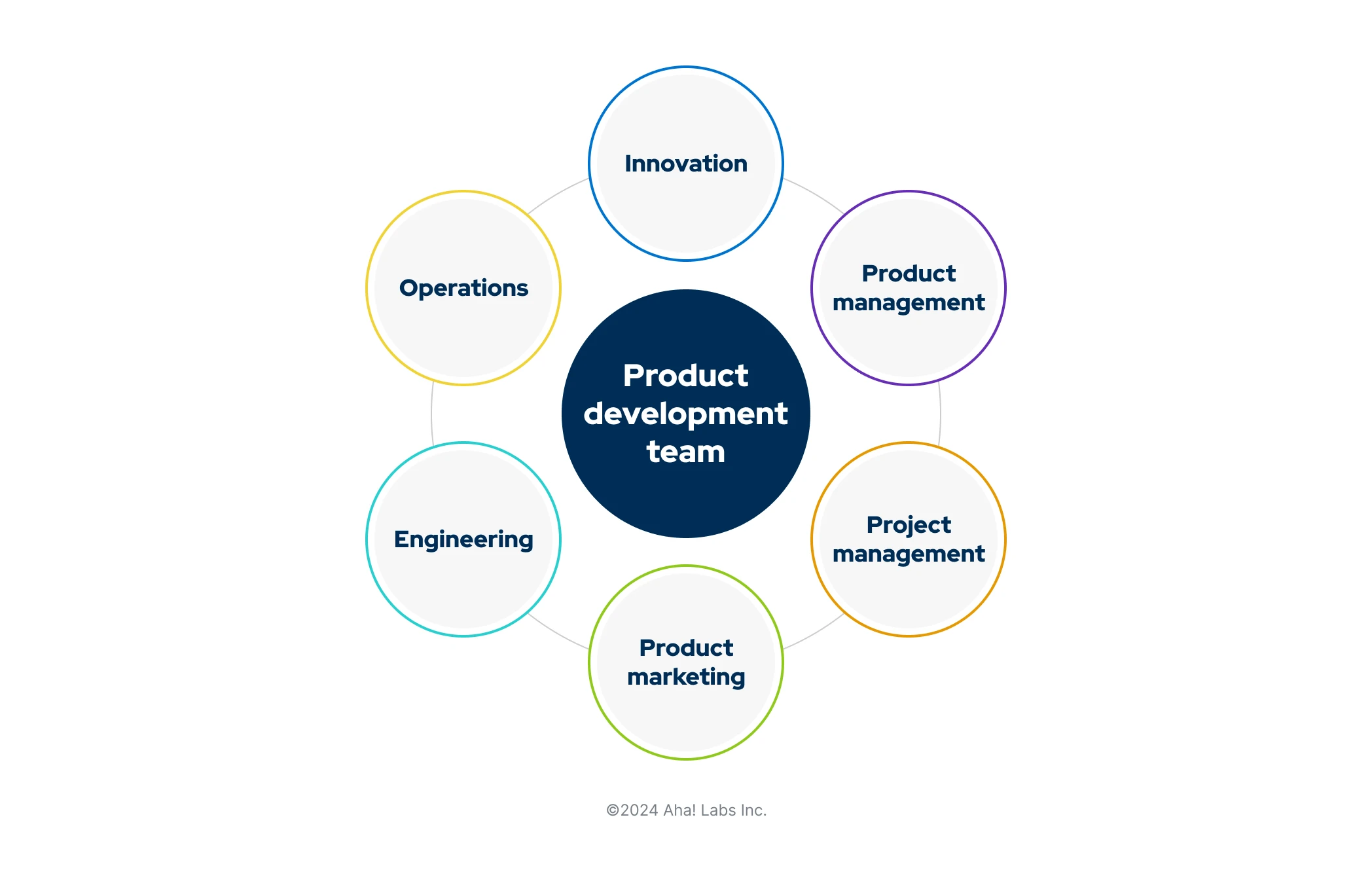
The Aha! Framework does not demand any certain team structure. It does assume that there is a core product development team with representatives from key groups and a broader cross-functional team that supports ongoing product success.