Essential product management skills, responsibilities, and tools
What you should know about product management
Last updated: April 2026
The product management process involves all the work required to deliver lovable products. Here are the basics you should know about PM — including why it is so important, key responsibilities, and more.
Product management is a compelling discipline — particularly for those with an entrepreneurial spirit. It offers autonomy, the chance to work across diverse teams, and an opportunity to make a meaningful impact on business growth.
As a concept, product management encompasses the strategic planning and implementation that goes into delivering a lovable product. Those who work in product management aim to build solutions that solve real customer problems. PMs in software specifically continue to release new functionality and improve their products and services in hopes of achieving long-term, sustainable success.
Product management work is dynamic and rewarding — it continues to grow in popularity. From 2023-2024, for example, just over 16% of MBA students at MIT's Sloan School of Management accepted jobs in product management — making this the third-largest job category for its graduates. Hiring site Glassdoor also ranked product management as the 10th best job in the United States in 2022.
Product managers really, really love Aha! software. Start a free trial.
But what does product management look like in action? And how can you prepare for a career in the field? We will explore these answers (and raise some more questions) in this guide. Use the following links to jump ahead to a specific section:
What is product management?
Product management is the process of bringing products and services to market that customers need. Its core function is to align the organization around what must be completed to ensure a successful delivery — growing the business as a result.
This work is integral to a company's broader product development cycle: the entire process of transforming a raw idea into a solution that addresses customer needs, and then measuring its lovability in the market.
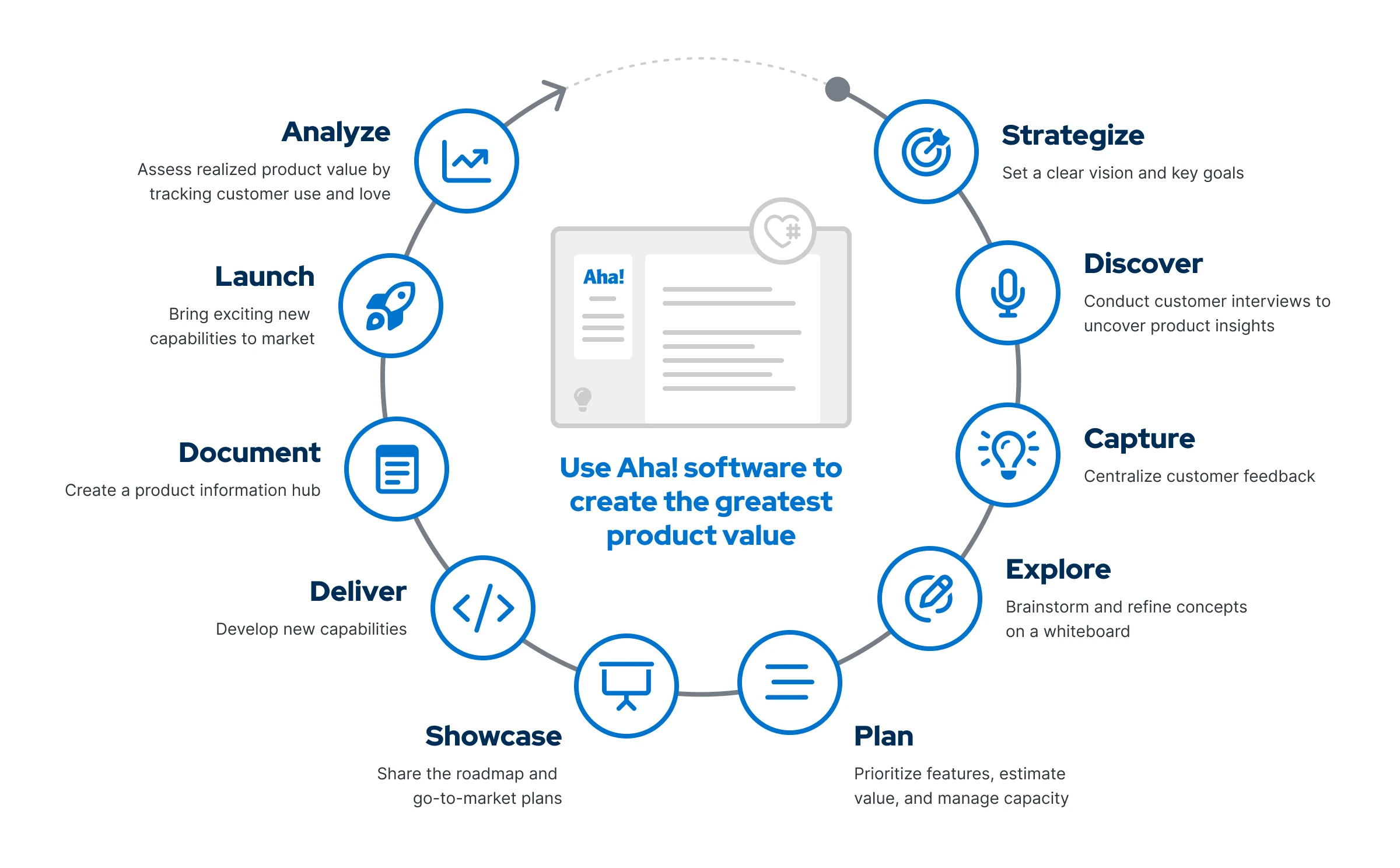
These are the stages of product development identified by Aha! experts. Our software suite covers every stage — so you can take a concept through to launch and beyond.
At each stage in the product development cycle pictured above, product management serves as the guiding hand. It centers leadership, engineering, and other cross-functional groups around a common vision and strategic direction for the work ahead. This requires a laser focus on business goals and a deep understanding of customers to make sure every decision leads to greater product value.
Related:
Where did product management get its start?
Product management is pretty well known today — particularly in the tech industry. But if you go back even just a few years, the function was less understood. (We spent a lot of time in the early days of Aha! writing what we call Versus posts comparing product management to other disciplines.) But even before product managers had a PM title, there were "product people" (brand managers, executives, and engineering leads) driving product growth and innovation:
Early 1900s: The concept of product management emerged as companies started producing goods at a larger, more ambitious scale thanks to technological advancements such as the assembly line. However, PM work was not formally introduced until 1931, when Procter & Gamble employee Neil H. McElroy drafted a memo to executive leadership. Although he was simply trying to justify hiring more people, his work impacted how we think about brand and product management.
1950s-1960s: During the post-World War II economic boom, businesses started focusing on marketing and selling their products to a more extensive consumer base. Product management evolved to include market research, product development, and strategic planning to meet customer demand.
1970s-1980s: The rise in technology and globalization motivated companies to adopt more structured product development approaches. This included introducing project management as a standalone function and closer collaboration with cross-functional teams such as engineering, sales, and marketing.
1990s and beyond: Then, the internet changed everything. It revolutionized product development, marketing, and sales. Product management expanded to include digital products and services, emphasizing user experience (UX) and continuous improvement.
Fast-forward to the present day, and product management now extends beyond product development and marketing to include the overall strategic direction of a company's portfolio. To thrive, products cannot be good (or even great). They must be lovable and fit into the bigger picture of what your company wants to achieve.
Related:
Why is product management important?
If you are reading this, we bet you already know how important product management is to a business. But to folks outside of the field, how do you describe its essential nature?
Here is a good way to articulate it: Product management enables teams to build products that meet real customer needs.
Product management drives business success in a few significant ways:
Ensures products are aligned with market needs, boosting sales and success
Grows revenue and profitability through strategic pricing and feature optimization
Strengthens the company's competitive position by continuously innovating and improving the offering
Enhances the customer experience and fosters product advocacy
Balances competing priorities, focusing on initiatives that will have the greatest impact on business goals
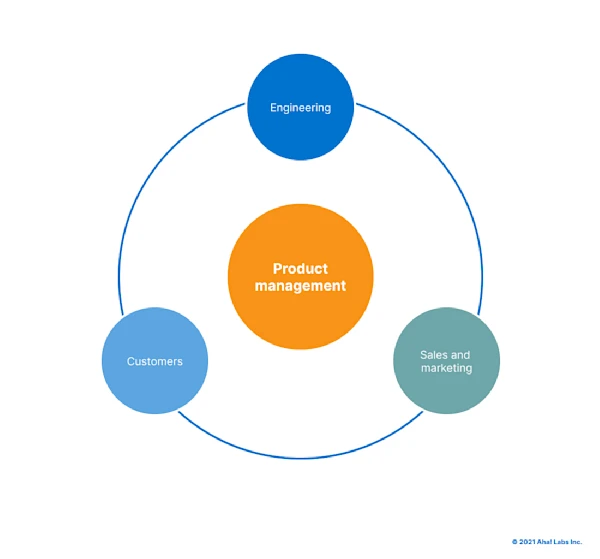
Companies achieve sustainable success based on the strength of their offering. And although product management does a lot of the heavy lifting, product building is a cross-functional endeavor. Product management acts as a bridge between engineering, design, marketing, sales, and customer support. People who work in product management facilitate communication among these teams, making sure everyone is working toward the same product goals.
From understanding customer needs and setting strategy to maximizing product value and market success, product management is the driving force behind it all.