What is product-led growth?
It is the so-called "fuel" behind some of the most successful technology companies. It is a growth strategy that promises lower acquisition costs, shorter sales cycles, and more happy customers. And although some product leaders celebrate it as something new, those who have worked in software for many years will recognize the tried and true tactics that make it so powerful.
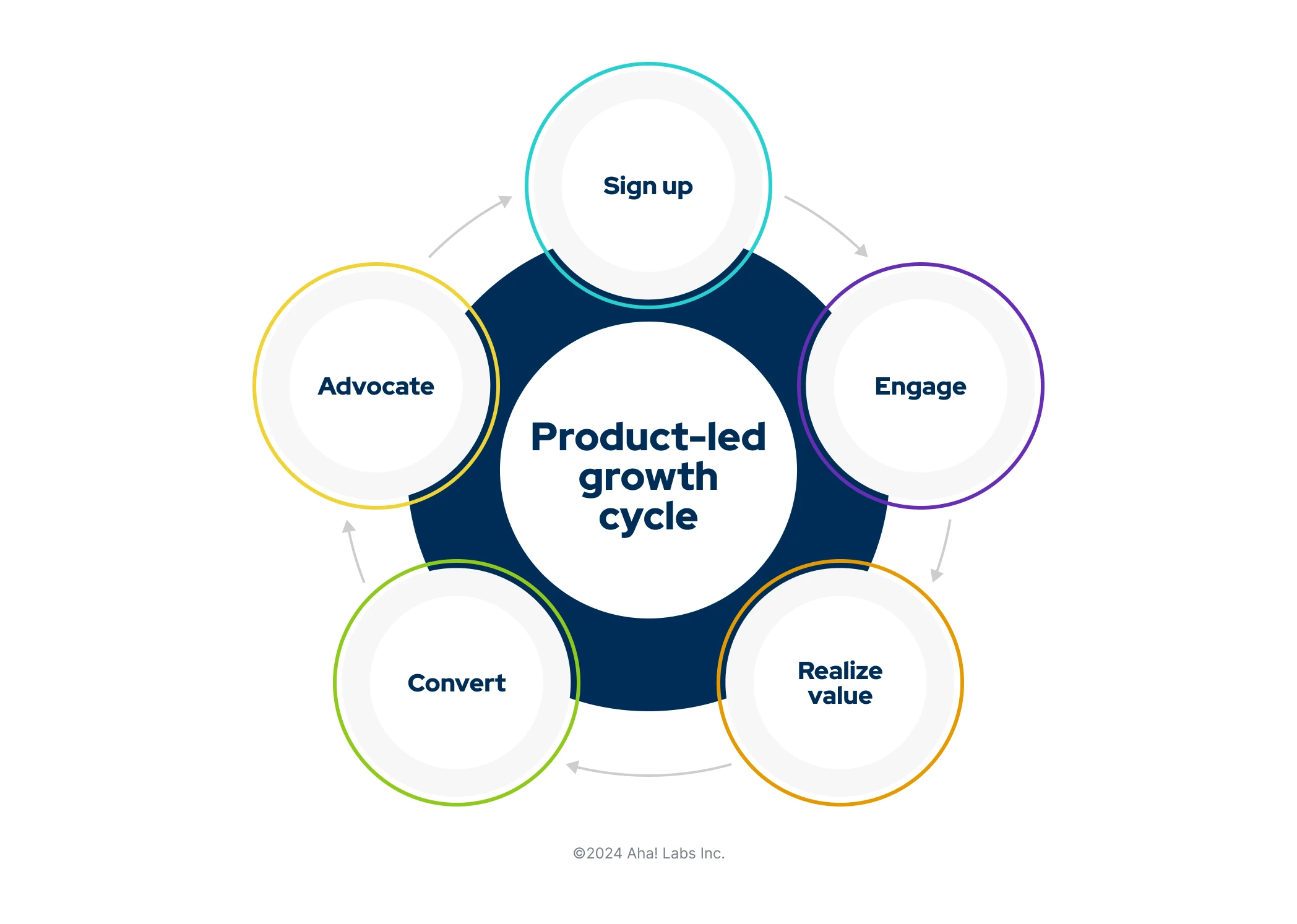
Product-led growth (PLG) is a business strategy that relies on product usage as the main way to acquire, engage, and retain customers. PLG upends traditional high-touch sales models and instead empowers users to experience and purchase your product. The product is highlighted at every stage of the buyer journey, with the goal being that users can self-educate their way to paying customers with little interference from the company.
This guide tackles some of the most common questions about PLG and provides high-level guidance on how you can implement a PLG strategy at your company. Your approach will reflect the unique factors that make your product special. However, there are some general concepts that underpin PLG which can be applied to any company.
Craft your product strategy using Aha! Roadmaps. Sign up for a trial.
Jump ahead to any section to learn more about product-led growth:
What is the history of product-led growth?
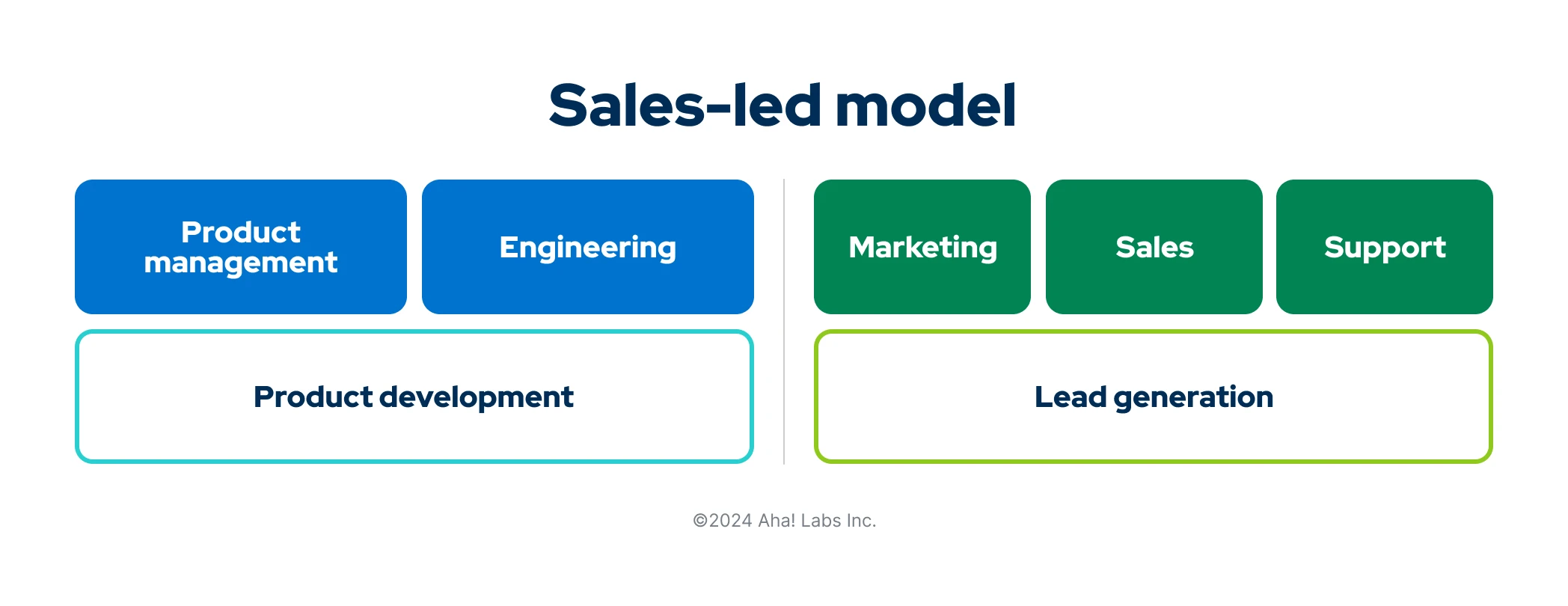
Product development is the engine that drives most businesses forward. Taking a concept from idea through to market launch is a massive effort that consumes significant company resources and requires broad cross-functional collaboration. For decades go-to-market activities were siloed by function: product management, engineering, marketing, sales, and support. Most technology companies were organized around two tracks with hard lines separating the functions.
Marketing generated interest and sales closed the deal. Sourcing leads (the process of generating interest in the hopes of making a sale) was the norm. Prospective customers would submit an online form or book a demo with a sales rep to find out information critical to the evaluation process — everything from what the product actually looked like in practice to pricing and policies that could impact decision-making.
This sales-led growth model created a variety of challenges. Marketing was often evaluated against the number of “marketing qualified” leads (MQL) that the team generated. Hitting MQL goals led many marketing groups to focus on finding ways to capture more and more leads — such as creating (and gating) content with the sole intention of harvesting as many contacts as possible to hand off to the sales team.
Sales then tackled outreach to those MQLs, many of whom were more interested in the content that marketing had developed than the product itself. Early-awareness folks may not have even realized that they had a problem that could be solved by software. Sifting through and following up with all of the different leads created long and expensive sales cycles. Commissioned salespeople could become motivated to close bigger deals to justify the effort involved in all the outreach. And in the end, customers paid for the inflated cost of a bloated process.
With the rise of subscription-based software-as-a-service (SaaS) came a new way of thinking. Startups could conceive of and launch a product relatively quickly, but certainly could not afford the expensive infrastructure associated with a sales-led growth model. In highly competitive categories, time to market was essential — teams pushed to get an early version of the product out there for users to try. Many of these product builders were themselves weary of high-touch and high-pressure sales tactics and eager to ditch the old way.
To reduce friction and gain immediate feedback about the product, SaaS companies embraced a “try before you buy” approach. This could be in the form of a free trial period or a freemium (no charge to start, but with a cost to use advanced functionality) offering. The more value that users found in their early experience with the product, the more likely they were to convert from a trial or freemium account to a paid account. (And to tell their friends and colleagues about the cool new tool they discovered.) The more that people used the product and found value in it, the more the product development team was able to quickly incorporate learnings to iteratively improve and refine it.
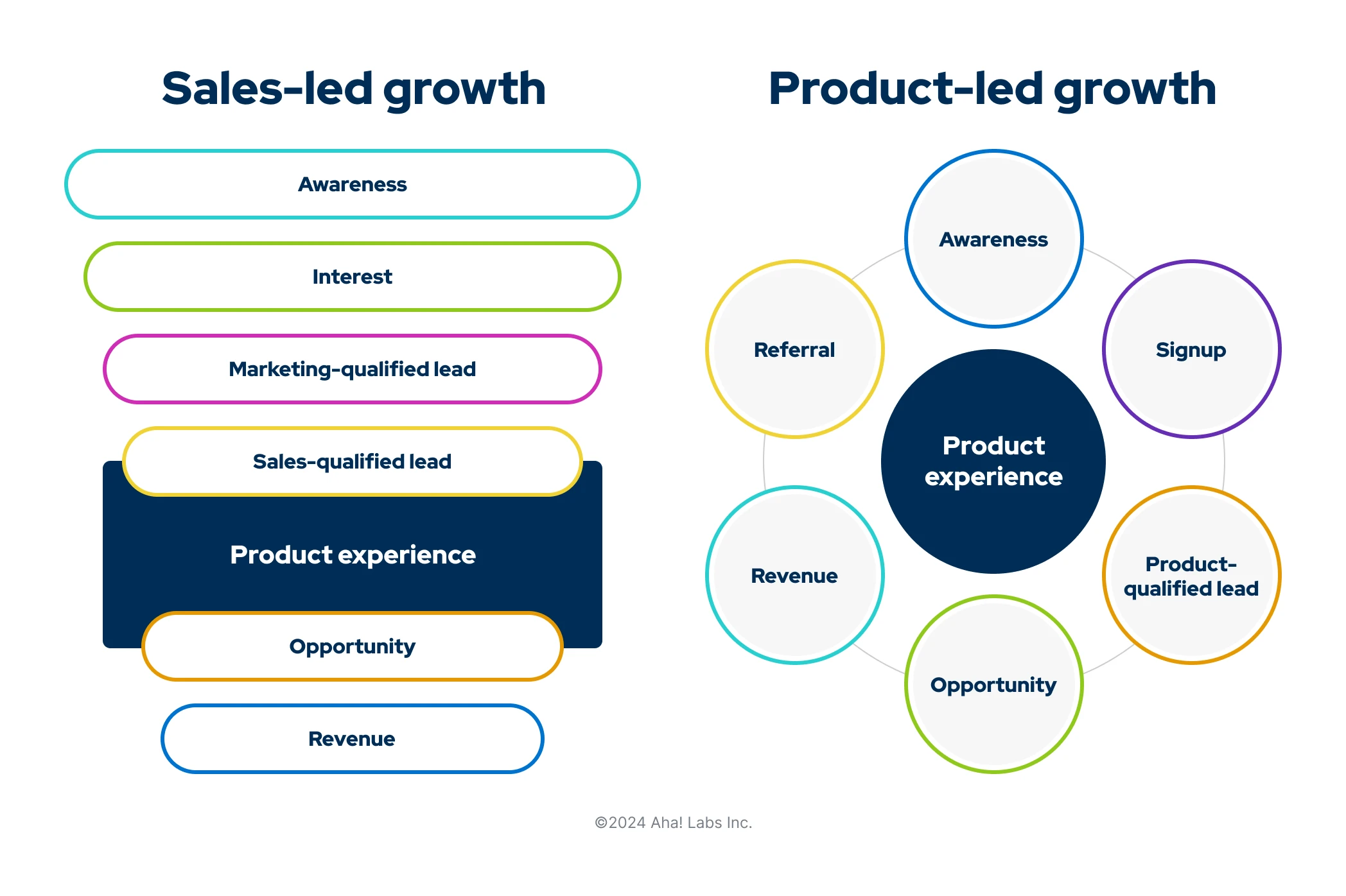
Sales-led vs. product-led growth
We will go into more detail on the differences between sales-led and product-led growth throughout this guide. But to get us started, here is a quick overview of the main differences between the two:
Sales-led growth:
Focused on senior decision-makers
Puts a barrier between users and the product
Requires contact with a sales professional
Can lead to longer sales cycles
May increase to cost to acquire customers
Might hinge upon professional setup and configuration
Product-led growth:
Focused on product users
Empowers prospective customers to explore the product
Enables marketing to focus on educational content
Can reduce sales cycles as users find value
May decrease the cost to acquire customers
Usage rarely hinges upon professional rollouts
Examples of product-led technology companies
Whether or not they actually claim the mantle of PLG, many of today’s most successful SaaS companies grew quickly by focusing on a frictionless buying process and investing heavily in product experience. The list of 10 PLG companies below is by no means exhaustive, but instead illustrates a wide range of categories.
10 product-led software companies:
Aha! — product development
Calendly — online scheduling
Dropbox — file hosting
Pinterest — image sharing
Shopify — e-commerce
Slack — instant messaging
Stripe — payments
SurveyMonkey — surveys
Zendesk — customer support
Zoom — video meetings
Related:
What does it mean to be “product led”?
The definition is easy enough to understand. You put the product at the center of the customer journey, making usage and experience the core way that you attract and convert. But what does it actually mean in practice? The reality of PLG is much more complex.