What is a go-to-market roadmap?
Last updated: May 2024
Every company needs to think deeply about how to drive new customer growth. The opportunities to garner new customers are defined as part of an overarching go-to-market strategy. This could include marketing activities such as programs and campaigns that are part of the broader marketing strategy. It also includes plans for bringing new products and services to market.
This guide focuses on that key aspect of the go-to-market strategy — how to launch a new experience to customers. The experience itself could be a new product or a feature or enhancement to an existing product or service. It could also be when your company wants to introduce a product to a new audience or user base.
Creating your go-to-market strategy is the first step in the go-to-market process. It documents how you will leverage internal cross-functional teams and external partners to communicate the value of what you are delivering and gain competitive advantage. This strategy is critical to planning a launch that reaches the right audience, based on defined buyer personas. It also includes effective product positioning so those customers understand the value of the new offering.
Read more: What is a go-to-market strategy?
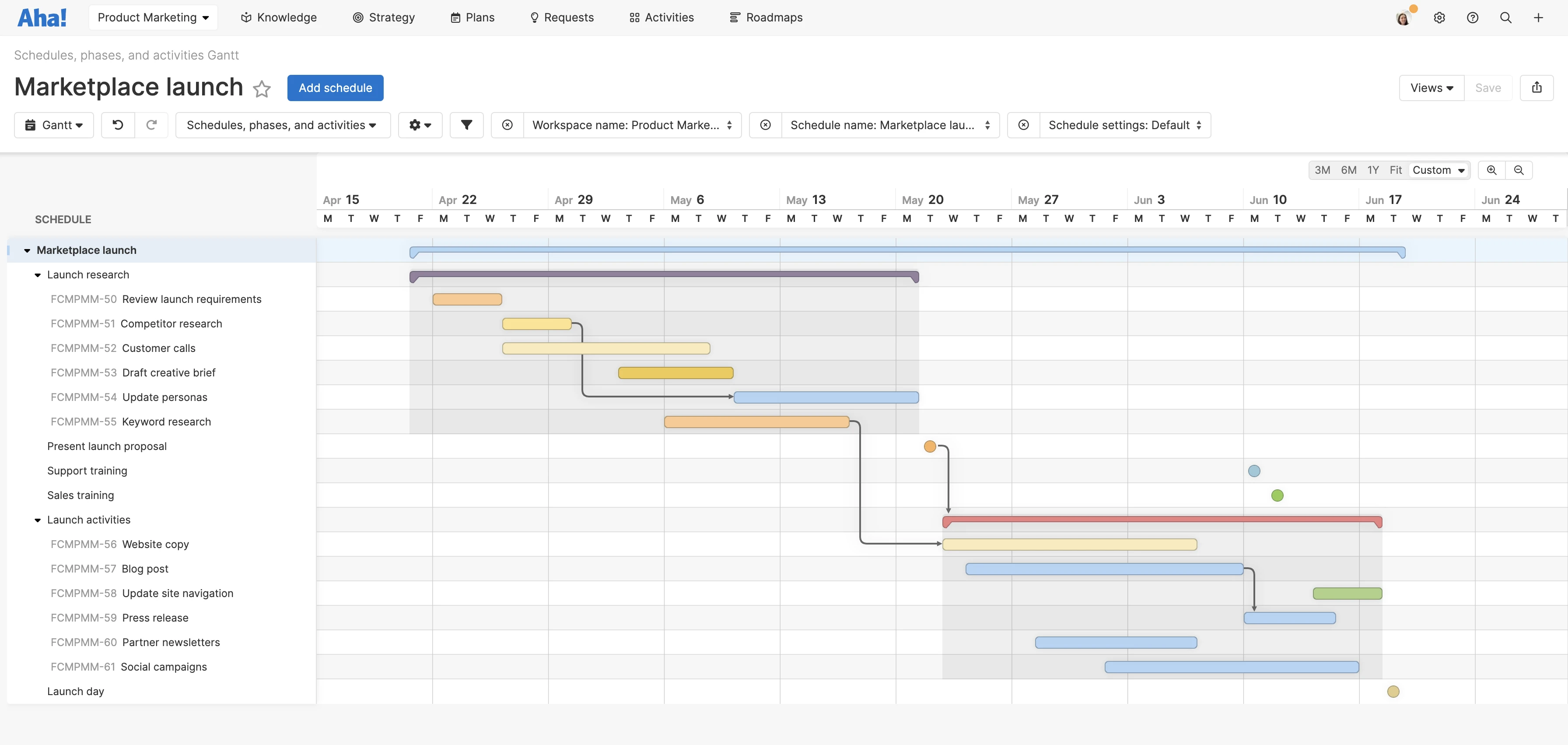
A go-to-market roadmap is a visual representation of the work you want to accomplish for your launch and the timeline for when you will get there. The purpose of a go-to-market roadmap is to capture and coordinate the timing of all the cross-functional activities required to release a new customer experience.
Build your own go-to-market roadmap in Aha! Roadmaps. Try it free.
Keep reading or jump ahead here:
Why is a go-to-market roadmap important?
While defining your go-to-market strategy is a foundational planning step, it is only as good as how you implement it. Time to market is key, along with tight collaboration and communication across teams. A go-to-market roadmap captures the details of the work and defines deadlines to drive the delivery of your strategy.
Not every launch will be a big and flashy new activity but all launches have some commonalities. There are always many moving parts and fixed deadlines. A go-to-market roadmap provides a central place to track the many details and dependencies of your launch. Having a repeatable go-to-market roadmap template that you can customize helps ensure everything is documented and planned for, as well as identifying any gaps.
Your go-to-market roadmap is also a great communication tool. It can help you spot cloudiness — from missed tasks to downstream impact to other teams that you might not have considered. You can use it to provide clarity to the cross-functional teams on shared responsibilities and important milestones. The roadmap helps keep everyone on track and holds them accountable to their contributions to the launch.
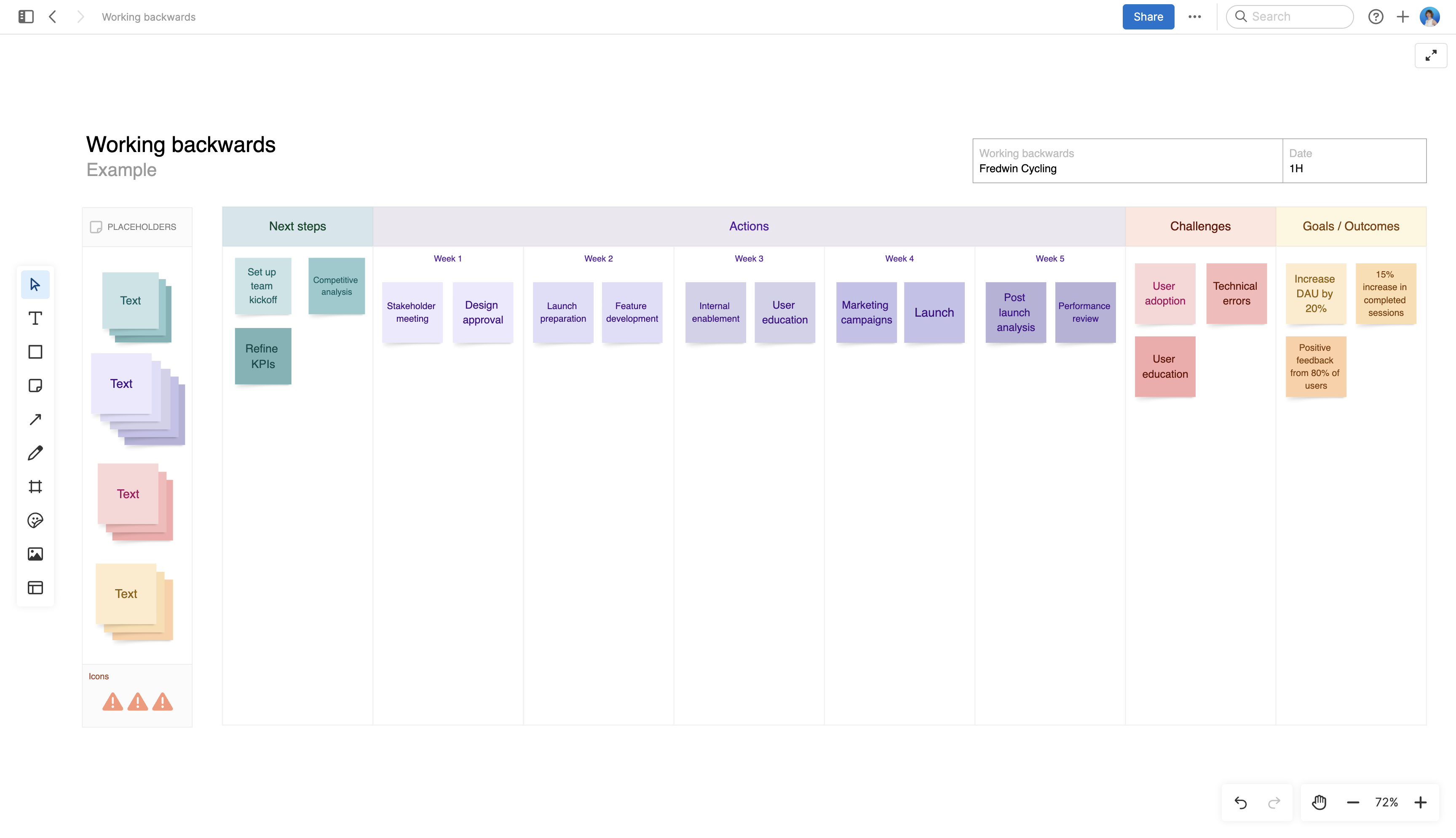
If you are not sure where to start, it can be helpful to create a rough draft. Try a working backwards template — start with your launch goals in mind, then identify the milestones you will need to reach in order to achieve them. Once you have outlined the key activities, you can easily transfer them to a more detailed roadmap plan.
Try the working backwards template in Aha! software with a free trial.