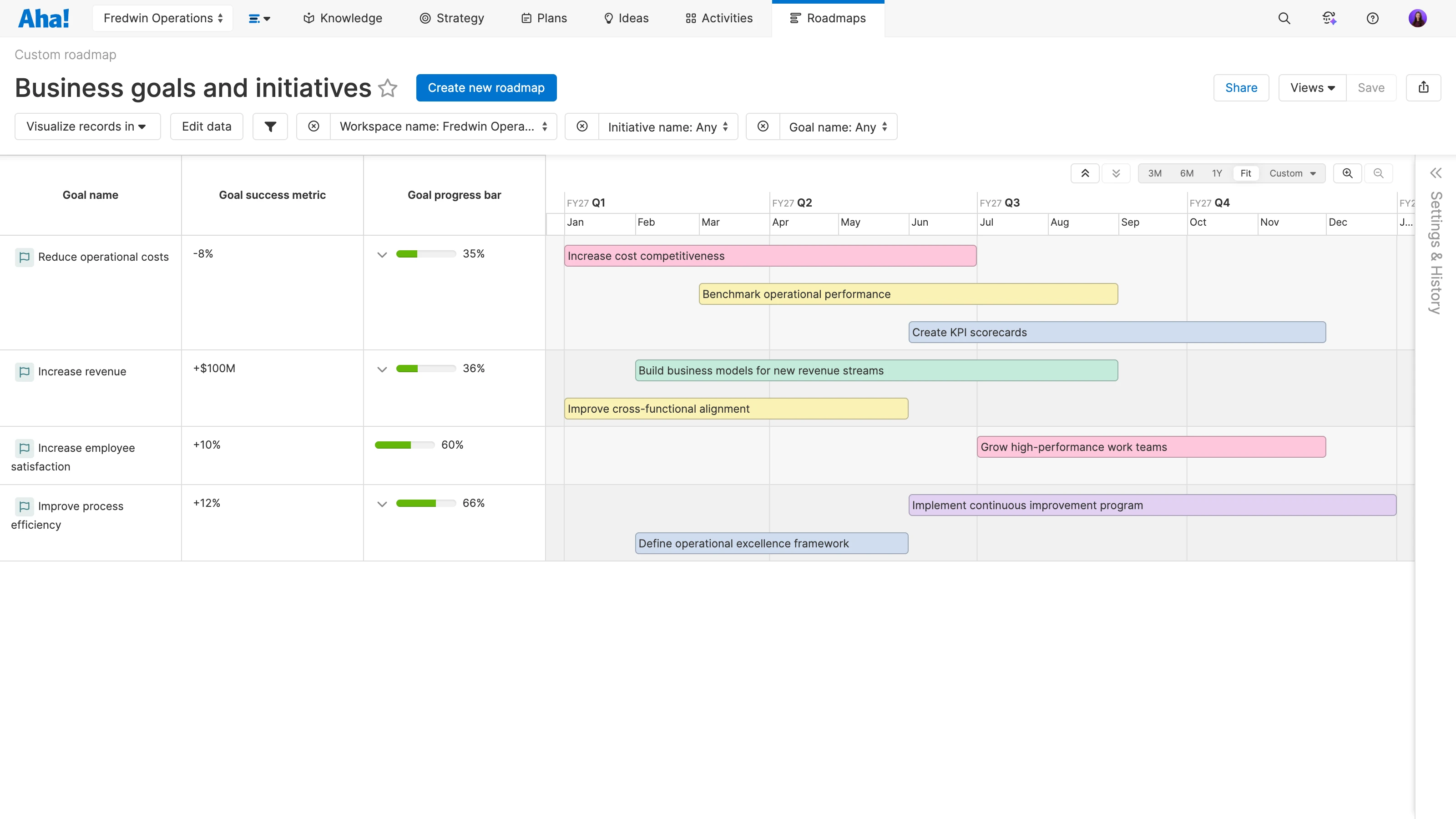
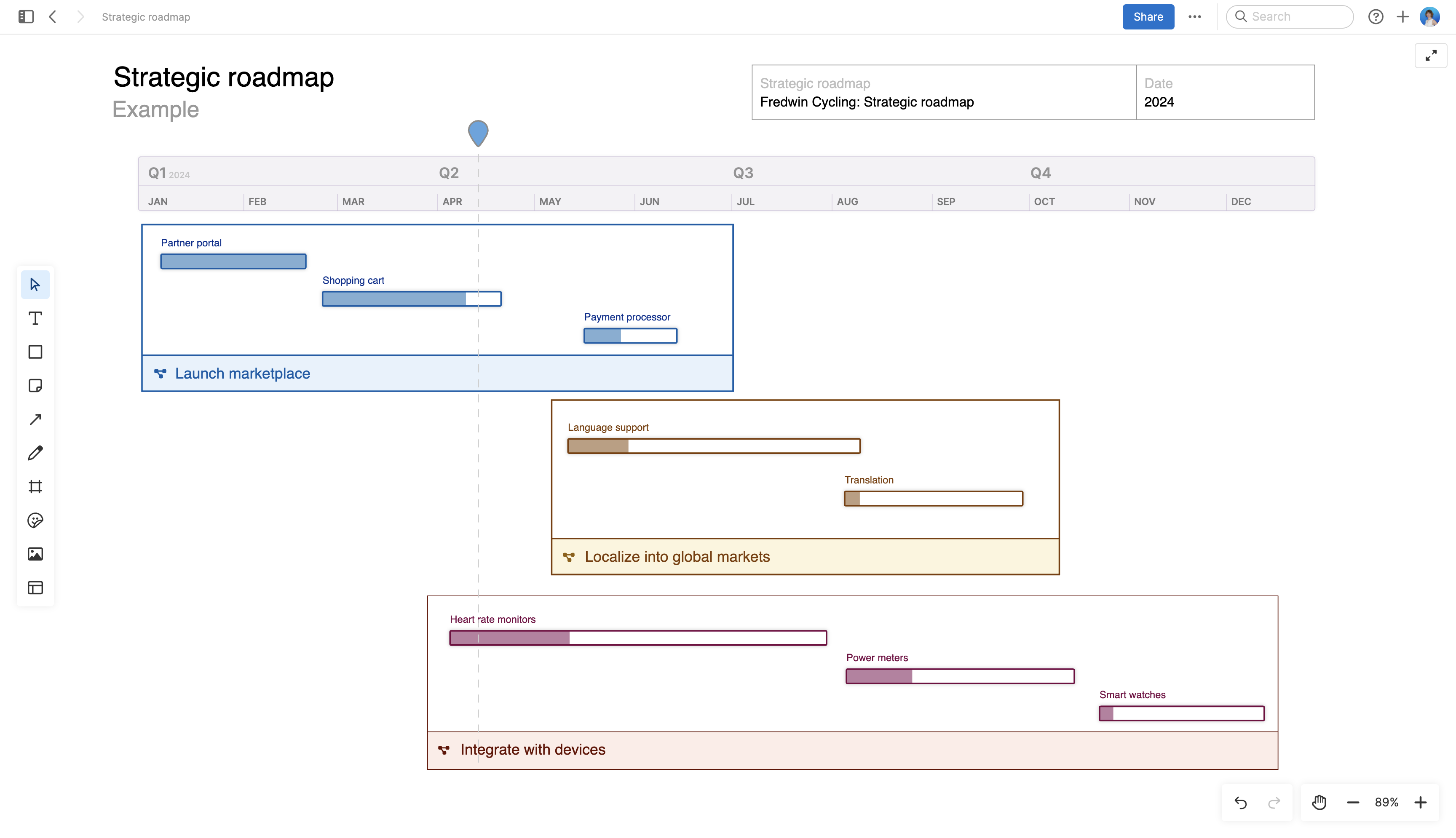
2. Product strategy roadmap:
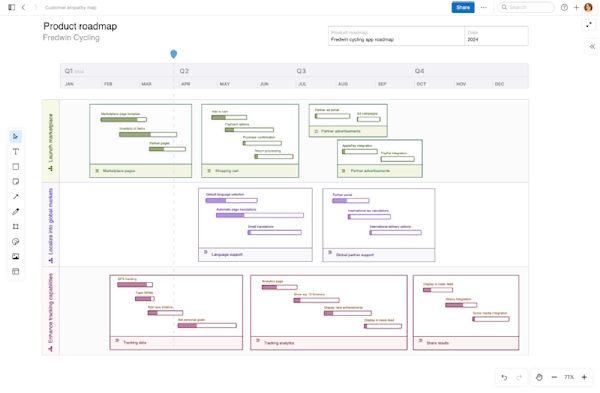
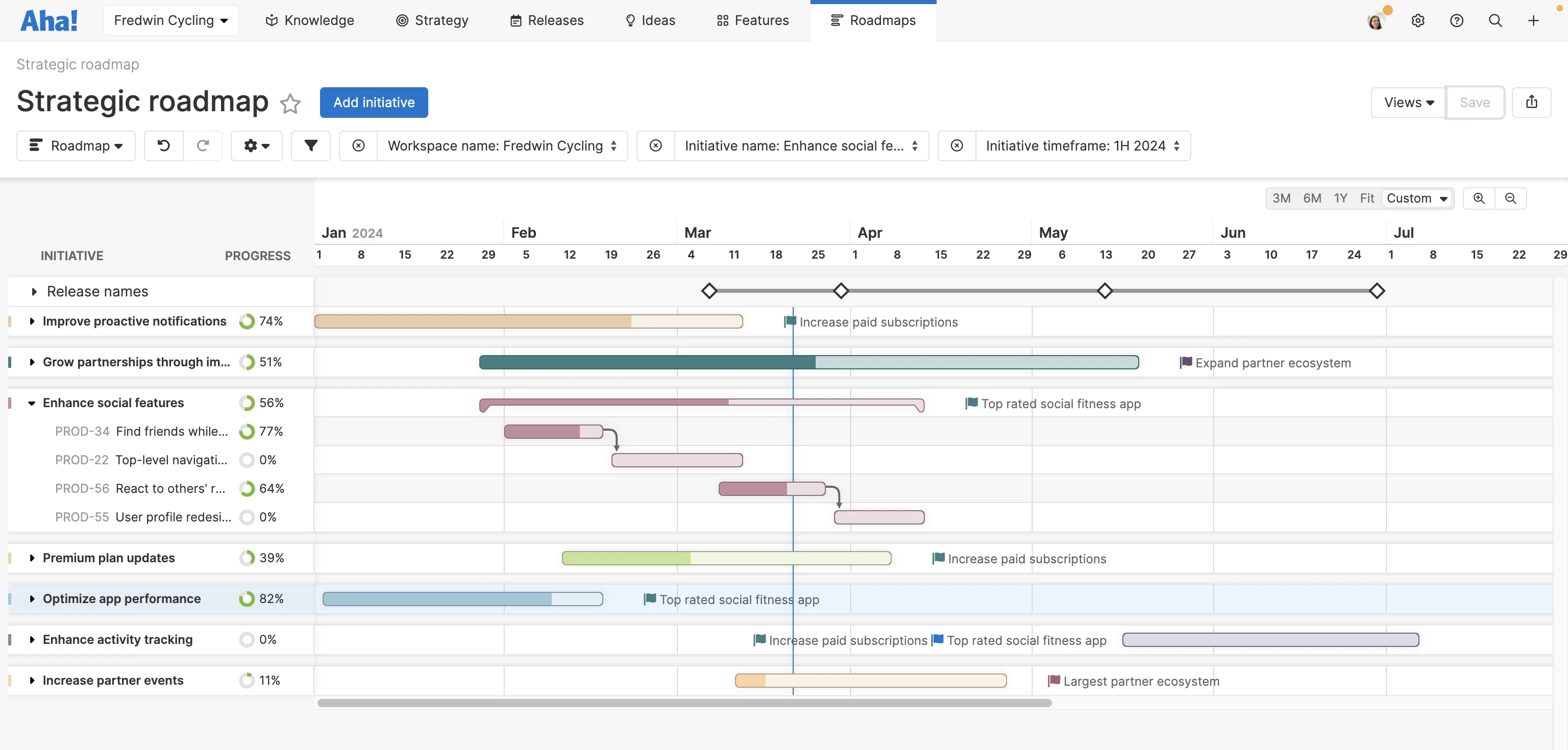
Conveys the product vision, which connects to and supports the larger company vision and goals. A product strategy roadmap also includes time-bound product goals, such as gaining a certain number of new customers or free trial signups each quarter. The roadmap will highlight the product initiatives (or themes of work) that product and engineering are responsible for. See the image at the top of this guide for an example.
Related:
Top
4 big benefits of a strategy roadmap
It takes deep thought and deliberate planning to move from where you are now to where you want to be. A strategy roadmap helps, showing how you plan to achieve your vision. It is a powerful tool for communicating your desired destination, rallying the entire team around the "why" behind their work, and guiding priorities.
Here is a quick primer on the difference between vision, strategy, and a roadmap:
Vision: Establishes where you want to go and why it matters
Strategy: Captures the goals, initiatives, and approach for achieving the vision
Roadmap: Visualizes how you will achieve the strategy along with a time frame for completion
A strategy roadmap for a company or product anchors your team. You can use these visual tools to help inform prioritization decisions about what work to pursue next, postpone, or say "no" to. Only invest in the efforts that will bring you closer to your goals and initiatives.
Four big benefits of a strategy roadmap include:
Alignment: Unites everyone around shared objectives
Clarity: Declares what the organization or product team is striving toward
Focus: Orients the team around what you will accomplish and how you will deliver value
Inspiration: Motivates teammates to achieve and excites people about what is coming
And here is a nugget worth noting: Strategy roadmaps are typically internal documents. That said, some companies choose to share high-level roadmap views with various external groups. These might be customers, investors, shareholders, or partners.
For example, many companies have contractual agreements with customers. With a customer-facing strategy roadmap, you can show general time frames for when the team plans to work toward certain efforts or deliverables. Public or venture-backed companies might also create external strategy roadmaps to give context around what shareholders or investors can expect. Typically, these are even more high-level — showing only select areas of investment and general dates. (This is when it is handy to have roadmapping software that allows you to use external release dates.)
Top
When to create a strategy roadmap
Setting a bold strategy takes time and careful consideration. Building new things is exciting, and it can be tempting to bypass strategy and jump right into making your business or product roadmap. But if your roadmap is not rooted in strategy, it will end up as a collection of random efforts or loosely related features that might not deliver real value. Instead, tie your work to a strong anchor: your strategy roadmap.
This is why company leaders typically create a strategy roadmap early, after founding a new business, coming up with a new offering, or deciding to expand into a major new market. Similarly, a strategy roadmap for a product also comes early in the product development process. Usually, company or product leaders will build it after the company and product strategy is defined, but before creating more detailed plans (such as release or features roadmaps).
For existing companies and products, you will likely make or update the strategy roadmap on a set cadence — either annually or in line with your organization's strategic planning cycle. Our team follows our own product development framework, which calls for roadmap sharing on a monthly basis. Regardless of cadence, the important thing is that you regularly revisit this roadmap. Why? Here are a few key reasons:
Adjust your strategy (and matching strategic roadmap) to keep pace with change.
Related: