What is a go-to-market strategy?

Learn how to create a go-to-market strategy that drives successful launches

Last updated: November 2025

Build an effective go-to-market (GTM) strategy to plan successful product launches, align teams, and communicate product value. Plus, get started with our free GTM strategy template.

If you release a new product feature and no one hears about it — does it even make a difference? It takes a lot of hard work to ideate, plan, roadmap, build, and deliver new product functionality. But the value of what you have created is not always apparent to customers. It is up to you to deliver the gift.

This is where go-to-market strategy comes in. A go-to-market (GTM) strategy outlines how you plan to launch new experiences to customers, including how you will communicate the value of what is being released. The goal is to translate technical functionality into messaging that resonates with your audience — informed by the overall product strategy.

Product development teams craft go-to-market strategies to stir up awareness and excitement around all types of launches — for brand new products, enhancements to existing ones, and expansions into new markets. GTM strategy can also encompass long- or short-term plans. You might review GTM strategy annually to examine how your overall approach is performing and get aligned on major product plans for the year. In the short term, go-to-market strategy focuses on the individual releases happening on a regular cadence.

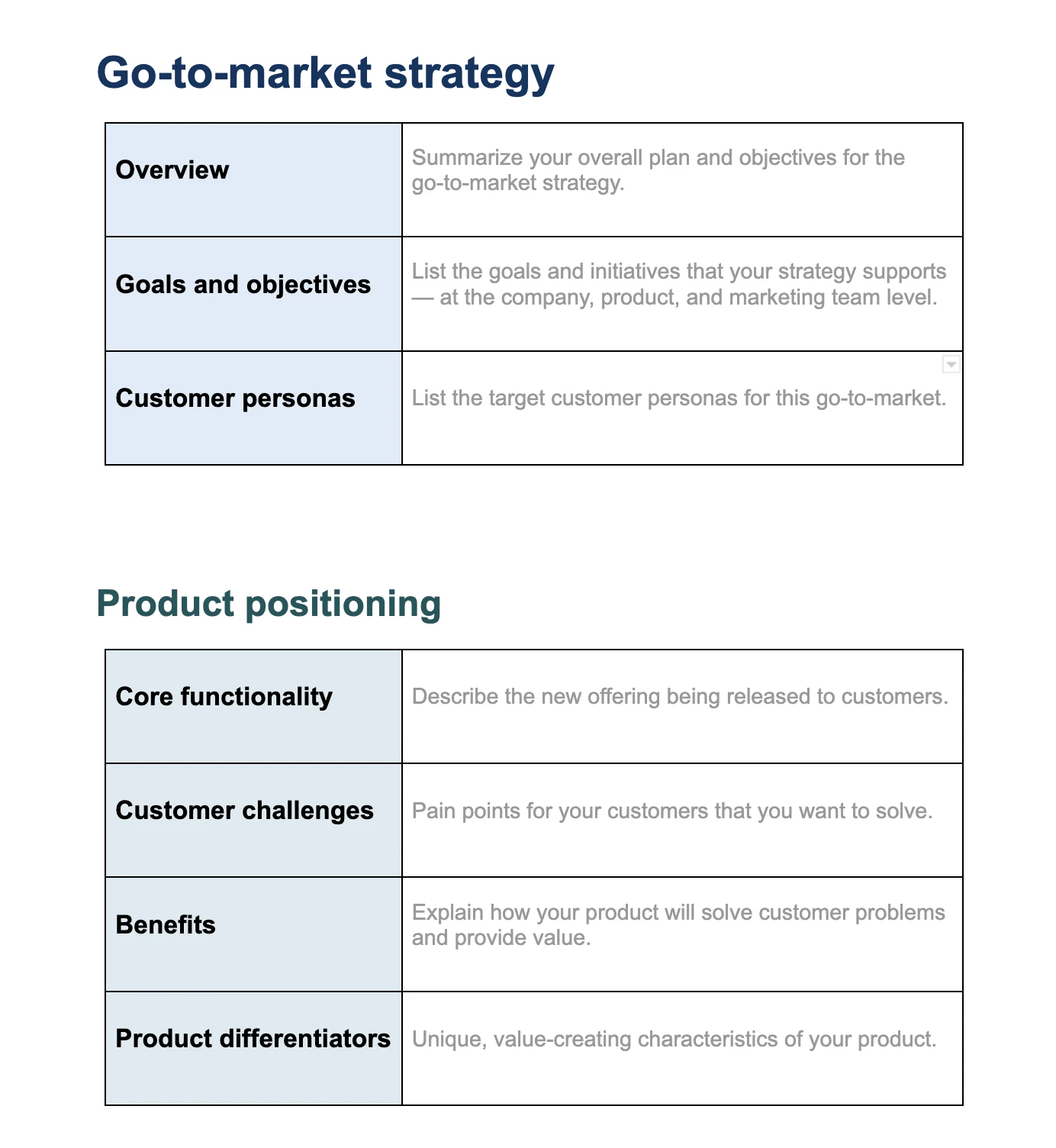
In this guide, we will cover the "who", "why", and "what" behind excellent go-to-market strategies (plus, we will throw in a free template to help you get started). Keep reading or jump ahead here:

Set strategy and launch brilliant products with Aha! software. Sign up for a trial.

Who owns the go-to-market strategy?

Years ago, go-to-market activities were distinctly separated by function. Product management set the product direction, engineering built it, marketing did outreach, and sales closed the deal. It was this way for decades. But in today's world of product-led growth, product teams are ditching rigid siloes — instead embracing a much more cross-functional approach.

Now, go-to-market strategy ownership is shared among product marketing, product management, and engineering at many tech companies. Typically a product marketing point person will drive the effort and coordinate with the rest of the core product team. It is also best-practice to bring in sales and support team members for alignment on messaging, pricing, customer training, and even as a channel for getting the word out about new features.

This shared-ownership model is common for established businesses. But at small and early-stage companies without dedicated product marketing teams, GTM strategy is often wrapped into the overall marketing strategy and spearheaded by the broader marketing team.

Related:

Top

Why is go-to-market strategy important?

It is always exciting to deliver new product value to customers. But it can also feel like a lot of pressure. Between the ups and downs, go-to-market strategy keeps you focused on the end goal by supporting you in three main areas — alignment, customer experience, and direction.

Alignment GTM strategy clues the rest of the organization into your plans for delivering something new to your target audience. It offers a single source of truth — so everyone understands how to talk about the new functionality, what the benefits are, and who to share the news with. When everyone is aligned on your GTM strategy, it provides a stronger message and a more cohesive experience for customers.

Customer experience Go-to-market strategy is a key component of your customer experience. The way that people are introduced to your product can help shape their overall perception of your offering. For prospective customers, this means educating folks about what you are building and getting them excited. For existing customers, a solid GTM strategy demonstrates the continuous value you provide.

Direction Creating a GTM strategy is only the first step in the overall go-to-market process — it sets the direction for the launch activities that follow (like, building a go-to-market roadmap and writing promotional content, for example). Your GTM strategy is your guide to planning the most impactful outreach for your target audience. It can also help you evaluate the effectiveness of your approach post-launch.

Beyond this, successful go-to-market strategies come with a number of benefits:

  • Increased awareness of your company and product

  • New customer growth

  • Improved engagement or retention from existing customers

  • Higher product usage

  • Internal recognition for your product team's efforts

Related: