What is a marketing strategy?
Last updated: January 2025
A marketing strategy is an overall plan for how you will reach your target audience and earn loyal customers. It outlines your competitive edge over other offerings and defines foundational information such as key product messaging, specific benefits, user demographics, and success metrics. A strong marketing strategy aligns the team and ensures your efforts drive revenue, build trust, and grow your brand.
Let's explore marketing strategy concepts and components further. Feel free to use these links to skip ahead.
Why is marketing strategy important?
Setting a marketing strategy is essential to keeping your team in sync and performing well. It aligns the entire company around shared market, business, and product assumptions. This is key to launching campaigns and promotional activities that effectively engage potential customers, drive revenue, build brand awareness, and strengthen the relationship with existing customers.
Your marketing strategy should establish:
Goals that determine how success will be measured
High-level efforts needed to achieve your goals
Who will get the most value from your product or service
What you know about the target market
Benefits of using your product or service
How to reach and communicate with your ideal customer
How to establish a sustainable competitive advantage
How to create a marketing strategy
Your strategy sets the direction for your everyday marketing activities. This keeps the team focused on what matters most — so you can successfully acquire, keep, and grow customers.
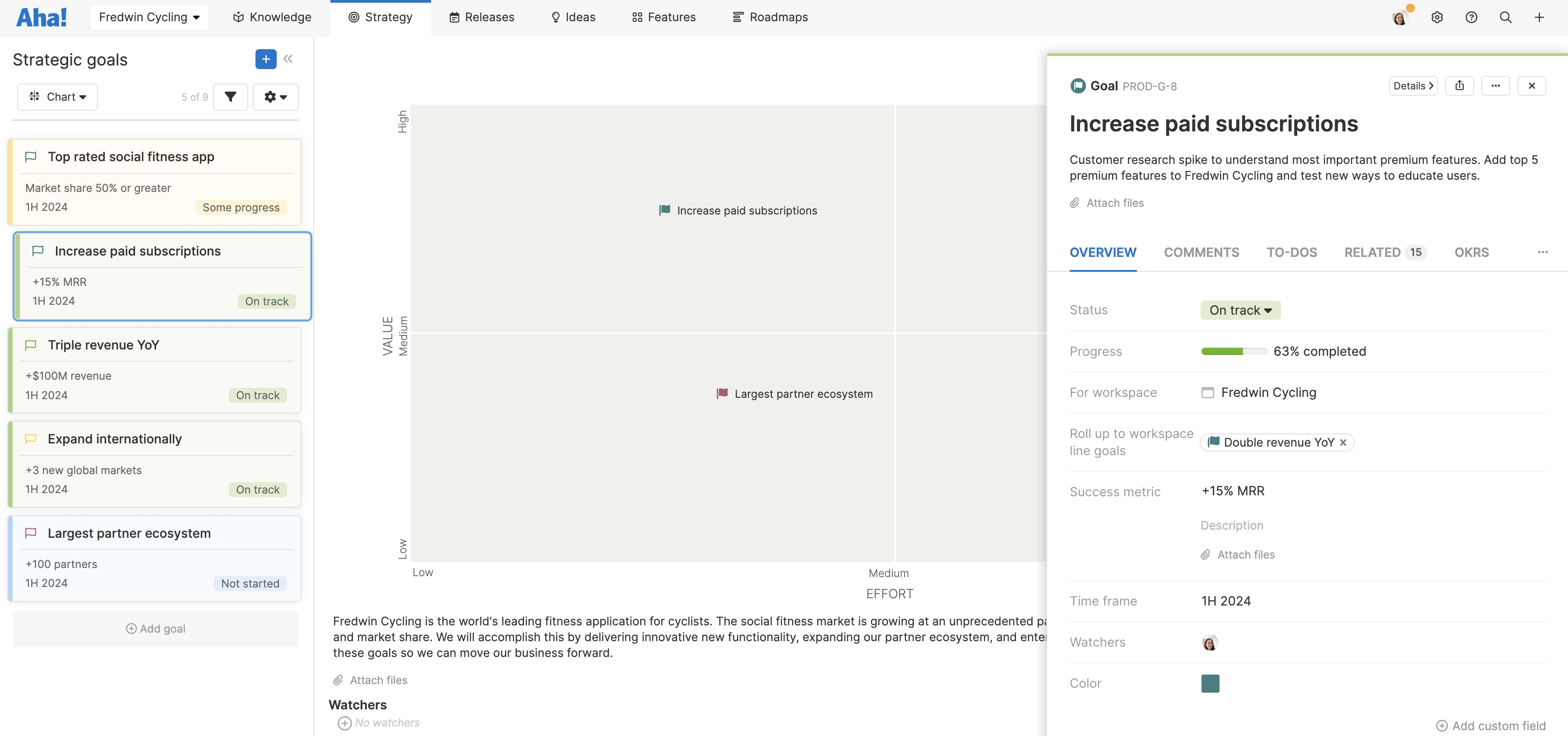
Set marketing goals
Before you define your marketing goals, you must have a clear understanding of your company’s overall vision and goals. This allows you to work backwards, setting marketing goals that serve business objectives. For example, if the business goal is to increase revenue by 30 percent, consider marketing goals around increasing the number of qualified leads or the trial-to-paid conversion rate so you can achieve this.
Here are some examples of marketing goals:
Goal: Drive leads to inside sales Metric: +500 a month |
Goal: Raise trial-to-paid conversion rate Metric:+ 5% |
Goal: Enhance social media presence Metric: +800,000 followers by year end |
Setting goals that are measurable and time-bound helps you demonstrate how your marketing strategy will deliver against the company’s goals. It also helps the team plan campaigns and promotional activities that deliver against companywide strategic directives.
Identify the target market
Your target market is the group of customers most likely to buy your product or service because it provides a meaningful benefit to them. This is determined through an in-depth understanding of customers who want or need what you are offering. It is important to identify specific customer segments within your overall market so you can refine your marketing approach for each group.
During your marketing strategy analysis covering each customer segment, distill everything down to following information:
Geographic, demographic, and behavioral characteristics
Market size and growth potential
Competitive activity
Risk factors
Approach for serving the segment
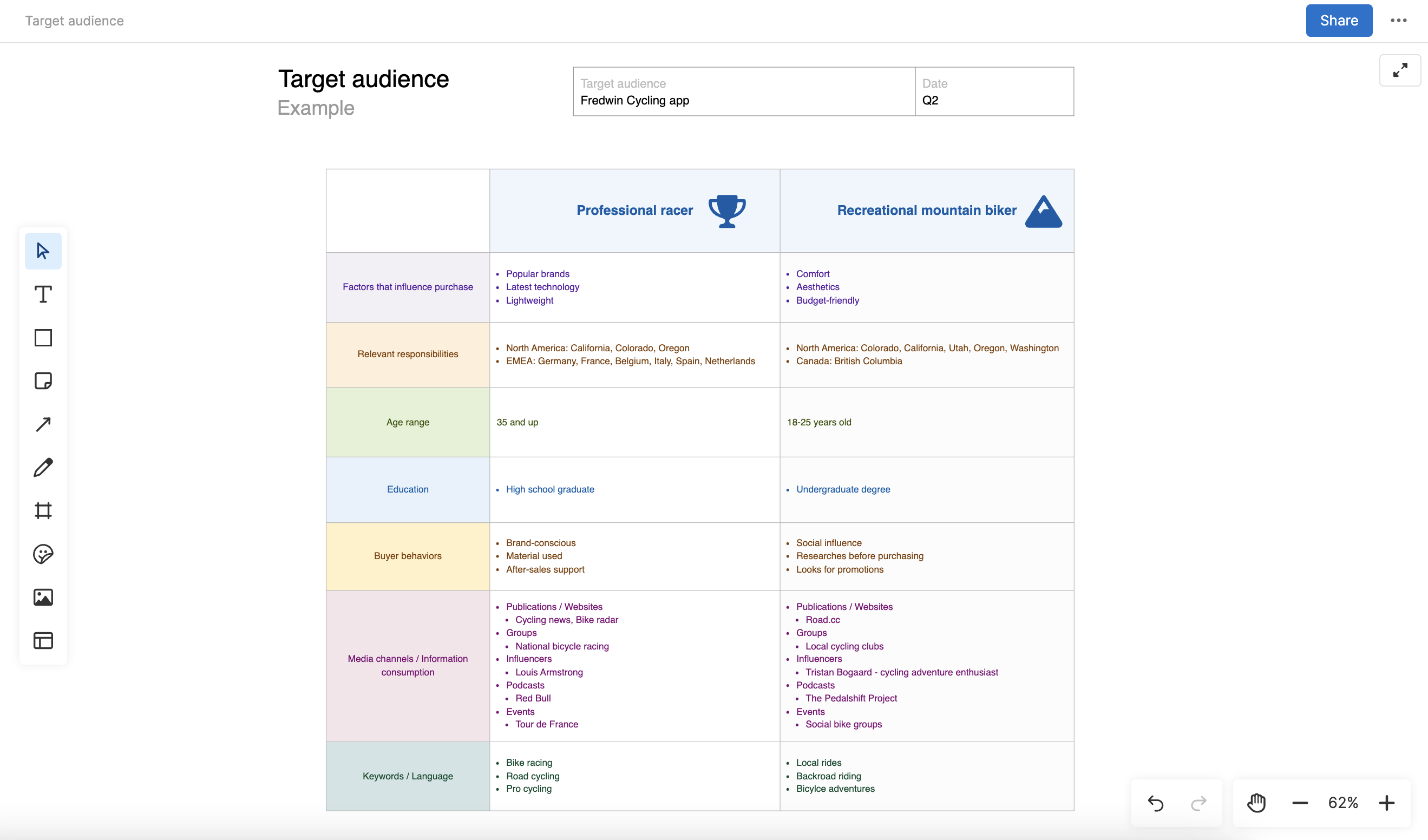
This exercise helps you evaluate market opportunities and target the people most likely to buy your products. Once you have defined your customer segments, create detailed personas that describe your ideal customer. Include key characteristics, such as their goals, challenges, likes, and dislikes. This helps the marketing team craft messaging that is tailored for each audience.
To help you get started, try this target audience template. It will help you document the defining characteristics of your target personas — so you can create a strategy that resonates.
Define your target audience in Aha! software. Sign up for a free trial.