How to set marketing goals
Goals are an essential component of your marketing strategy. They are often the place you start. Goals set the direction for what needs to happen for your product or service to do well in the market and are the foundation of the plan you build to get there.
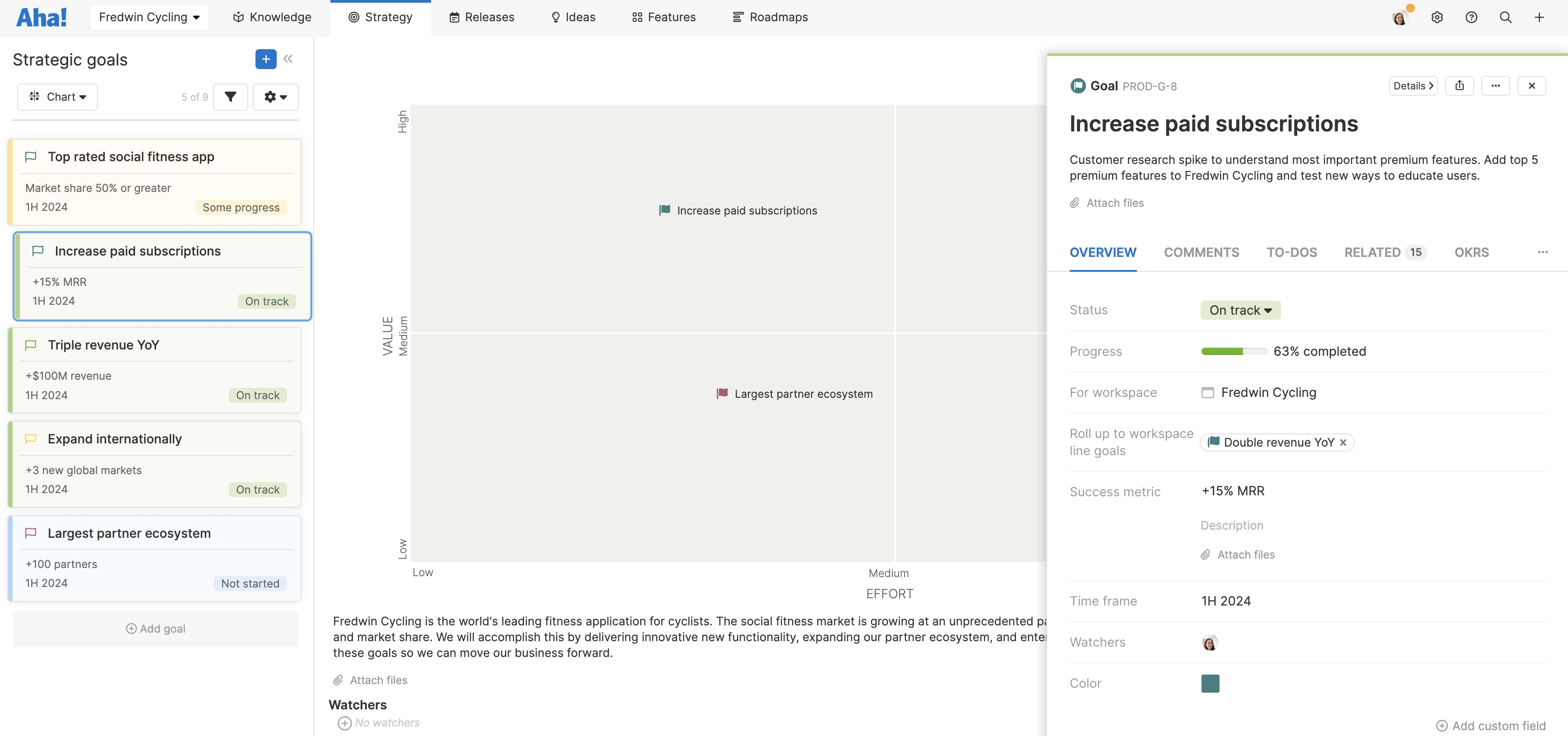
The purpose of marketing is to reach your target audience and communicate the benefits of your product or service — so you can successfully acquire, keep, and grow customers. So, your marketing goals must relate to the specific business objectives your company wants to achieve. A top-down hierarchy of goals keeps your marketing plan aligned with the business strategy and shows the impact of marketing.
Setting focused, realistic, and quantifiable goals upfront establishes a true north for your marketing efforts. This demonstrates the strategic importance of what the team is working on and empowers you to show leadership why your marketing plan is the best approach.
Jump ahead to any section:
Marketing goal frameworks
Many organizations use a goal management framework to set marketing objectives. Frameworks provide a structured approach for creating relevant and actionable goals. Some of the most popular frameworks include mnemonic devices to help teams remember the elements.
Here are a few popular goal-setting frameworks:
CLEAR goals
CLEAR is a goal-setting approach that combines logical and emotional reasoning. CLEAR goals recognize the collective power of the team in achieving outstanding results and focus on emotionally engaging people in the work they do.
Collaborative | Create goals collaboratively to drive momentum and internal buy-in. |
Limited | Set goals that are limited in scope and duration. |
Emotional | Choose words that make an emotional connection with the team, so everyone embraces them with energy and passion. |
Appreciable | Be ready to break large goals down into tactical action items. |
Refinable | Be willing to refine and modify your goals in response to new situations and findings. |
OKRs
Objectives and key results (OKR) is a management framework for setting company, team, and employee objectives. Three to five objectives are defined at each level and associated with key results. Objectives are often set on a quarterly basis and reviewed monthly or weekly.
Objectives | Define three to five objectives that are qualitative, time-bound, and actionable. |
Key results | Quantify each objective by setting three to five results that are based on things you can measure. |
SMART goals
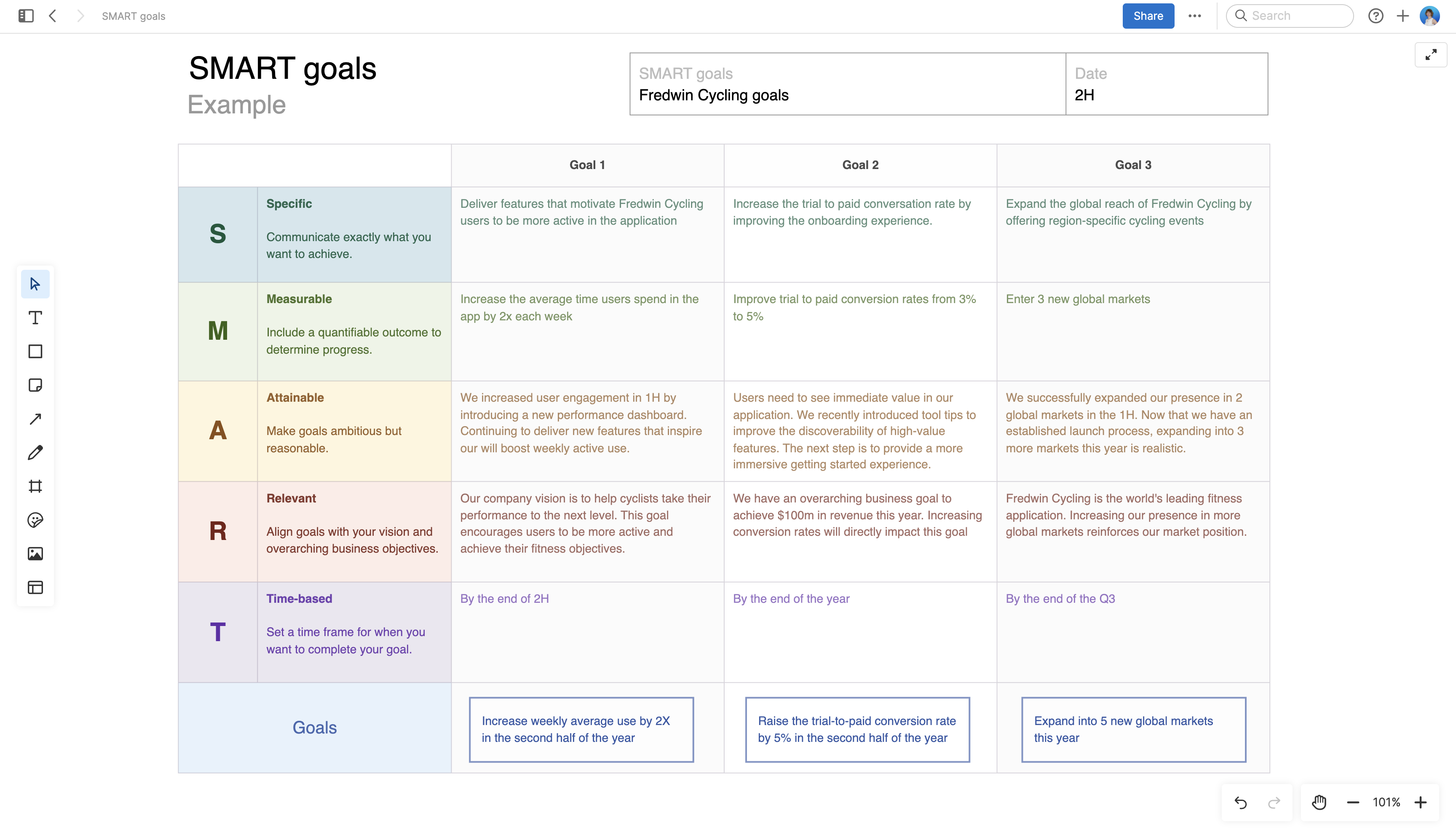
SMART is an acronym that stands for specific, measurable, attainable, relevant, and timebound. Using the SMART structure to set goals helps you identify exactly what you want to accomplish so you can deliver against your strategy.
Specific | Define goals that are clear and unambiguous so the team understands what you want to achieve and why. |
Measurable | Identify a quantifiable outcome so you can measure progress and determine if you meet the goal or not. |
Attainable | Set goals that are challenging but possible to achieve, taking available resources and potential obstacles into consideration. |
Relevant | Relate your marketing goals with the company’s overall vision and mission. |
Time-bound | Establish a start and end date to create a sense of urgency and help the team plan what can be accomplished during the time frame. |
Many templates exist that can help you get started with different goal frameworks. For example, the SMART goals template in Aha! software includes guided examples for setting clear objectives for your team. Give it a try.