What is a Minimum Lovable Product? (Plus, MLP vs. MVP)
Last updated: September 2024
A Minimum Lovable Product (MLP) is an initial offering you build with the intent of delighting customers from the start. It goes beyond what is required to make a product functional, aiming for a lovable experience instead. The goal is not to make people say, "Well, it works." It is for them to exclaim, "This is brilliant!"
Aha! co-founder and CEO Brian de Haaff first introduced the concept of the Minimum Lovable Product in 2013, then expanded on it in his bestselling 2017 book, Lovability. He argued that pursuing an MLP is fundamental to cultivating customer happiness, which leads to long-term business growth.
In this way, the Minimum Lovable Product serves as a counterpoint to the Minimum Viable Product (MVP). Just like it sounds, an MVP is the most basic version of a product, with just enough features to be usable and viable in the market. Many companies create an MVP as a way to quickly launch a product with limited functionality and promise to add more later. However, it is rare that this promise is kept in customers' best interests. Companies might add more features, but fail to consider what customers actually need. Or meaningful updates never come at all, leaving customers frustrated with the bare minimum and driven to seek alternative solutions.
Build more lovable products — try Aha! software.
Shifting from an MVP to an MLP mindset is how many successful product teams deliver more value to their customers from the moment a product launches — receiving lasting adoration and loyalty in return. This guide will help you learn how to embrace this way of thinking. Keep reading or skip ahead here:
Why is a Minimum Lovable Product important in product development?
Customers today have more options than ever. In particular, their relationship with technology is highly transactional. If a customer's experience with your product leaves them feeling unsatisfied, unheard, or uninspired, they will quickly move on to find something better.
A Minimum Lovable Product can help you to avoid this fate. It offers a way to differentiate your product in a crowded marketplace — from the very first interaction a customer has with your company to the product experience itself. That is because an MLP approach requires you to do the following before you build anything:
Deeply consider what customers care about.
Understand the problems they have.
Explore how to make their lives better.
Many companies bypass this upfront research, opting to launch quick and learn later. But when you pause to consider the customer experience as a whole and strive for love at every stage, customers will not only purchase your product or service — they will also want to see your company thrive.
Keep in mind that we are still talking about the "minimum" here. Lovability grows over time. You will continue to make your product more lovable as you learn more about your customers and build upon your initial product offering. But starting with a Minimum Lovable Product mindset means you will be more likely to continue prioritizing meaningful solutions over the baseline requirements.
Related:
MLP vs. MVP: A closer look
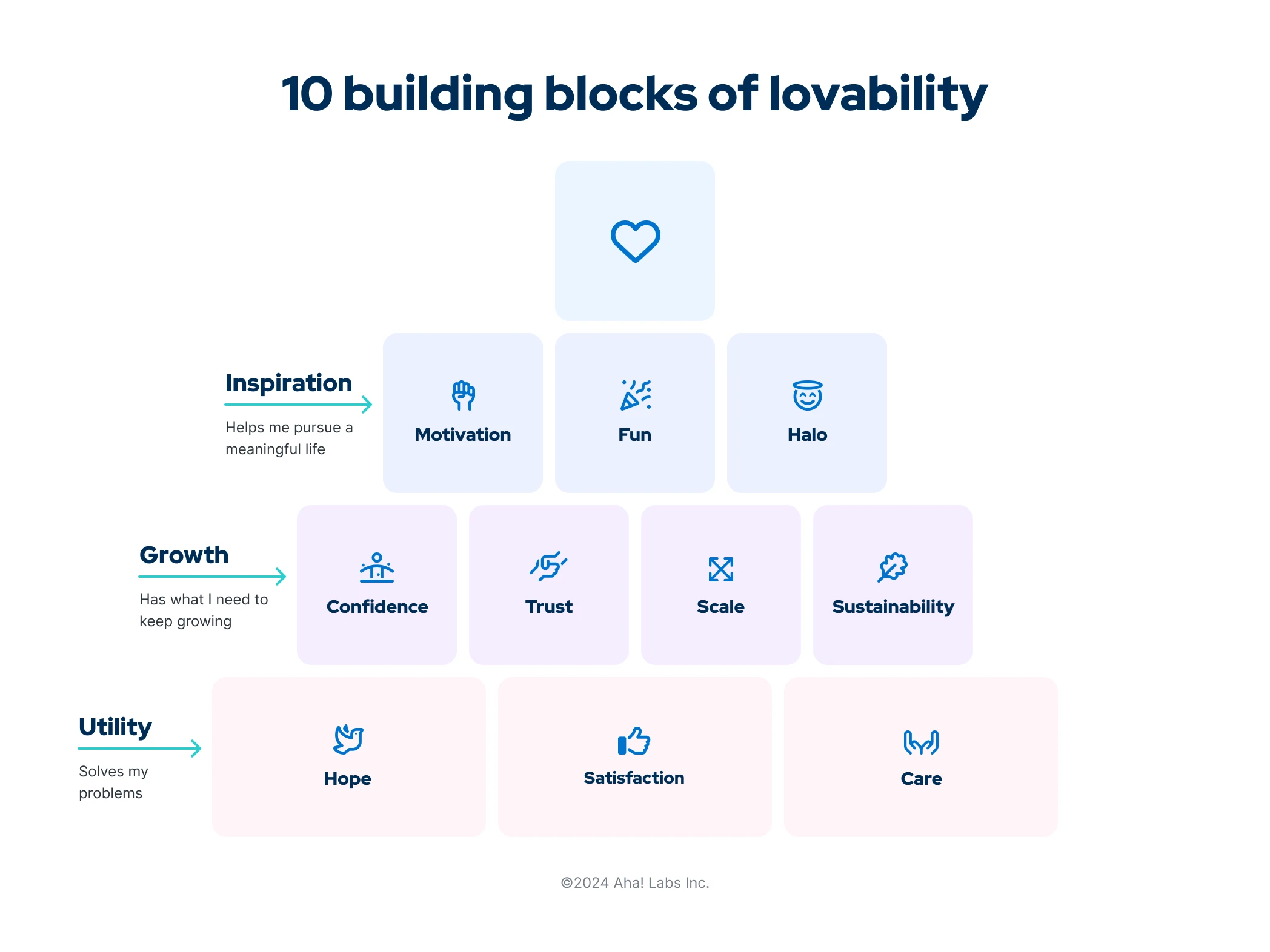
The Minimum Lovable Product builds on the concept of the Minimum Viable Product, while simultaneously rebutting it. Both involve moving fast and iterating over time. But only the MLP approach focuses on offering something highly valuable to customers from the start.
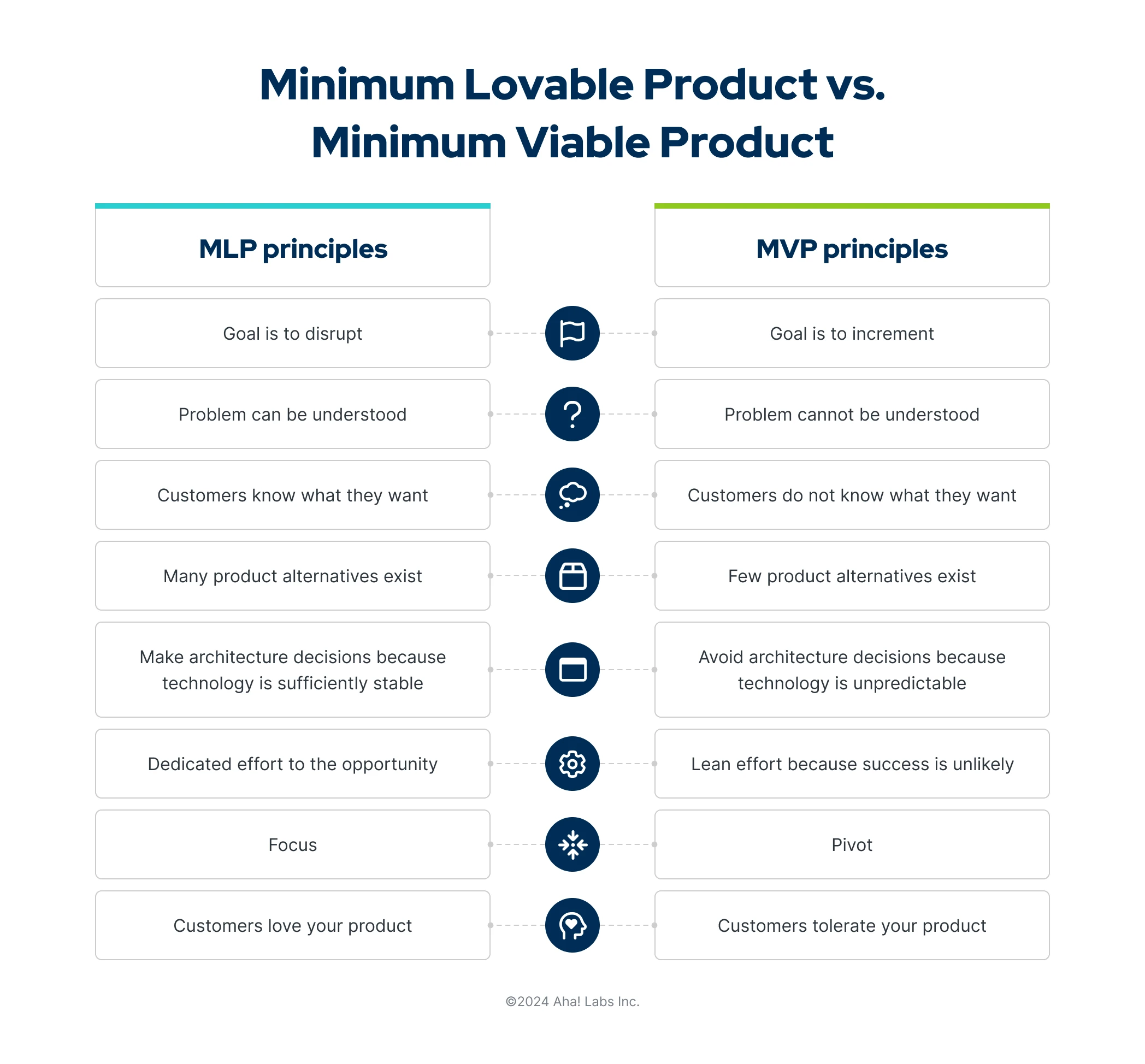
This is reflected in each approach's supporting principles. Here is an overview of the key differences between the MLP and MVP:
In short, a Minimum Lovable Product allows you to be far more confident in what you build for customers (even when other product alternatives exist) because you have a deeper understanding of the problem to you want to solve. That means you can be more disruptive with your decisions and dedicate meaningful effort to creating a product customers will truly enjoy.
The Minimum Viable Product is more about getting to market quickly and cheaply before other alternate solutions emerge. The problem to solve is hazy. The goal is to learn and increment as you go. This creates a high likelihood of pivots down the line, often resulting in a lean effort from the team — as well as a lack of clarity on what you are building toward and what customers actually need.