How product managers should do market research
Why do customers buy your product? The simple answer is they have a problem to solve. But a deeper explanation exists beyond the benefits and features of what you offer. You must understand who your customers are, what they really care about, and why they choose your product over another if you want to ensure long-term success.
This is something product managers know well. In fact, it is part of the job. Product managers are responsible for determining what target customers need and value to build a product they will love. This process is called product discovery. And it begins with research.
Market research involves gathering and analyzing information about the overall market environment, prospective customers, and competitors for your product or service. For product managers, this helps you formulate a nuanced worldview of the opportunities and threats that exist for your offering. Think of it like studying a habitat — you are exploring the elements that could affect your product's ability to thrive. Like any habitat, conditions can be variable. You will want to keep learning and observing as markets are constantly shifting (especially in the tech industry).
While research is a core product management task, the entire cross-functional product team needs to understand the market — each representative will zero in on different aspects to help your product succeed. This guide will give you an overview of what market research entails and how to get started conducting your own.
Vision, market research, user feedback — manage it all in Aha! Roadmaps. Try it free.
Why is market research important?
Understanding the market is an important part of crafting your product strategy — along with defining what you want to achieve and how you plan to get there. Market research brings external factors into consideration.
This is important because market research is critical to finding product-market fit. You need to deeply understand your market position, audience, and any alternative solutions if you want your product to succeed. This matters whether you are launching a new product, enhancing an existing offering, or entering a new market.
In other words — intuition alone is not enough. Even if you have a clear product vision and substantial industry experience, conducting regular market research often uncovers new and unexpected ways to improve your product. This can also improve your resilience as an organization.
Of course, there will always be external forces you cannot control. But if you have a deep understanding of the market environment and customer values, you will be in a better position to adapt to challenging situations.
Plus, market research enables all members of the core product team to make more informed decisions. The following are only a few examples of many, but market research helps:
Product management — Empathize with customers and understand their needs to better prioritize upcoming product work.
UX design — Make design choices that reflect how customers want to use modern products.
Engineering — Stay up-to-date with technologies used by competitors.
Product marketing — Update product positioning to resonate with what customers want to hear.
Related: How do product managers work with other teams?
What are the components of market research?
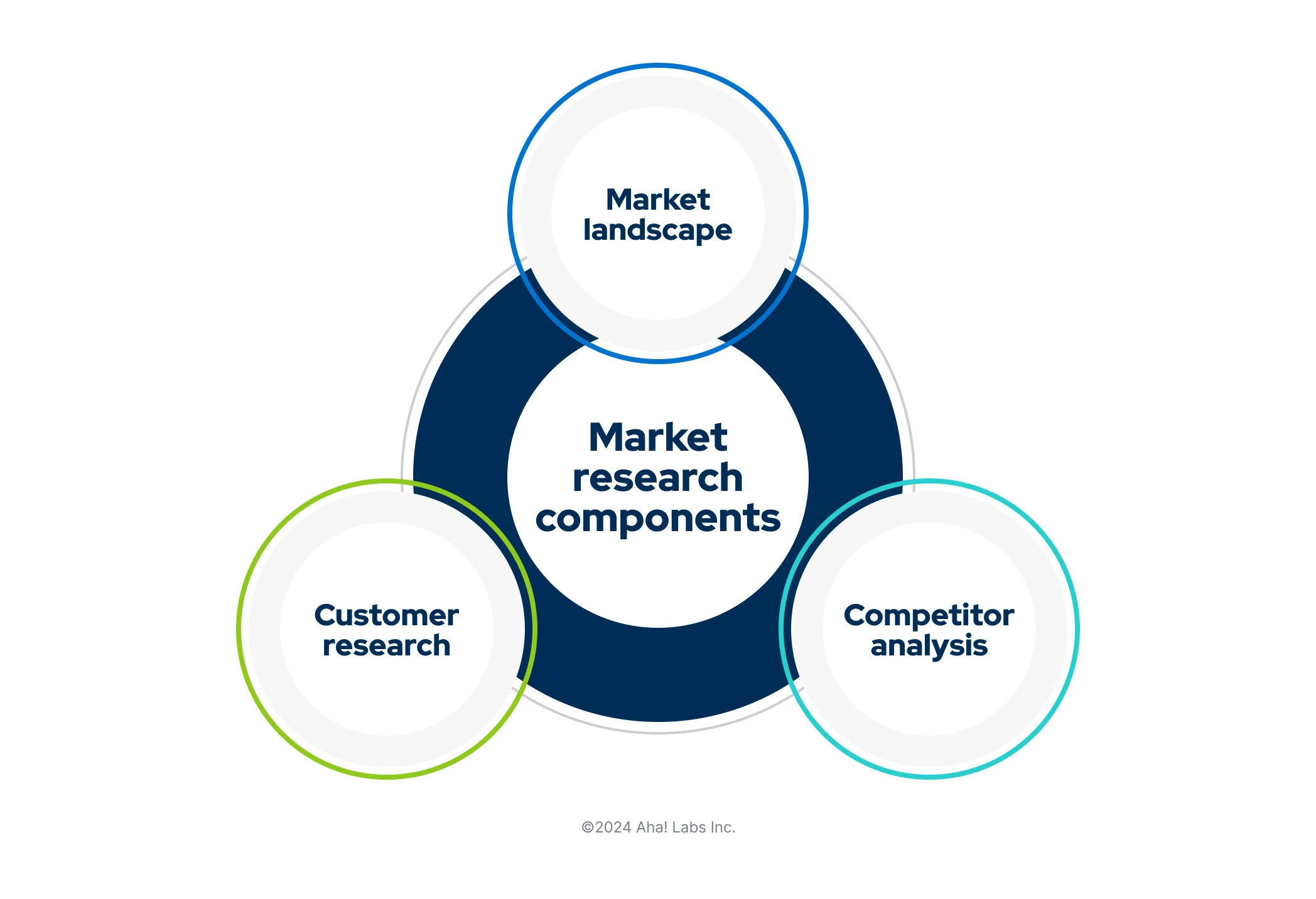
For product development purposes, you will want to explore three core components of market research — the overall market landscape, competitive analysis, and customer research.
Overall market landscape
Examining the market as a whole is a good place to start. Typically this piece of market research looks at macro-level industry characteristics and customer behavior. Below is a list of different factors to consider when researching the market landscape.
Buyer power | Ability of buyers to impact product quality, price, and customer service within a market. |
Demographics and psychographics | Similar characteristics and common beliefs your buyers share (e.g., age, income, cultural values). |
Growth rate | Quantified measure of the change in demand within the market over a given period of time. |
Market share | Portion of revenue attributed to each company in the market (including your own, if applicable). |
Market size | Number of customers and/or revenue within the market over a given period of time. |
Pricing | Current amount customers are willing or expect to pay for similar products. |
Risk | Likelihood of volatility, financial loss, or other market factors that could negatively impact your business. |
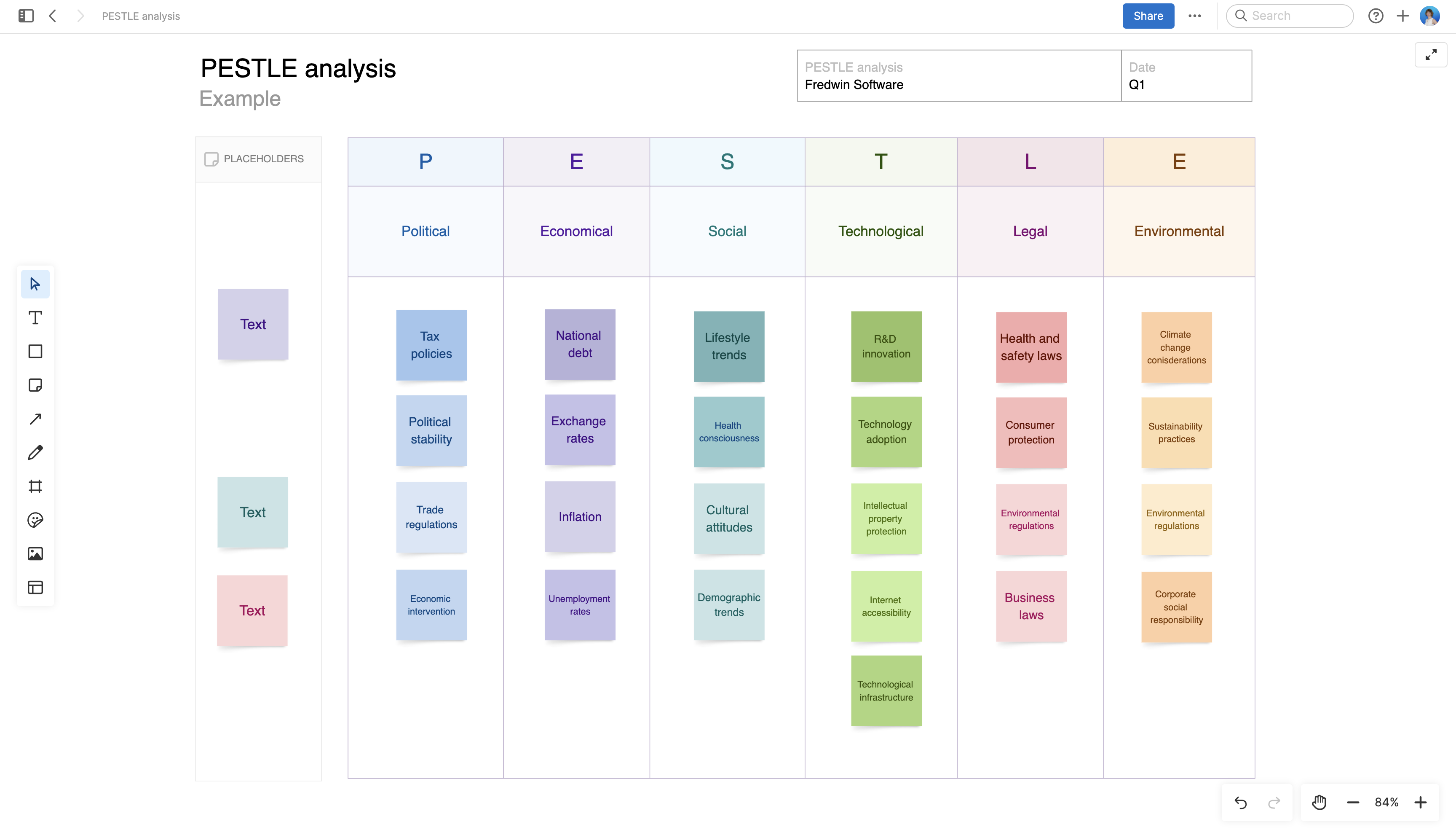
A PESTLE analysis — which stands for political, economic, social, technological, legal, and environmental — can be a helpful exercise to get your team thinking about the broader market and where your product will fit into it. Give it a try in Aha! software with this whiteboard template: