How to measure and achieve product-market fit
Define product-market fit to find demand — plus sustainable growth
Last updated: February 2026
Product-market fit is all about how well your product addresses a specific market's needs — plus whether you have enough of a customer pipeline to support long-term growth. Learn about why product-market fit is important, its key components, how to measure it, and more.
Product-market fit describes how well your product meets the demand of a viable market. (That is a textbook definition, anyway.) Here is another definition that we like better: Product-market fit is when your product is something that people really want to buy and you have enough customers to support your growth over time.
Finding product-market fit is vital to getting product development right. Maybe this seems obvious — who would build a product that no one wants to buy? No one. At least, not intentionally. But it happens more often than you might think.
Deliver more value with Aha! Roadmaps. Sign up for a free trial.
You can find countless cautionary tales. Many well-meaning founders and product builders have put passion above product-market fit. Those that do so often confuse their own excitement for a solution to a problem that may not exist in the market. If a product does not fit, it tends to fail.
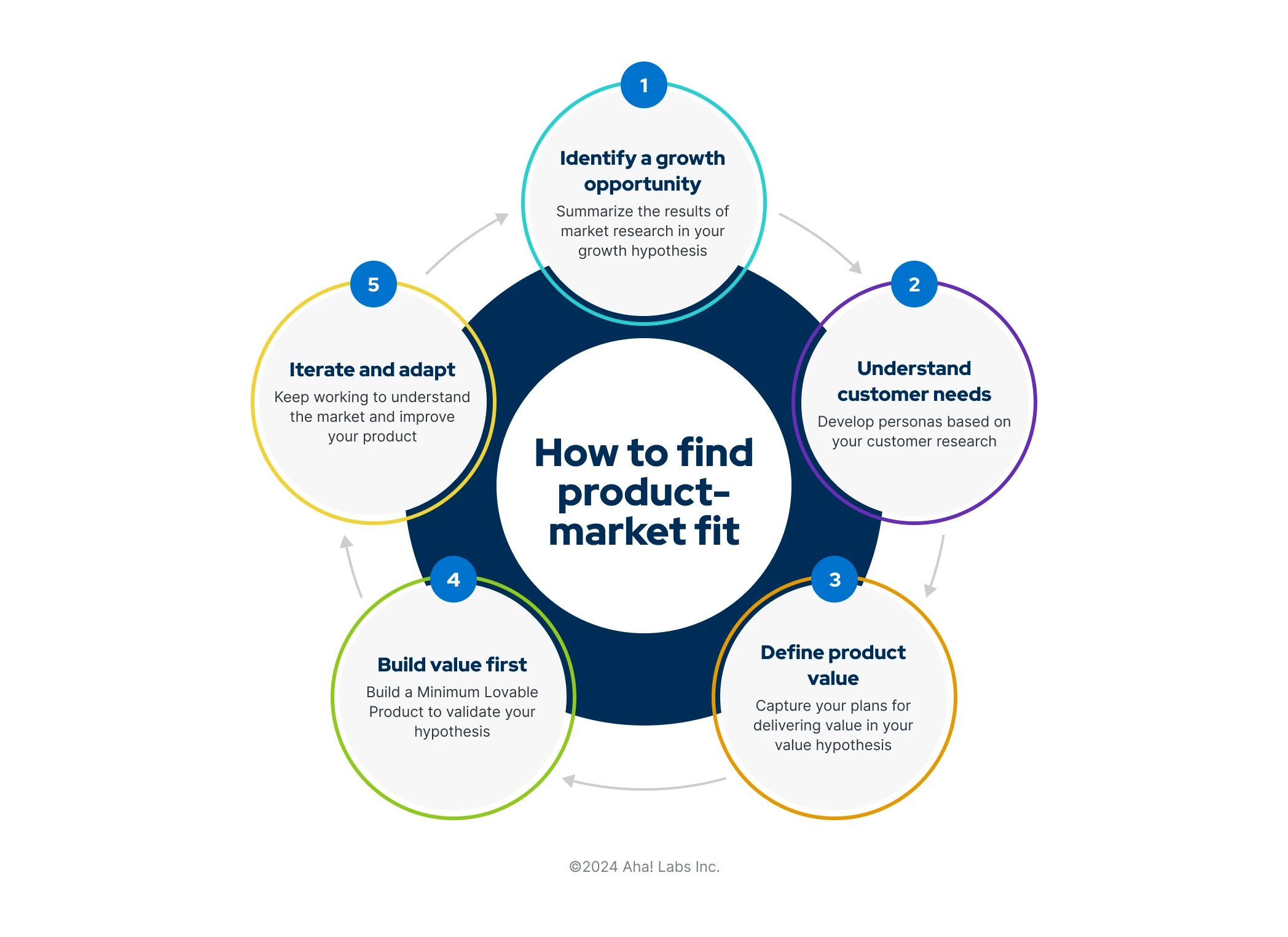
Product-market fit is essential to lasting product success. It is like a special ingredient with no substitutions. But the process of finding it (and recognizing when you have) is not always straightforward. Many product experts have shared their take on what product-market fit really looks like. As a product builder, it is wise to seek out varied perspectives to inform your understanding of the topic. But this guide will walk you through the fundamentals as a start.
Skip ahead to any section:
Why is product-market fit important?
You can have a brilliant idea. A compelling story. A talented product team. And even a fully functional product that manifests all of these things. But if no one wants to buy what you are offering, then you will not get anywhere. This is why product-market fit matters.
While you may think product-market fit is primarily a startup issue, it is just as important for established companies with successful product portfolios. New and existing products require the same level of attention to product-market fit.
Some startups fall into the trap of conflating early enthusiasm from a few people with a real market opportunity. For established businesses, the challenge is looking beyond positive feedback and requests from a few to an actual need by many. No matter how innovative you believe your idea is or how badly someone wishes your product had a certain feature — this does not mean you should build it.
Related:
In both scenarios, product-market fit is a counterbalance to egos and excitement. If you cannot confirm that enough demand exists to sustain growth and eventually turn a profit, it will be hard to win. Maybe even impossible. Finding product-market fit requires you to question what you think you know and prove how you will succeed. This is challenging, ongoing work — it is core to ensuring your long-term success and continuously delivering product value.
Of course, those other elements still contribute. A solid strategy, bold leadership, and a high-achieving product development team — getting all of these strong building blocks in place bodes well for the future of any business.
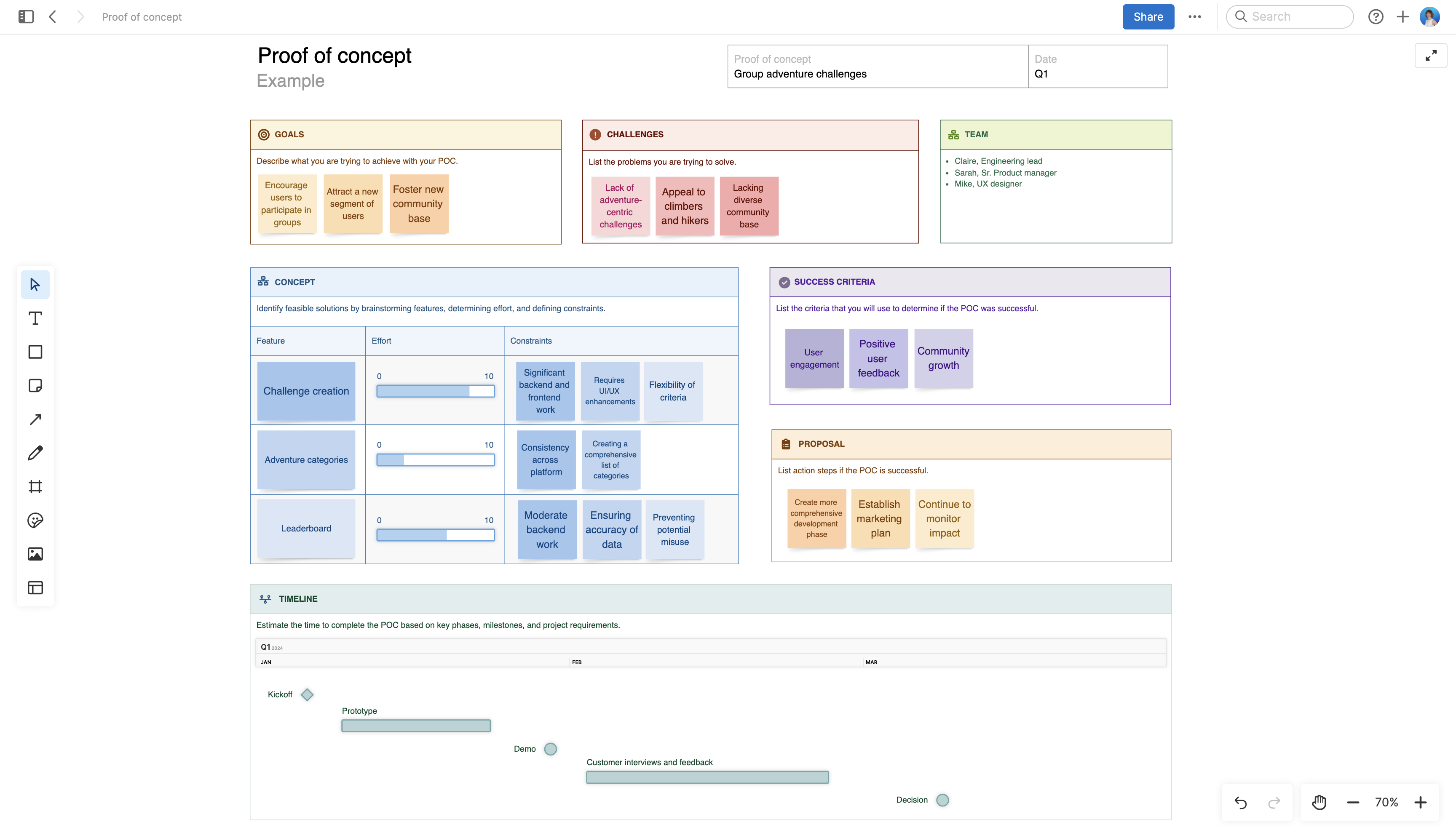
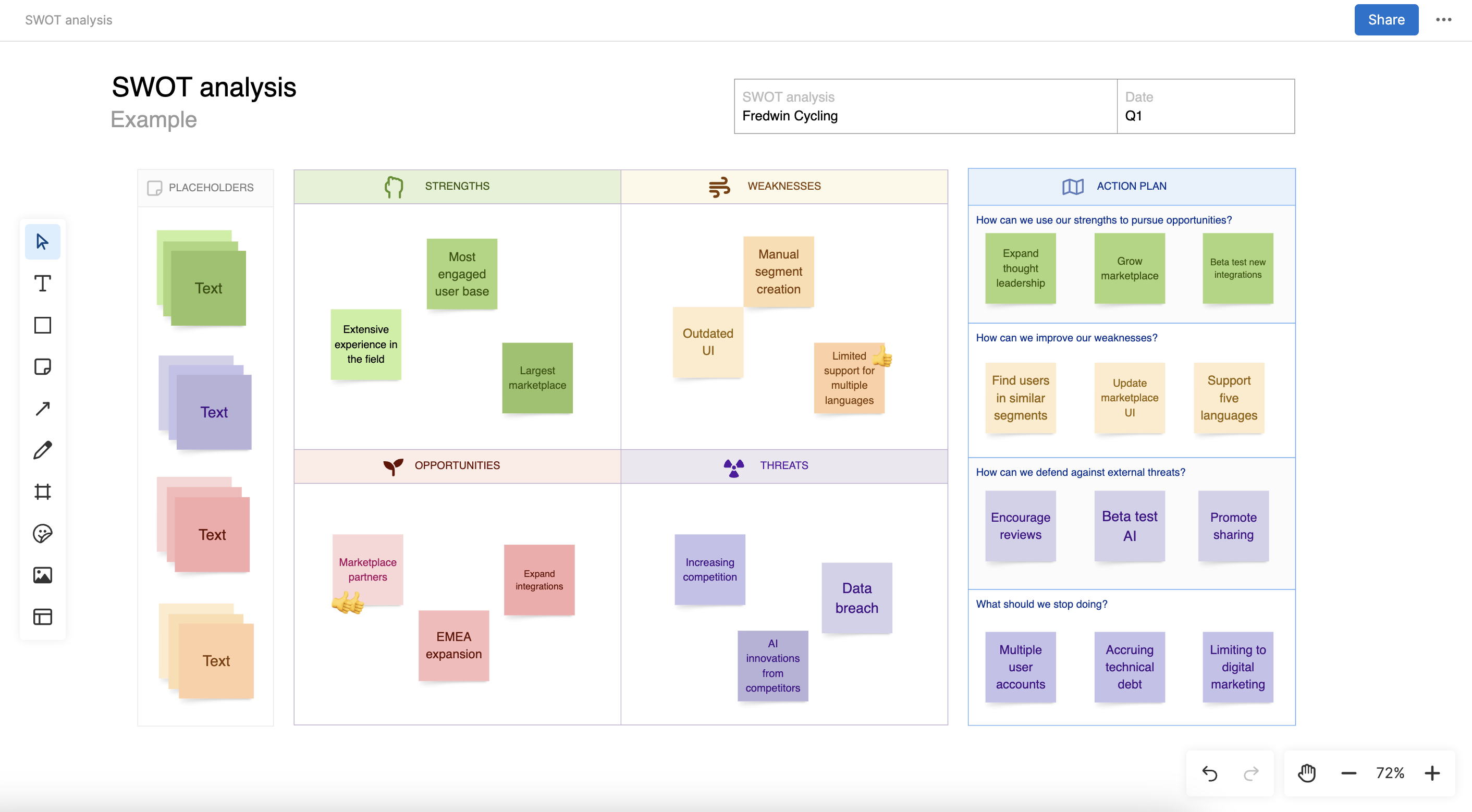
Certain frameworks can also help you to validate your likelihood of product-market fit success. For example, completing a proof of concept upfront is one way to examine the feasibility of your product idea from multiple angles. Aha! software includes this template: