How to plan releases across teams
Last updated: April 2024
A product manager’s job includes managing product releases and leading cross-functional teams to ensure greatness. But what exactly is a release? Does every team need to have releases — even agile teams? How is a release different from a sprint?
From the customer’s perspective, a release is any new functionality that improves how they interact with the product. From the organization’s perspective, a release (also called a launch) is all the work that must be completed to deliver this new experience by a planned date. Regardless of the development methodology, releases are critical to providing customers with a Complete Product Experience (CPE), in which every customer touchpoint is optimized to deliver the best holistic experience possible.
Create. Ideate. Roadmap. Build. Do it all with Aha! — free for 30 days.
Providing the best new customer experience requires coordinating the participation of multiple groups within an organization. The individuals responsible for planning, communicating, executing, and collaborating on a release are known as the cross-functional product team.
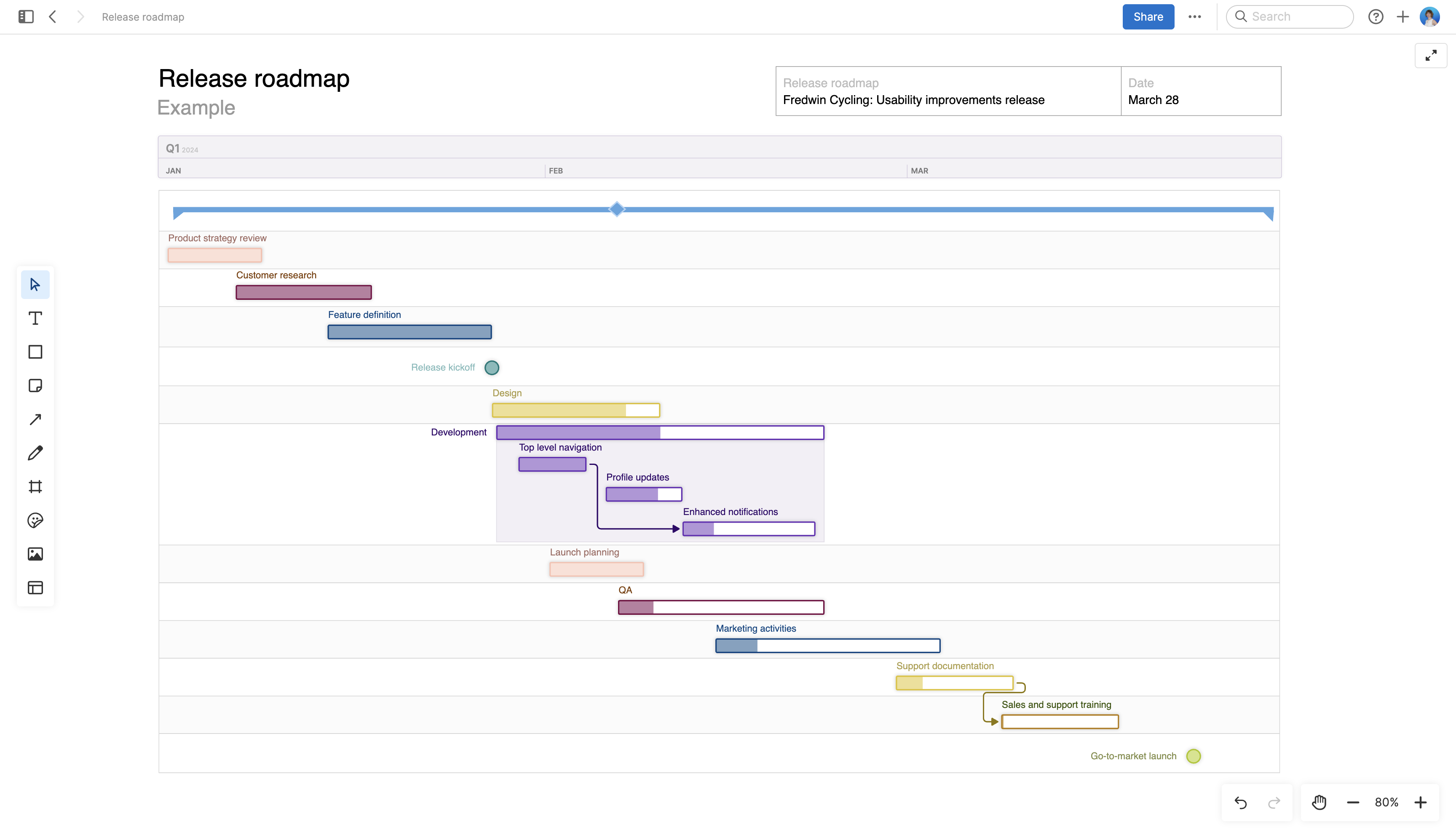
A release is more than a brief development sprint, and a cross-functional team is more than a development team. Although some organizations may release weekly or monthly (on a sprint-like cadence), it is important to remember that a release comprises all the work that goes into a new product experience — including the work of groups such as UX, sales, marketing, support, and operations.
Jump ahead to learn more:
Building the cross-functional release team
When organizing a release, think about all the jobs that need to be done to provide customers with a great new experience — from design and go-to-market activities to sales enablement and support documentation. The cross-functional product team includes representatives from each of these key functions. Members of the cross-functional team own the work of their functional group and ultimately are responsible for the release’s success. These team members should be strong leaders and subject matter experts in their field. They should also have the authority to make decisions for the functions they represent.
These are the departments and roles that participate on a cross-functional team at a standard midsize or large company:
Department or group | Team role or function |
Documentation | Writes and updates technical documentation, such as release notes or support content |
Engineering | Owns the work of development teams, including estimation, sprint planning, and acceptance criteria |
Finance | Represents the financials and resource allocation — will likely not attend every meeting |
Legal | Represents product and company legal interests — will likely not attend every meeting |
Marketing | Communicates product positioning and awareness — may include product marketing, field marketing, and public and analyst relations |
Operations/IT | Assists with deployment of the release features |
Project management | Handles day-to-day advancement of work and unblocks team members (could also be scrum master) |
Product management | Leads the product team in planning, managing, and delivering the new product experience |
QA | Ensures product quality |
Sales | Prepares the sales team to communicate changes in the value proposition or demo flow |
Support | Prepares messaging and training about the release experience in support of customers |
UX | Researches and designs optimal customer interactions with the new product experience |
So who plans and manages the release process? This can vary from company to company based on size and organization. Though large organizations often have designated project managers, release managers, delivery managers, or program managers who own this effort, the product manager will always have an instrumental role and often performs overarching project management tasks as well.
Managing the cross-functional team
Cross-functional product teams work best when they feel invested in the product, have clear goals, are stable for the duration of the release, and meet regularly. Each member of the team is responsible for two-way communication: sharing perspective and bringing important information about the release back to their group. The product manager ensures that team members collaborate, work through dependencies, and meet target dates. Product managers are responsible for the success of the group, so it is incumbent on them to lead the product team with a clear vision and help resolve conflicts.
Harnessing the participation of various stakeholders can be challenging, but the result is organizational support and better products that delight customers. Product managers can motivate their teams by defining the strategy behind their plans, collecting feedback, and communicating broadly and frequently.
Related: