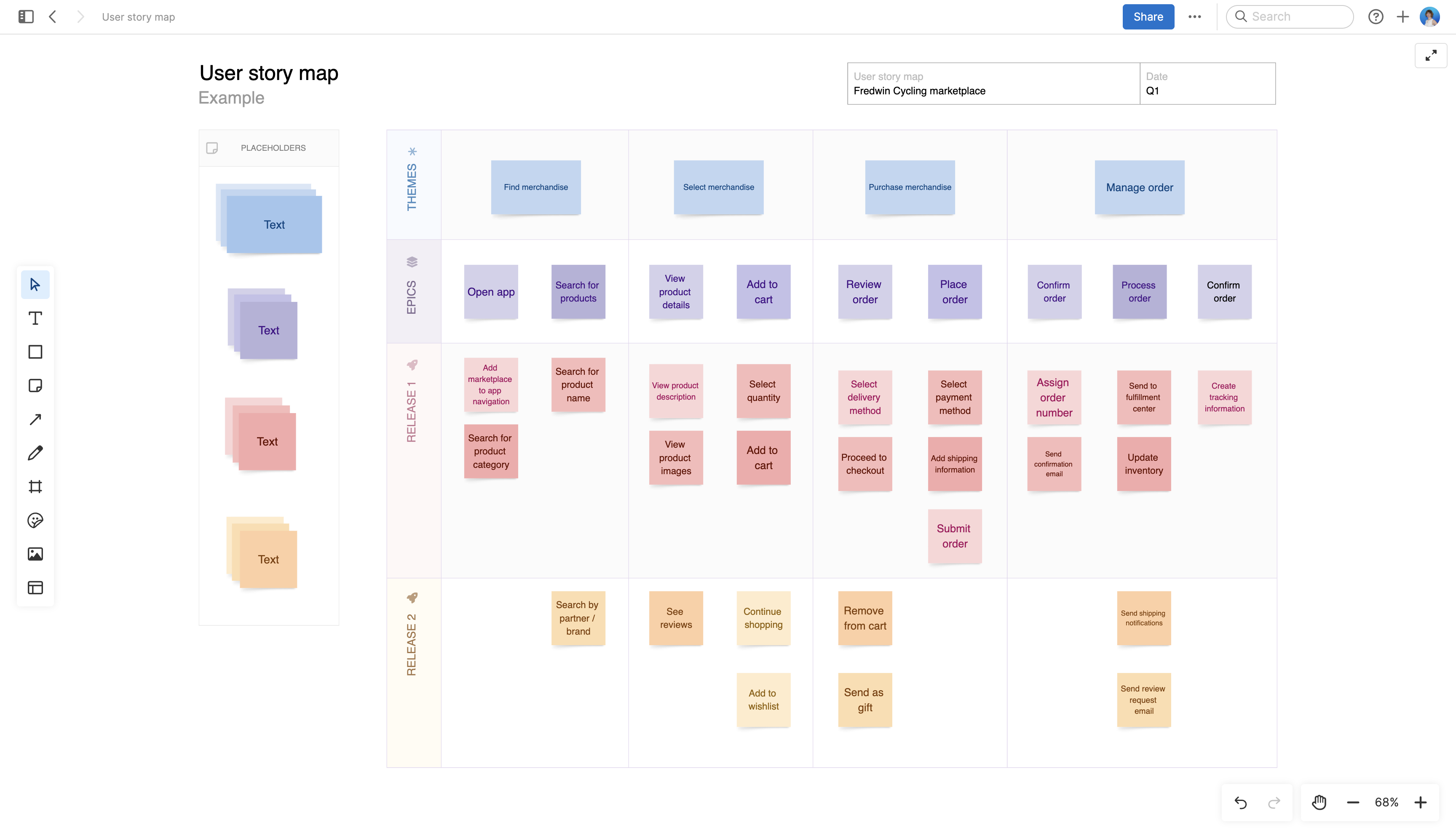
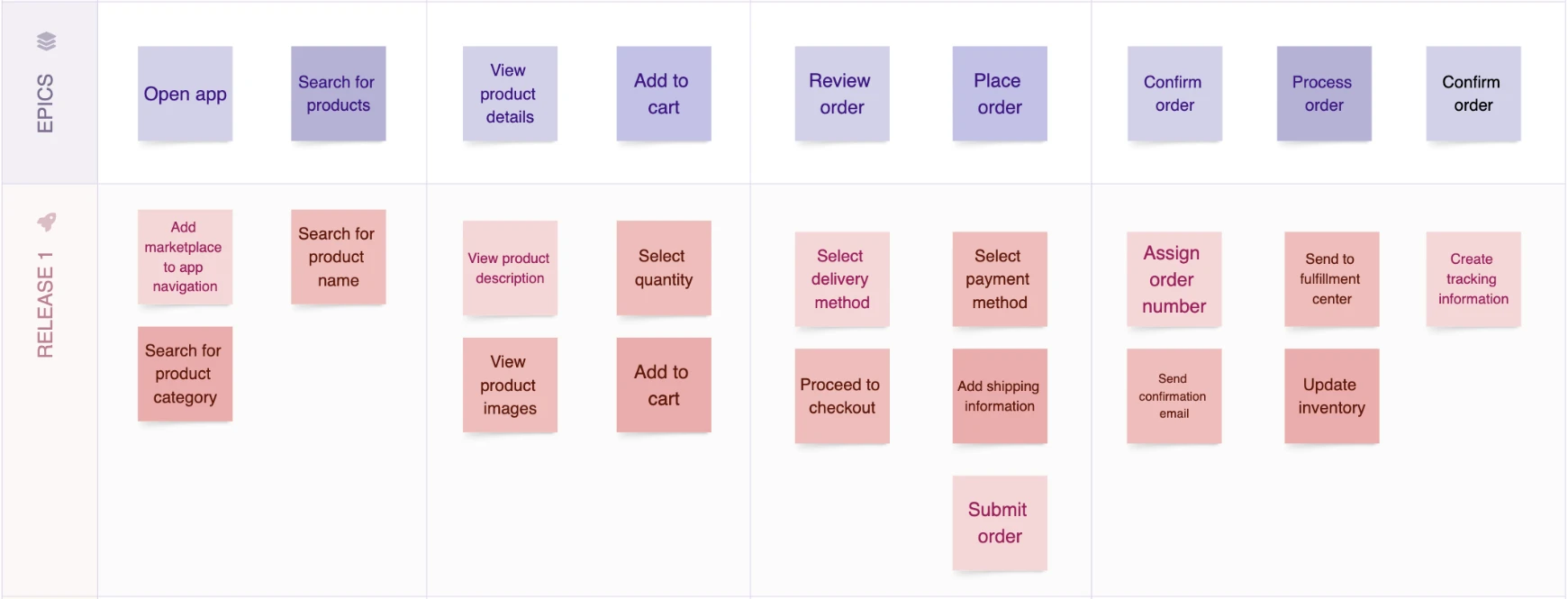
User story mapping employs the concept of user stories — which communicate requirements from the perspective of user value — to validate and build shared understanding of the steps to create a product users love. You want to write user stories in a format that captures business value and can be completed within a development iteration (usually called a sprint).
The user story format — As a [type of user], I want to [action] so that [benefit]. — encourages you to think about product interactions from a user’s perspective.
In this guide, we break down the process of creating a user story map into six steps. These steps are not prescriptive — use them to help you adopt a new user story mapping process or improve an existing one.
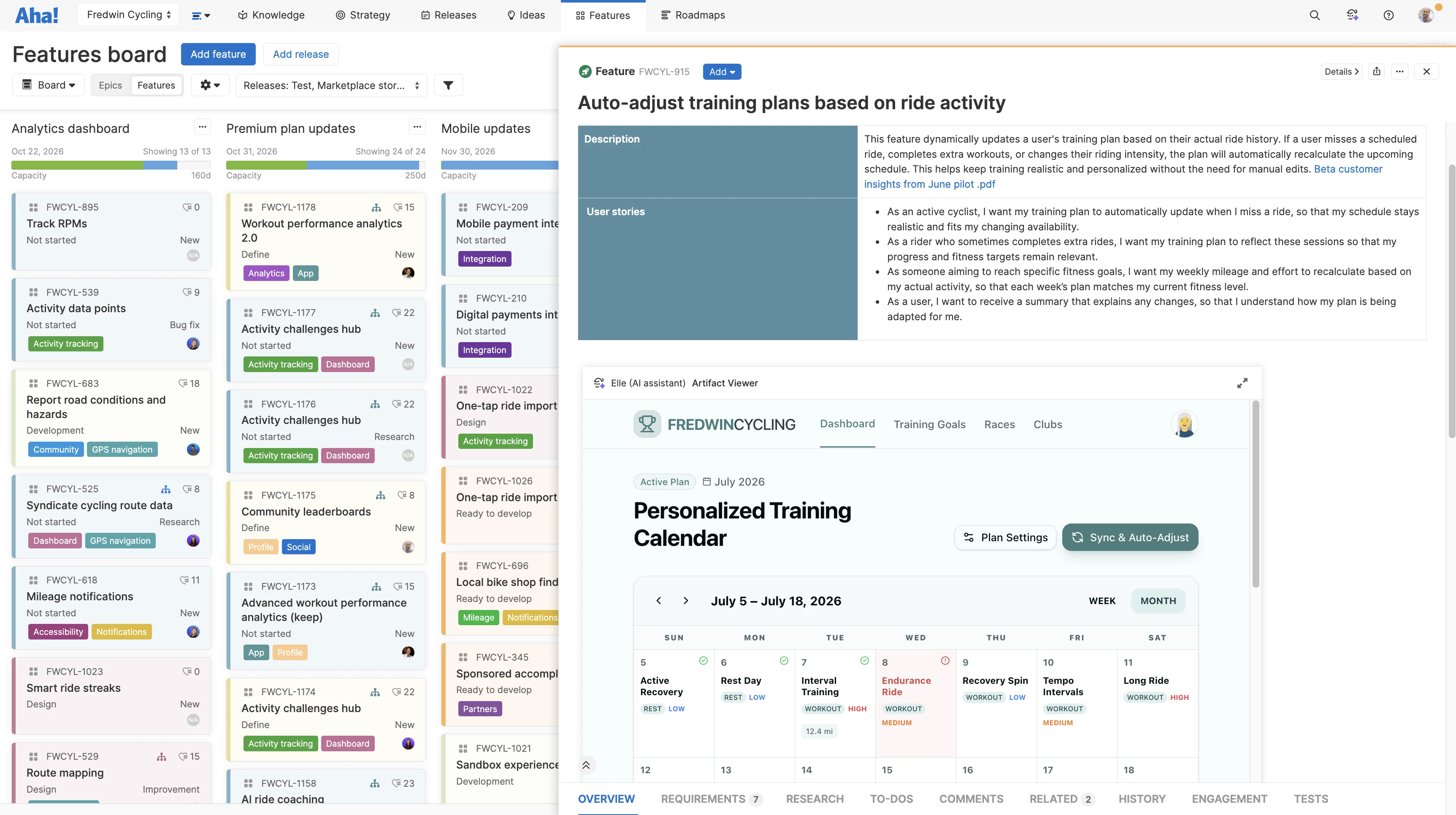
If you use Aha! software, you can take advantage of built-in user story mapping functionality in a couple of ways. Dynamic user story mapping is built into the features section of Aha! Roadmaps. You can also get started quickly with the user story map template, or visit this guide for even more template options: User story templates + user story mapping templates.
Jump ahead to any section to learn more. In this guide, we will cover:
What are the benefits of user story mapping?
Mapping user stories can make it easier for you to build experiences your customers love. When done well, user story mapping helps you:
Focus on user value: When you build a user story map, you are envisioning the product from a user’s perspective. The resulting story map helps you identify how users experience the product and what efforts will lead to the best outcomes. This forces an outside-in approach to product roadmap planning.
Prioritize the right work: Building a holistic visualization of all the work necessary to deliver a Complete Product Experience (CPE) can help product managers decide what is most important, organize work into releases (the delivery of a new customer experience), and de-prioritize work that has less user value.
Drive clear, well-sized requirements: User story mapping can help you write stronger users stories by providing a visual representation of how large items of work break down into smaller ones, and by illustrating how work items fit together.
Deliver new value early and often: User story mapping helps you group your work into iterations and releases based on how valuable it will be to users. Working on the most important things first means you can deliver the most customer value faster, get early feedback from customers, and learn quickly what product features will be most valuable.
Expose risks and dependencies Creating a story map of how users interact with a product can give you a global view of the product so you can visualize potential blocks, risks, and dependencies that must be mitigated in order to deliver the product successfully.
Build team consensus: The process of conceiving and building a user story map provides a shared view of the customer experience and the work that is required to improve it. The exercise encourages conversations that lead to a shared understanding of what to build, when, and why.

Related:
Top
Who should participate in user story mapping?
User story mapping is a collaborative exercise that helps align cross-functional teams around building a product that will be better tomorrow than it is today. For this reason, product managers should involve anyone whose work contributes to delivering greater customer value.
Since a user story map requires a holistic view of the product, it is helpful to collaborate with team members who contribute to the CPE. This includes folks from:
Related: