About the 5 Whys template
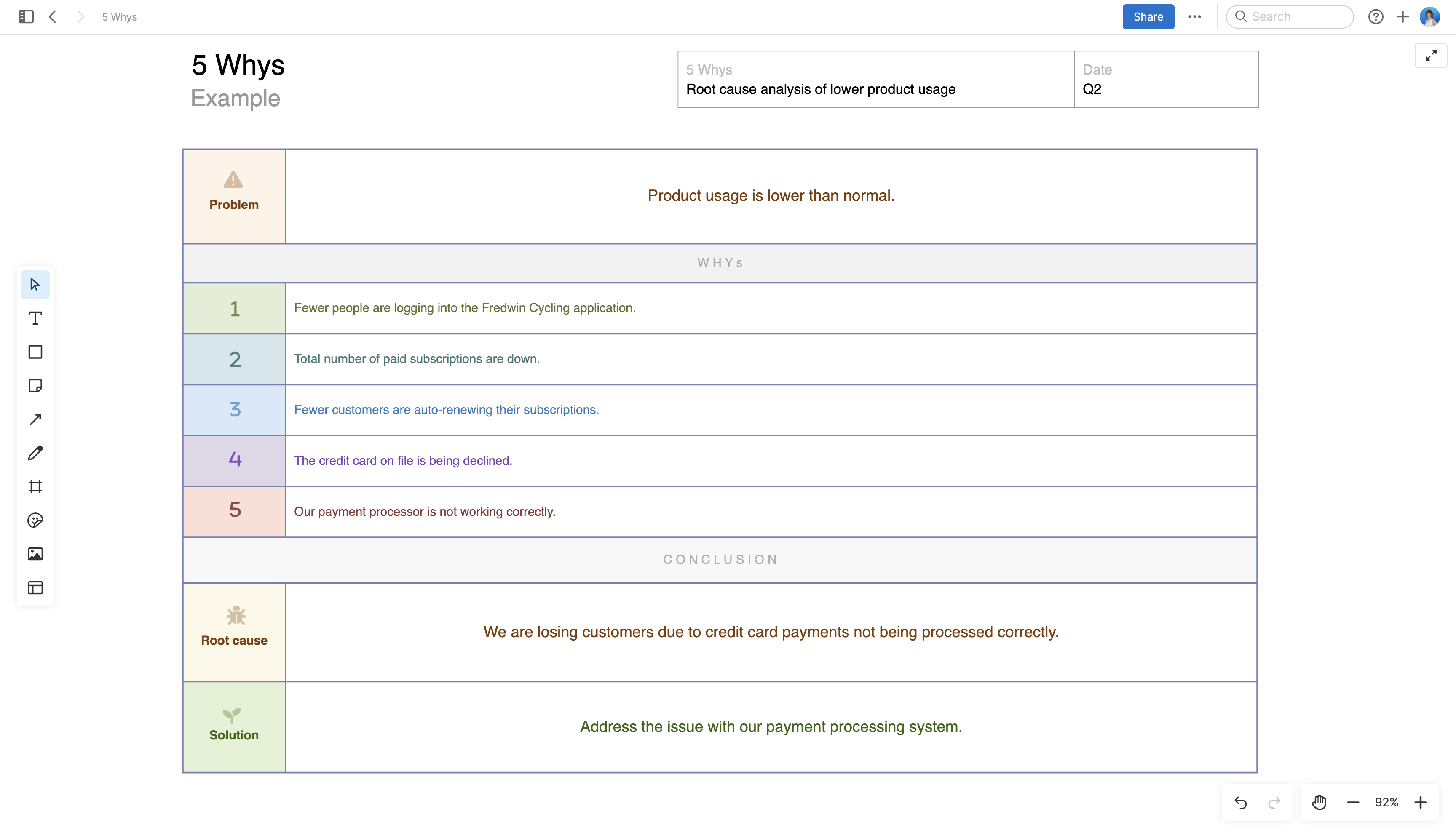
The 5 Whys exercise helps teams solve problems in a structured and efficient way. Use this template to uncover the underlying reasons behind a product- or customer-related challenge. The format prompts you to ask "Why" five times — guiding the team closer to the source of an issue.
Included in the 5 Whys template
This 5 Whys template includes built-in capabilities such as:
A menu of classic whiteboard features (including shapes, sticky notes, grids, and emojis)
Quick access to best practices and a pre-filled 5 Whys example for guidance
Inline comments to gather feedback, questions, and ideas from teammates
Presentation frames to easily share your work
How to use the 5 Whys template
Imagine that product usage is down or you see a drop in customer engagement. To determine the root cause, some teams use the 5 Whys brainstorming technique. This 5 Whys template gives you a structured way to define the problem, ask the group why it occurred, and surface possible solutions. Repeating the same question helps you move past symptoms and uncover deeper reasons for an issue.
Give it a try the next time you face a thorny problem or need to make an important decision. It can also be useful when assessing the potential value of features in your backlog. Or try it during a retrospective meeting to uncover why something did not go as planned.
Best practices
Reflect on core challenges and solve them together.
Define the problem: Clearly articulate each issue you need to address. Gather colleagues from different teams who can contribute unique perspectives to the discussion.
Ask "Why": Ask your first "Why" to identify the most obvious cause of the problem. Then, keep asking "Why" to uncover the underlying cause. Repeat this process at least five times or until further questioning is no longer productive.
Document reflections: Capture responses to the 5 Whys in this template so you can visualize your thinking. Then, the team can focus its analysis on areas within your control.
Implement solutions: Come up with appropriate solutions or corrective actions based on the identified root cause. Once you address the problem, monitor the results to confirm that you truly solved it.
FAQs about the 5 Whys template
Why is the 5 Whys approach important?
The 5 Whys approach helps product teams identify the fundamental cause of problems instead of merely addressing symptoms. By repeatedly asking "Why," product managers can gain deeper insights into issues — and then use what they learn to implement the right solutions.
What are some 5 Whys best practices?
As you ask each "Why", be straightforward and objective with your answers. Avoid jumping to conclusions or moving through this exercise too quickly. Engage members from different areas of the product team who will bring diverse perspectives and insights.
How should the findings from a 5 Whys session be documented?
Write each question and answer it in the whiteboard template along with agreed-upon actions or lessons learned. Use inline commenting to capture insights from collaborators or add links to related information. This creates resources the team can refer to if similar issues occur in the future. It can also help you track the effectiveness of your implemented solutions.
Is this template free to use?
Yes. To use this 5 Whys template, sign up for a free 30-day trial of Aha! Whiteboards. (You can also try this template in Aha! Roadmaps if you need a complete product management solution.) Easily customize the template to suit your needs, then share it with as many people as you want (for free) to streamline collaboration.