About the problem statement template
Product teams accumulate dozens of potential problems to solve: customer friction, internal workflows, technical debt, team coordination gaps. The challenge is understanding problems well enough to know which solutions will actually help.
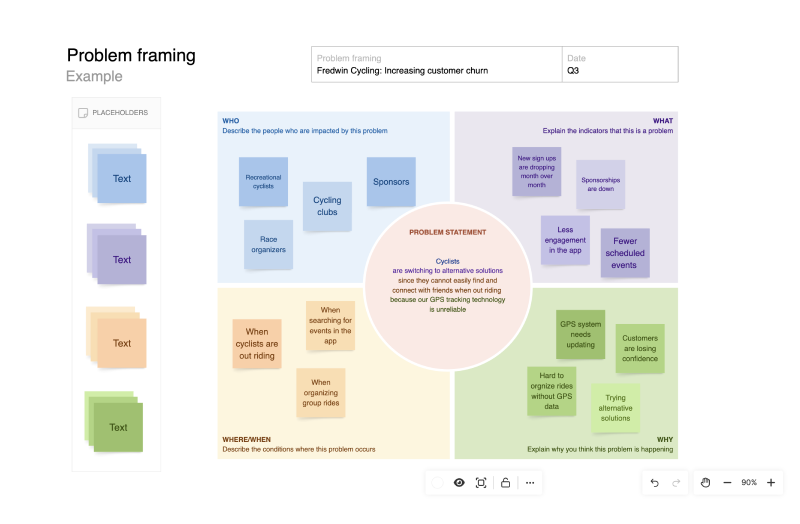
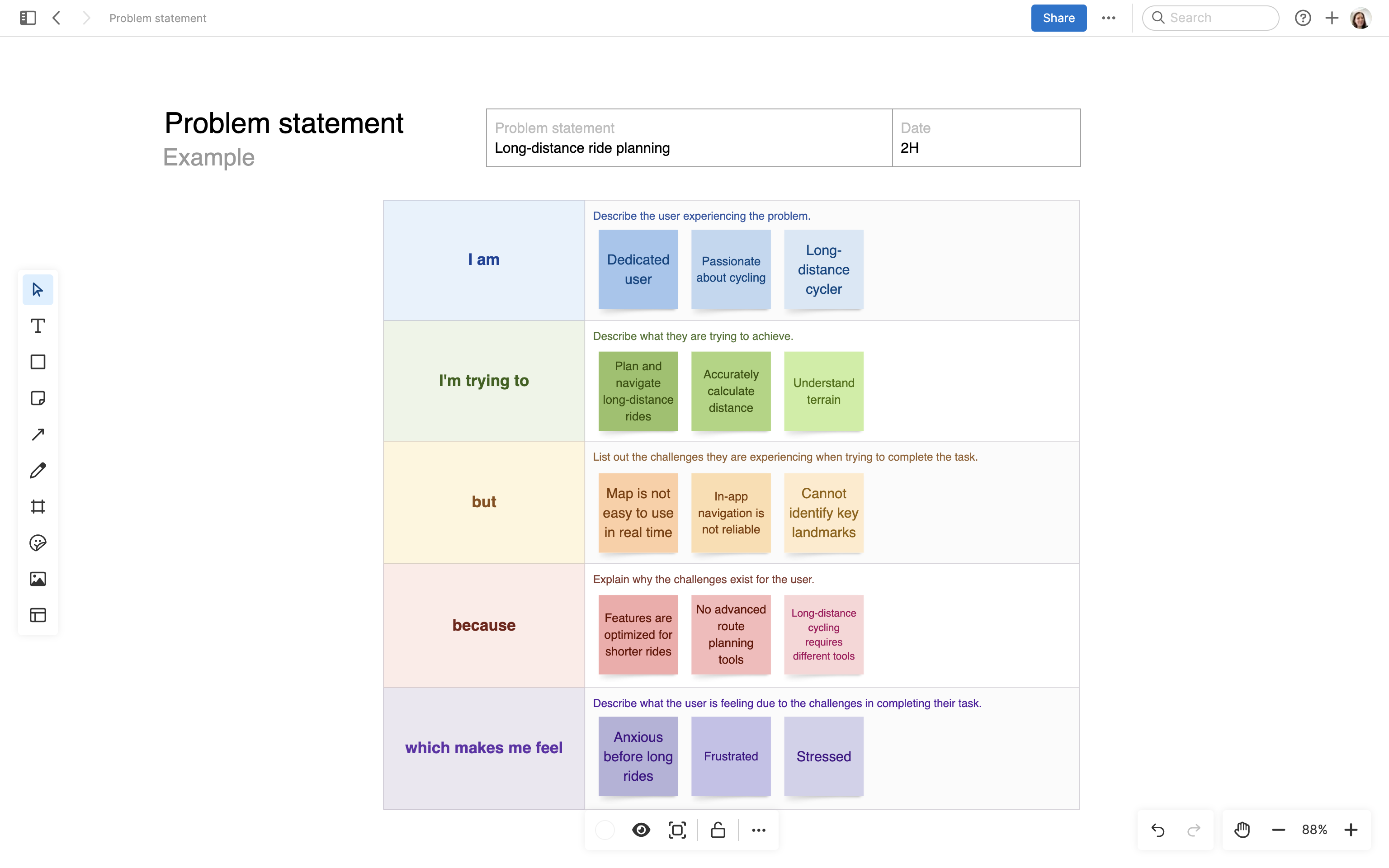
This problem statement template structures any challenge from the perspective of whoever experiences it. Five sequential prompts guide you through who is affected, what they are trying to accomplish, what is blocking them, why those obstacles exist, and how it impacts them. The framework can be customized across a variety of contexts. Add supporting data from interviews, usage analytics, or team observations to quantify impact and validate assumptions.
Included in the problem statement template
This problem statement template includes built-in capabilities such as:
A structured framework with five sequential prompts to capture user perspective
Color-coded sections to visually separate different dimensions of the problem
Inline comments so teammates can add observations, questions, or alternative viewpoints
A menu of classic whiteboard features (including shapes, sticky notes, and grids for collaborative exploration)
How to use the problem statement template
Use this template whenever you need to understand a problem before proposing solutions — during discovery, when analyzing feature requests, or when data reveals unexpected patterns in how people work. Start by gathering input from people who experience the problem: teammates, customers, partners, or anyone who sees it firsthand. Have each person fill out the template individually to start, then bring those perspectives together to see where observations align and where they conflict.
Look for patterns across what people describe. If multiple teammates mention the same bottleneck but explain it differently, this is useful information about the root cause. Cross-reference what people describe against concrete evidence (for example, usage metrics that show drop-off points, interview transcripts with specific quotes, or support ticket volumes that confirm frequency). The completed problem statement should feel grounded in real behavior rather than speculation. It should also be specific enough that someone unfamiliar with the situation could understand what is happening and why it matters.
Best practices
Focus on observable behavior when describing problems.
Use exact words: When someone describes a challenge in an interview or feedback session, capture their phrasing rather than translating it into internal terminology or business language
Separate the problem from potential fixes: If you find yourself describing interfaces, features, or specific implementation approaches, step back and focus on what needs those solutions would address
Test emotional accuracy: The final prompt about feelings should reflect language you have actually heard people use — not emotions you think they probably experience
Validate with fresh eyes: Share your completed problem statement with a colleague who was not involved in creating it to see whether the challenge is immediately clear or requires additional explanation
FAQs about the Problem statement template
What should be included in a problem statement?
Start with enough context about who is affected that someone outside your team could picture the situation. Note their role, the workflow, or circumstances that make them vulnerable to this problem. Describe what they are trying to accomplish, what prevents success, why those barriers exist, and the resulting impact. Include two to three pieces of concrete evidence (like how many people encounter this, how often it occurs, or what it costs in time or workarounds).
How detailed should a problem statement be?
Address one specific problem rather than combining multiple related issues into a single statement. Include enough detail that the challenge is clear to someone unfamiliar with your product or team, but stop short of proposing solutions or describing features. Most effective problem statements run 50-100 words with supporting data points that confirm the problem exists on a meaningful scale.
What is the difference between a problem statement, user story, and jobs-to-be-done?
Problem statements describe current challenges from the affected person's viewpoint without prescribing how to solve them. User stories specify desired functionality using a standard format geared toward development. Jobs-to-be-done frameworks focus on the progress people want to make in their work. Start with problem statements during discovery, then translate validated problems into user stories when you are ready to build.
Is this template free to use?
Yes. To use this product updates template, sign up for a free 30-day trial of Aha! Whiteboards. (You can also try this template in Aha! Roadmaps if you need a complete product management solution.) Easily customize the template to suit your needs, then share it with as many people as you want (for free) to streamline collaboration.