Problem framing template
Clearly define and understand a problem you aim to solve
Use template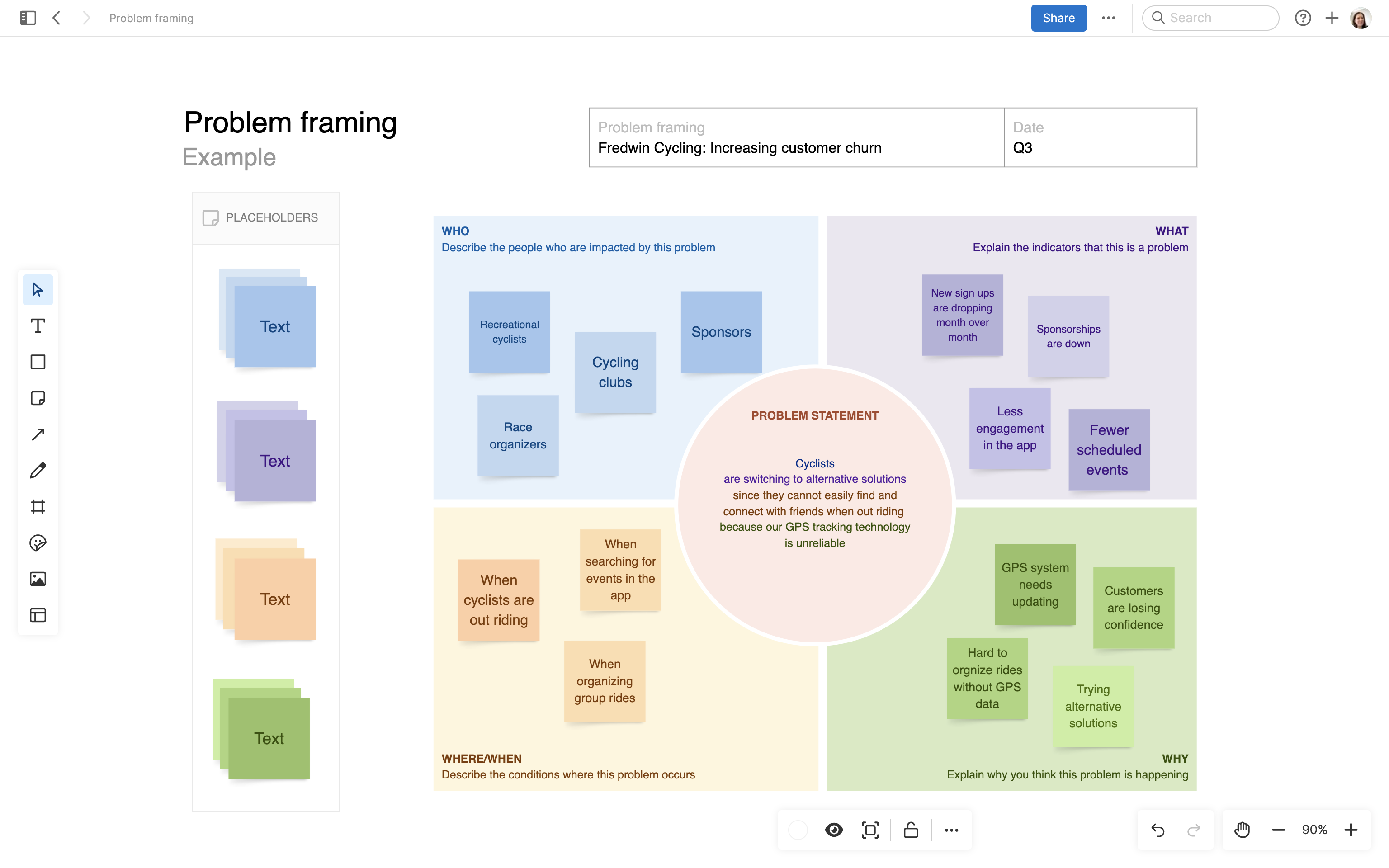
About the problem framing template
Sometimes, a problem looks obvious until three people describe it three different ways. The problem framing template helps product teams step back and examine an issue from multiple angles before deciding what to do next. You will capture who is affected, where the problem shows up, why it matters, and which factors might be contributing. Use it when kicking off new work, scoping initiatives, or getting stakeholders aligned — especially when a problem has many moving parts or the root cause is not immediately clear.
Included in the problem framing template
This problem framing template includes built-in capabilities such as:
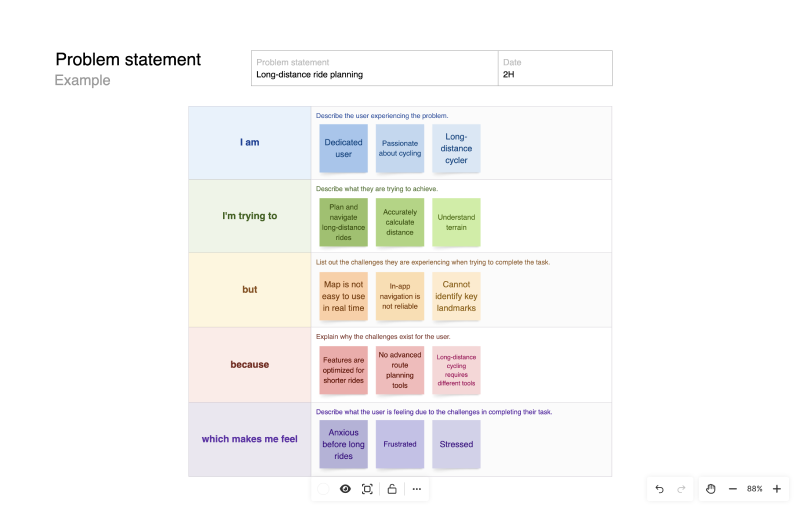
Structured fields to capture a problem statement, people impacted by the problem, causes, and impact
Frames and color-coded sticky notes to separate different dimensions (e.g., who, what, where/when, and why)
Inline comments so team members — from product, design, support, or sales — can add different perspectives
An AI assistant to help you brainstorm possible causes, summarize key themes, or draft a concise problem statement
How to use the problem framing template
Start by gathering people who see the problem from different vantage points. This includes product managers, designers, engineers, support teammates, or anyone close to customer feedback. Have each person jot down what they observe about the issue: when it shows up, who struggles with it, and what the immediate consequences are. Getting these individual perspectives on the board first helps you see where experiences overlap and where they diverge.
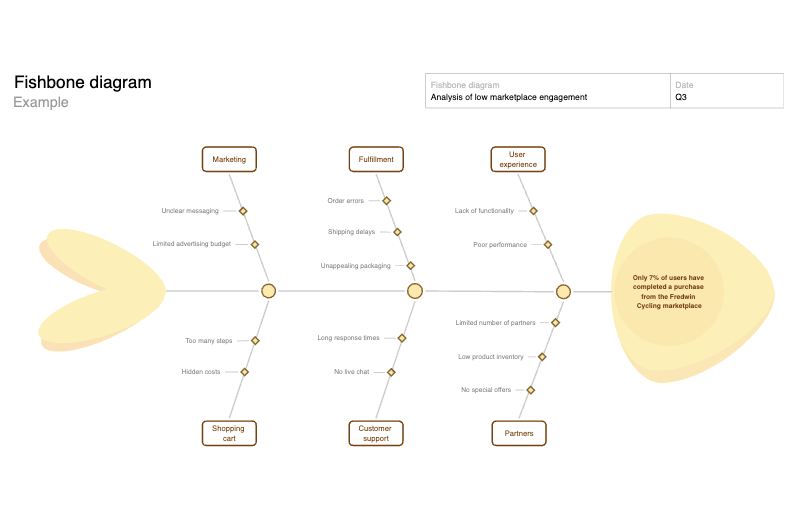
Next, work through each section of the template to make sense of what you are hearing. Describe the problem in plain terms and capture the moments where it becomes most visible — such as during onboarding, when usage spikes, or when customers try to complete a specific workflow. Use color-coded sticky notes to explore why the problem might be happening. Some causes may be technical, while others stem from policy decisions, UX friction, or unclear processes. Treat these as working hypotheses rather than conclusions.
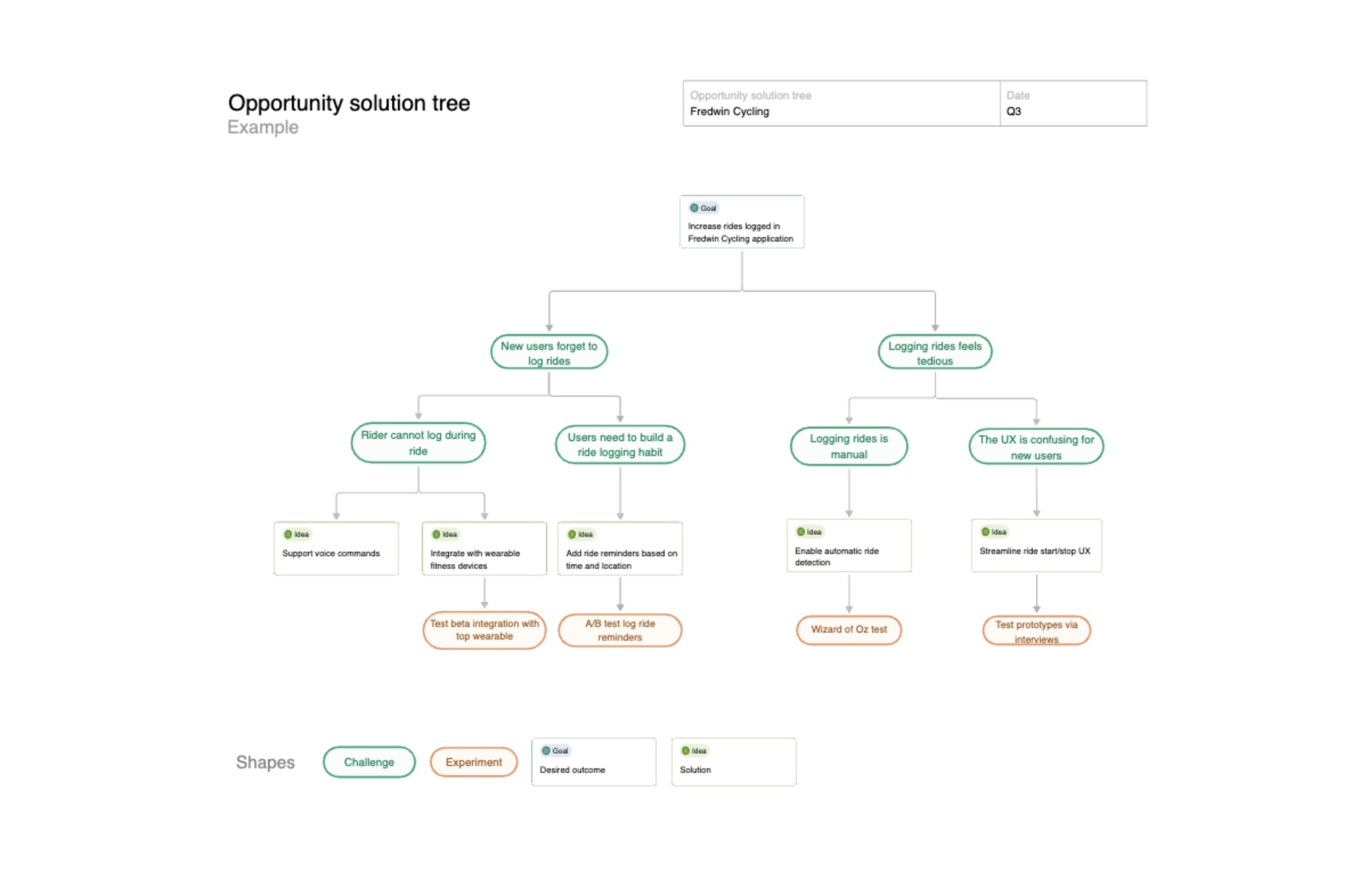
Once you have laid out possible causes and impacts, cluster related themes and talk through what feels most consequential. The visual layout makes it easier to spot patterns (for example, multiple notes pointing to one workflow, or several customer segments reporting the same frustration). End the session by agreeing on which parts of the problem to validate next. That might mean checking data, conducting customer interviews, or reviewing past decisions that shaped the current experience. The goal is not to solve everything in one sitting, but to align on what you understand so far and map out the next steps.
Best practices
Bring structure and shared understanding to messy or ambiguous problems.
Start with evidence, not hunches: Bring in customer quotes, support transcripts, usage data, or examples from recent incidents. Concrete details ground the discussion in what is actually happening rather than what the team thinks might be happening.
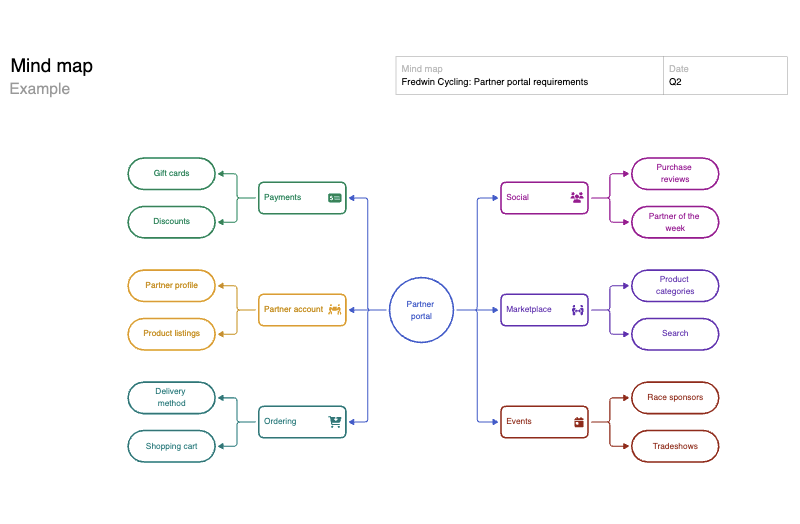
Make complexity visible: When a problem touches multiple workflows or segments, break it into parts and map each one separately. Seeing the pieces helps you identify which areas deserve more exploration and which are symptoms of a deeper cause.
Test hypotheses quickly: Use the template to define a few assumptions you can validate right away — through data checks, small experiments, or conversations with customers. Validation helps you avoid running with the most intuitive explanation instead of the correct one.
Connect insights to decisions: Do not let the framing stay on the whiteboard. Turn your insights into problem statements, decision logs, or initiatives to add to your roadmap so they actually influence your next steps.
FAQs about the Problem framing template
When should you use problem framing?
Use this template when the problem is unclear, has multiple stakeholders, or feels like it could be rooted in many causes. You want to make sure you understand exactly why a problem exists before coming up with a solution for it.
What kinds of problems can you tackle with problem framing?
Many teams use problem framing to think through customer-facing challenges like lower engagement or reduced signups. That said, this template is equally powerful for diving into internal team, organizational, or process problems (for example, when onboarding is slow, releases regularly delay, or cross-functional handoffs break down).
How do you make sure everyone participates effectively?
Invite a diverse group and give everyone a role: data lead, customer champion, skeptic, etc. Ask participants to write their own sticky notes first, then break into small groups and discuss. This helps avoid groupthink and ensures different voices are heard.
Will this template help you write a 'problem statement' too?
Absolutely. As part of framing, the template helps you surface the elements you need (who, what, where/when, and why) to write a clear, measurable problem statement — the kind you can build an initiative around or add to your roadmap.
Is this template free to use?
Yes. To use this segment profile template, sign up for a free 30-day trial of Aha! Whiteboards. (You can also try this template in Aha! Roadmaps if you need a complete product management solution.) Easily customize the template to suit your needs, then share it with as many people as you want (for free) to streamline collaboration.