Product builders all share certain traits. You are curious about problems, systematic in your thinking, and committed to deeply understanding the people who ultimately use what you build. Those traits also inform skills and best practices related to VoC activities:
You focus on problems, not solutions: Customers frame feedback as feature requests. Your job is to dig deeper and understand the underlying problem. Often, the best solution is different from what customers initially suggest.
You seek feedback at scale and depth: Breadth tells you what customers want. Depth tells you why. Cast a wide net with portals and surveys to understand broad priorities. But you also go deep with targeted research (like empathy sessions and customer interviews).
You review every piece of feedback: When customers know you're reading their feedback, they provide richer input. The product team at Aha! is committed to reviewing customer requests weekly. This level of discipline ensures nothing falls through the cracks and helps you spot patterns.
You categorize and tag systematically: Without structure, valuable insights get buried. Organize feedback by feature area, customer segment, or problem type. Then, add status labels to track progress.
You connect insights to roadmap decisions: Customer insights are directly linked to your roadmap. Integrated product management software makes this seamless. For example, when you promote a high-value idea to a roadmap feature in Aha! Roadmaps, you create traceability from customer insight to delivered feature.
You close the feedback loop: Respond to customers even when you have to say no. Explain your reasoning and share roadmap updates when appropriate. This transparency builds trust and encourages ongoing participation.
You make insights accessible across teams: Share customer feedback broadly. Help sales to understand product direction, support to see which pain points are being addressed, and give engineering deeper empathy for the problems they're solving.
You measure what matters: A VoC program that generates beautiful reports, but offers little impact is merely performative listening. Track submission volume, participation rates, time to respond, and whether you're building features that drive customer love and business outcomes.
Related:
Top
What is a voice of the customer program?
Definition: A voice of the customer program is a structured process for collecting, analyzing, and acting on customer feedback to inform product, marketing, and customer experience decisions.
Think of a VoC program as the infrastructure that turns scattered customer conversations into strategic advantage.
A VoC program transforms the listening practice we have described into a strategic process for systematically gathering, analyzing, and acting on customer feedback throughout the product development process. By collecting information from diverse sources and applying your learnings to business decisions, VoC programs help companies improve products, services, and the overall customer experience.
Before we dive into the details of what a VoC program is and how you can set up and scale your own, let's clear up some misconceptions.
What a voice of the customer program is not
A survey tool: Tools are important, but a VoC program is a practice that requires intention. You can't run one with a suite of tools and no repeatable process.
A project with an end date: This is ongoing infrastructure for customer research understanding, not a one-time customer feedback session.
About building everything customers request: A VoC program helps you understand customer problems, not implement their proposed solutions. Sometimes the answer is "no." The program gives you the context to make that decision confidently and explain it clearly.
Only for product teams: Treating this as "a product thing" wastes most of the value. VoC insights should inform marketing positioning, sales tactics, support documentation, pricing strategy, and customer success playbooks.
4 essential components
Now that you know what a VoC program is not, let's look at what actually makes one work. Every effective program has four essential components that work together to turn customer conversations into strategic decisions:
1. Systematic collection across channels
A VoC program establishes consistent methods for gathering feedback. The program defines both how feedback flows into your organization and who is responsible for capturing it.
This includes both:
Passive collection: Ideas portals, support tickets, reviews
Active outreach: Scheduled interviews, surveys, research sessions
2. Structured analysis and synthesis
Raw feedback is noise. A VoC program includes a repeatable process for turning that noise into signal. This is where you move from "some customers mentioned this" to "here's a trend we need to address."
Analysis and synthesis include:
3. Clear connection to decision-making
The defining characteristic of a VoC program is that customer insights actually influence decisions. There's a traceable line from "customers told us X" to "we're doing Y."
4. Closed-loop communication
Programs include mechanisms for telling customers what happened with their input. Status updates, roadmap transparency, and responses to feedback requests are built into the process — not treated as optional or a bonus when someone has time.
Who runs a voice of the customer program?
Someone has to wake up every day thinking about customer insights. Not as one of 15 to-dos, but as the most important task of the day.
The structure and ownership of a VoC program vary by organization size and maturity:
Organization | Typical ownership | VoC program |
Early-stage startups | Founders | |
Growing companies | Product manager or product marketing manager | |
Mid-size companies | Product operations or customer insights role | |
Enterprise companies | VoC team or center of excellence | |
Top
You want to avoid the trap of buying a bunch of disparate tools and losing your VoC efforts to software sprawl. Start with what you will actually use, then expand as your VoC program matures. The following table shows what to look for when evaluating VoC software solutions:
Function | What it does | When you need it |
Ideas management | | Always |
Research and discovery | Coordinate interviews Analyze transcripts Synthesize insights
| For regular customer research and spotting patterns |
Survey and polling | | To measure sentiment at scale |
In-app feedback | | To understand specific workflow pain points |
Product analytics | Track behavioral data Usage patterns Feature adoption
| To see what customers do vs. what they say |
Support and CRM | Surface common issues Track customer health Identify trends
| To mine existing data before asking more questions |
Recommended approach
The best approach often involves leveraging purpose-built tools to create a complete picture. Comprehensive product management software like Aha! can dramatically improve your ability to gather, analyze, and act on customer feedback.
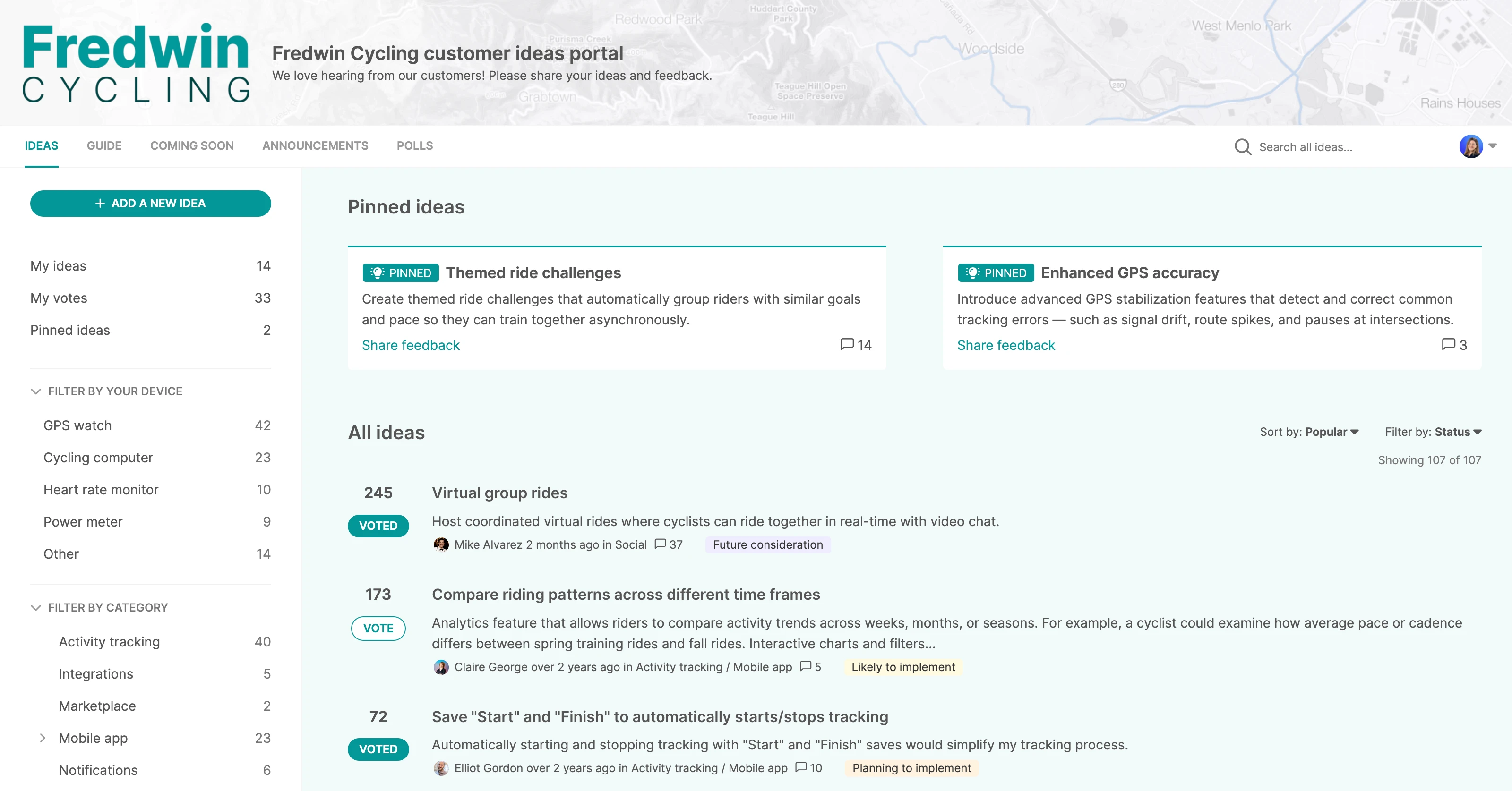
Customer feedback and voting: Aha! Ideas provides a central place for customers to submit ideas, vote on requests, and engage with your team. It includes features for organizing feedback, analyzing trends, and most importantly, closing the loop with status updates.
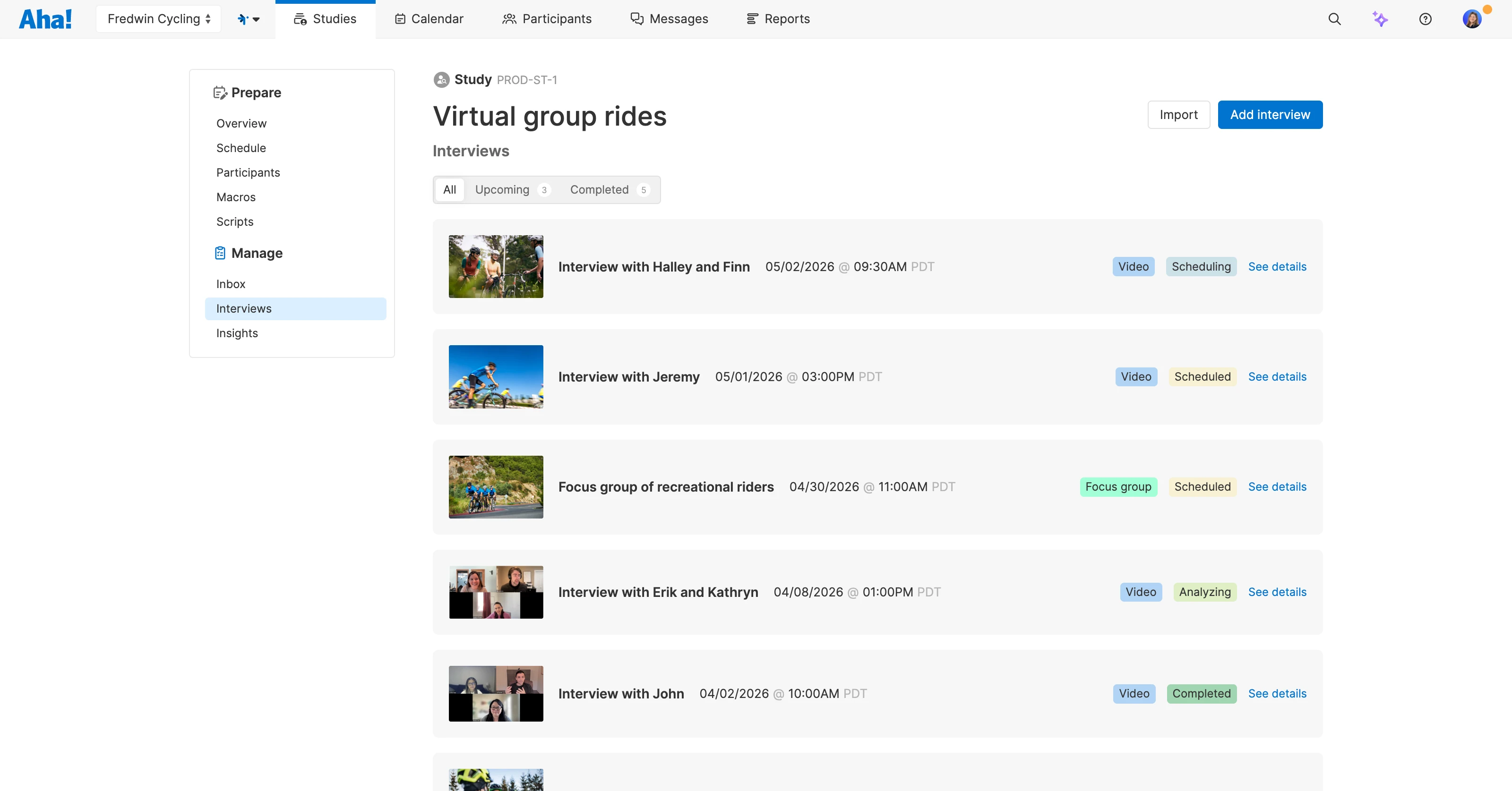
Research and discovery: Aha! Discovery helps product teams coordinate customer research, analyze interview transcripts, and surface insights during planning. These tools make it easier to move from scattered research notes to actionable strategic decisions.
Centralizing insights: Aha! Knowledge helps teams document and share customer insights, research findings, and product decisions in one place. This ensures VoC insights are accessible across the organization and don't get lost in individual notebooks or scattered documents.
Connecting insights to delivery: Aha! Roadmaps lets you connect customer feedback directly to features on your roadmap, creating traceability from customer need to shipped solution.
Related:
Top
Voice of the customer in action: A practical example
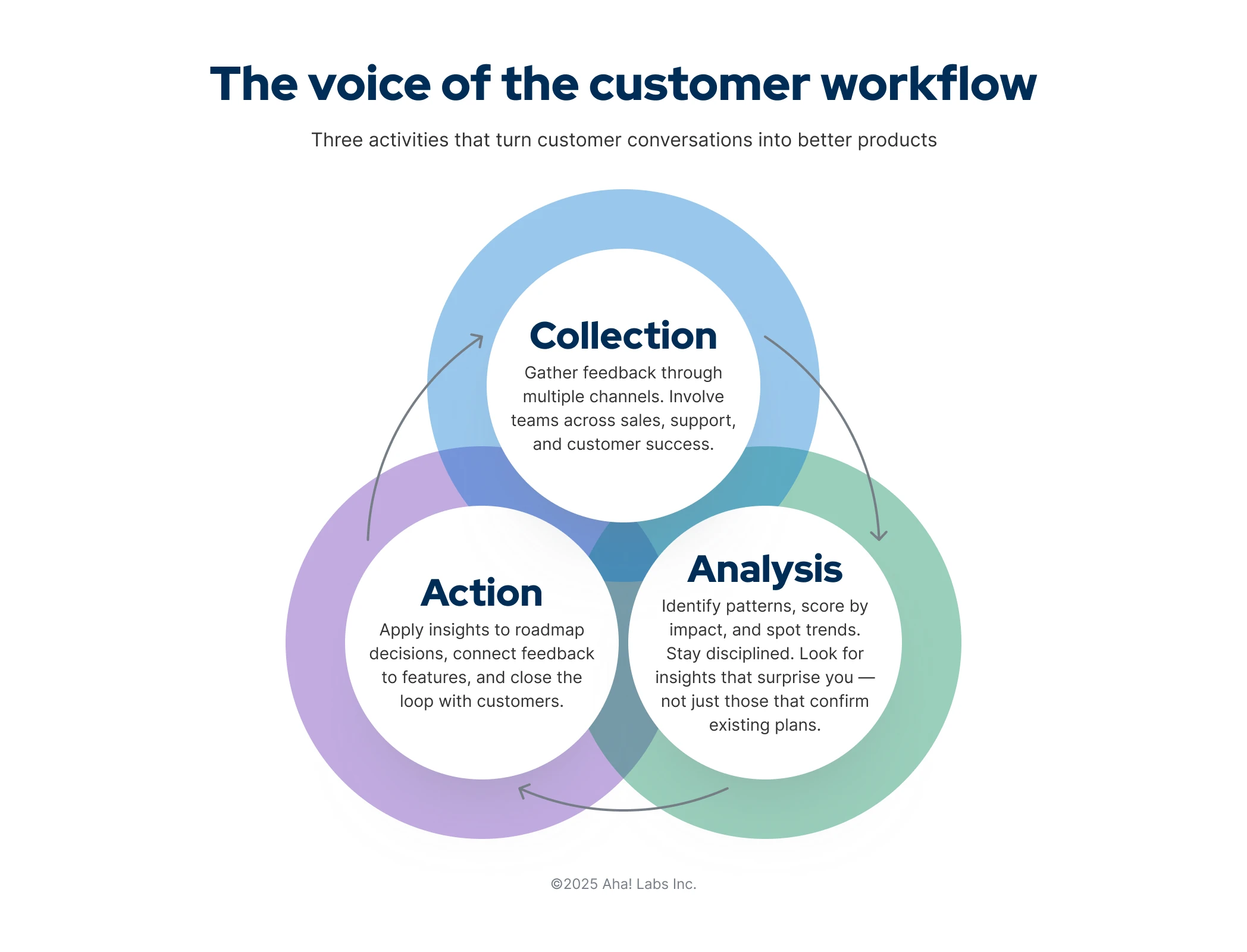
Every successful VoC program centers on three core activities:
Collection: Gathering feedback through multiple channels
Analysis: Identifying patterns and trends
Action: Applying insights to decisions
Let's look at how this works in practice. Consider how Fredwin Cycling, a fictional fitness app company, used its VoC program to avoid building the wrong feature:
The situation
Fredwin Cycling's ideas portal showed strong demand for "virtual group rides" — the ability to ride with friends in real-time with video chat. Over several months, 89 users submitted ideas about group rides, and the requests accumulated more than 350 votes in the ideas portal. The feature seemed like an obvious priority, especially since a competitor recently launched similar capabilities.