How to become a product manager
Last updated: February 2025
What did you want to be when you grew up? Chances are it was not a product manager. Despite the rising popularity of product management in the last decade, many of us never considered it as a career option. You might have only discovered it after starting your first job and gaining real-world business experience. But whether you learned about product management early or later in your career, you are here because the work is engaging and rewarding.
Product managers build solutions that solve customer problems and drive business results. If you are new to product management or transitioning from another role, you likely learned there is a steep learning curve. Books and online courses help, but success requires firsthand experience in building and delivering products. So how do you develop the skills needed to land your first product manager role?
Create. Ideate. Roadmap. Build. Do it all with Aha! — free for 30 days.
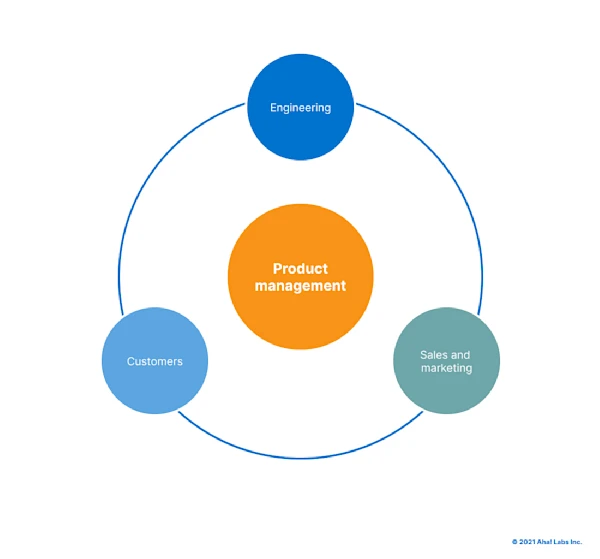
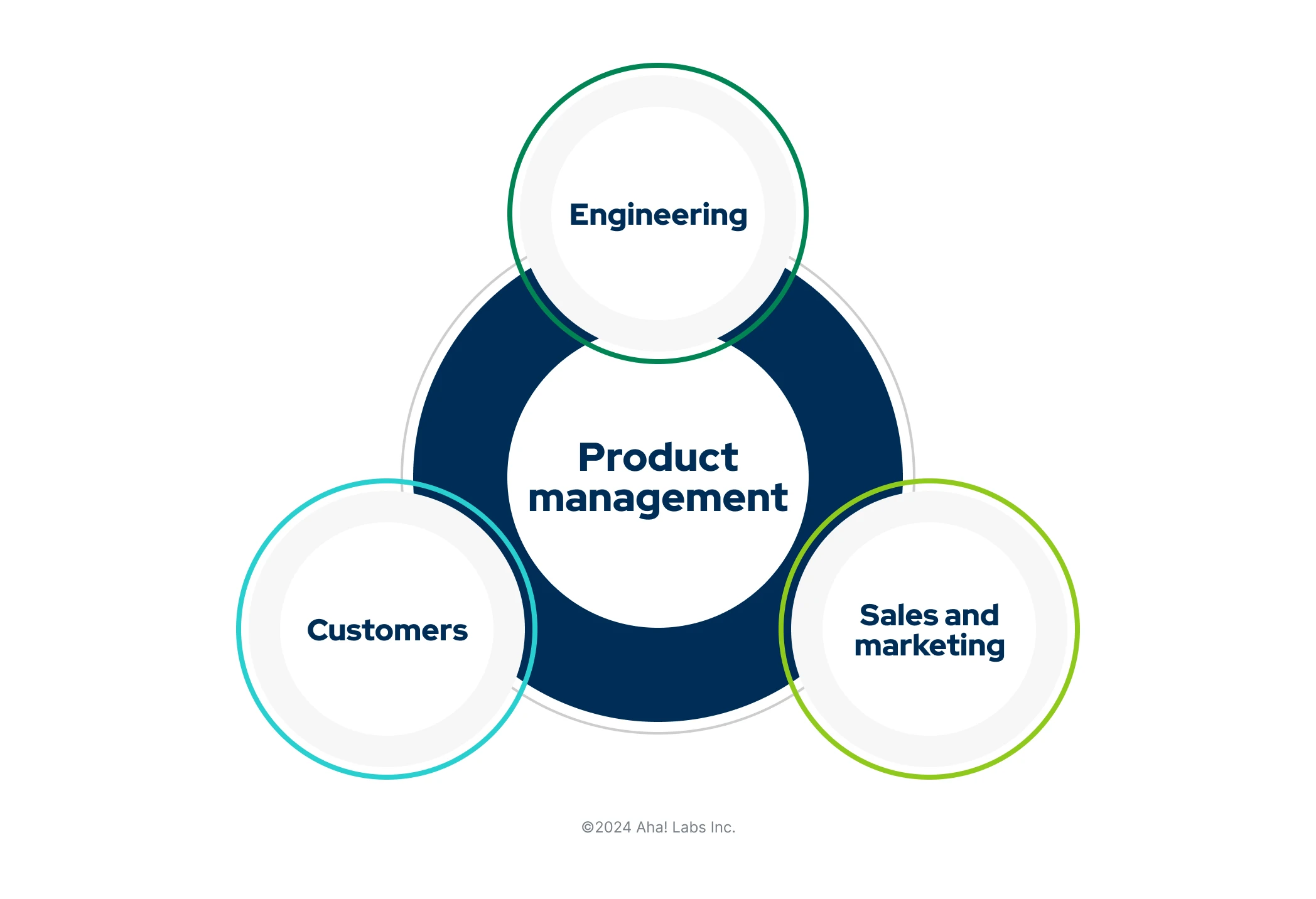
Product managers work at the intersection of engineering, sales and marketing, and customers to deliver products that create real value.
In this guide, we will walk you through the key skills, courses, and certifications to help you gain confidence and succeed in product management. Keep on reading or jump ahead to any section to learn more:
What skills do product managers need?
Product managers guide the entire product development process and help bring product plans to fruition. You lead the cross-functional product team and collaborate closely with groups across the organization, sharing your deep understanding of your customers and market.
Doing this work well demands a blend of technical, creative, and business skills spanning technology, design, and marketing fundamentals. Your exact responsibilities will vary depending on the organization and team you belong to, but here are some hard and soft skills that are useful for all product managers:
Analytics
Communication
Creativity
Leadership
Exceptional product managers have an innate sense of curiosity — you are driven by a constant desire to keep learning and growing. This helps you deepen your understanding of what customers need and come up with innovative ways to solve their problems. If this resonates with you, being a product manager might align well with your personality.
Succeeding in product management also requires resilience and persistence. You will face competing priorities, shifting timelines, and varied stakeholder opinions. Staying focused on delivering value while maintaining a positive, learning-oriented mindset is crucial.
You will also need to be comfortable using product management software and tools. These help you set product strategy, gather customer feedback, create wireframes and mockups, manage releases, collaborate with the team, and more. Because each company uses its own mix of tools, you typically learn how to use them on the job.
Keep in mind that on-the-job training makes up a large part of learning to be a product manager. As you gain new experiences within product teams at different organizations, you will learn and grow your skills over time. It can feel overwhelming at first, but every experience will help build your confidence. Product management is a journey — no one starts as an expert.
Related:
What is a product manager's educational background?
Product managers come from a variety of backgrounds. That means there is no single path, clearly defined track, or specific qualifications you need to enter the field.
If you have not yet started your career, you might be wondering if you can study product management in school and then look for a position in product. While product management is not yet a widely available undergraduate or graduate degree, the field is becoming more formalized. Some universities now offer certificates, minors, or concentrations in product management as part of business or technology programs. These programs can give you a strong foundation in key areas (such as product development methodologies, product roadmaps, and product analytics).
There are also a variety of boot camps and free online courses that focus on product management. These can be great for building specific skills, whether you are just getting started or are looking to deepen your knowledge in a particular area.
For those transitioning into product management later in their careers, earning an MBA can be a valuable option. An MBA provides broad exposure to business, statistics, and marketing — all of which are useful when working in cross-functional product teams.
Whatever educational path you choose, curiosity and a willingness to keep learning will serve you well. As the field is constantly evolving, being open to new ideas and continuous growth is key to long-term success.
Product management certifications
If you are interested in obtaining a product management certification, there are a few reputable options. For example, the Association of International Product Marketing & Management offers a product manager certification. (The organization also provides additional certificate programs in innovation, brand management, product marketing, and digital product management.)
You can also become certified in product management or Aha! Roadmaps through Aha! Academy, which offers interactive and immersive courses taught by product experts. The curriculum covers topics such as how to set product strategy, develop customer empathy, prioritize features, create visual roadmaps, and more.
Another great option is the Aha! Product Management Professional Certificate through LinkedIn Learning. This pathway offers a structured online learning experience to help you build core product management skills and earn a professional certificate upon completion.
Explore a professional certificate through Aha! — get started with LinkedIn Learning.
Before enrolling in any course or working toward a certification, do your research. Look for courses taught by experienced product experts who have worked at different types of companies and built real products. This ensures you learn from instructors with practical, meaningful insights.
Related:
How to start a career in product management
Product managers can come from almost any business or technical background. And the product manager role can mean different things depending on the organization, from leading technical product development to driving go-to-market strategy. There are also different types of product managers, including platform PMs, growth PMs, and technical PMs. (We have a guide that covers 15 different types of PMs, and counting!). But amidst the variability, one thing is consistent: Every product manager needs a deep understanding of their customers, products, and the business.
Most product managers do not begin their careers in a dedicated PM role. Many transition from adjacent positions where they gain relevant experience, such as software development, marketing, or business analytics. Just take a look at our Product All-Star series. You will find that product leaders come from all kinds of backgrounds — from technical roles to marketing, and even more unique fields like eco-tourism.
Common roles that transition into product management
If you are currently in a different role and want to switch to product management, you are not alone. Many people take this route. Adjacent roles that often lead to a career in product management include:
Business analyst
Consultant
Customer success
Product marketing
Product operations manager
Project or program manager
Software engineer
UX designer
For example, customer success professionals are often deeply familiar with the problems customers are facing and can offer valuable insights on how to improve the product experience. Business analysts and consultants bring expertise in analyzing data and identifying opportunities. And UX designers understand how users interact with products and can help shape a compelling user experience.
How to prepare for a role in product management
If you are interested in becoming a PM, start by gaining as much exposure as possible to product-related work in your current role. Here are a few practical steps:
Learn about your company's product strategy: Attend product team meetings (if possible), ask to shadow a product manager, and read through your company's product documentation to understand decision-making processes and the priorities guiding the team.
Get involved in cross-functional projects: Product managers work across many teams. Look for opportunities to participate in projects that require collaboration with product, engineering, marketing, and sales.
Build relationships with PMs: Express your interest in product management and ask if PMs are willing to share their experiences or offer guidance. Finding a mentor can help you learn faster and gain valuable insights.
Develop key skills: Product management requires strong communication, analytical thinking, and leadership skills. Look for ways to improve in these areas by taking on challenging projects, leading meetings, or presenting your work to stakeholders.
Strengthen your product knowledge: Stay up to date on industry trends and best practices. Read product management blogs, listen to podcasts, and take relevant courses.
Related:
For those just starting their career
If you are recently out of school and beginning your career, remember that most product manager positions are not entry-level. Instead, you might look for roles such as associate product manager or product analyst, or start in an adjacent role like product marketing or customer support. These positions will help you gain foundational experience, learn about how product teams operate, and build the skills you need to eventually move into a product management role.
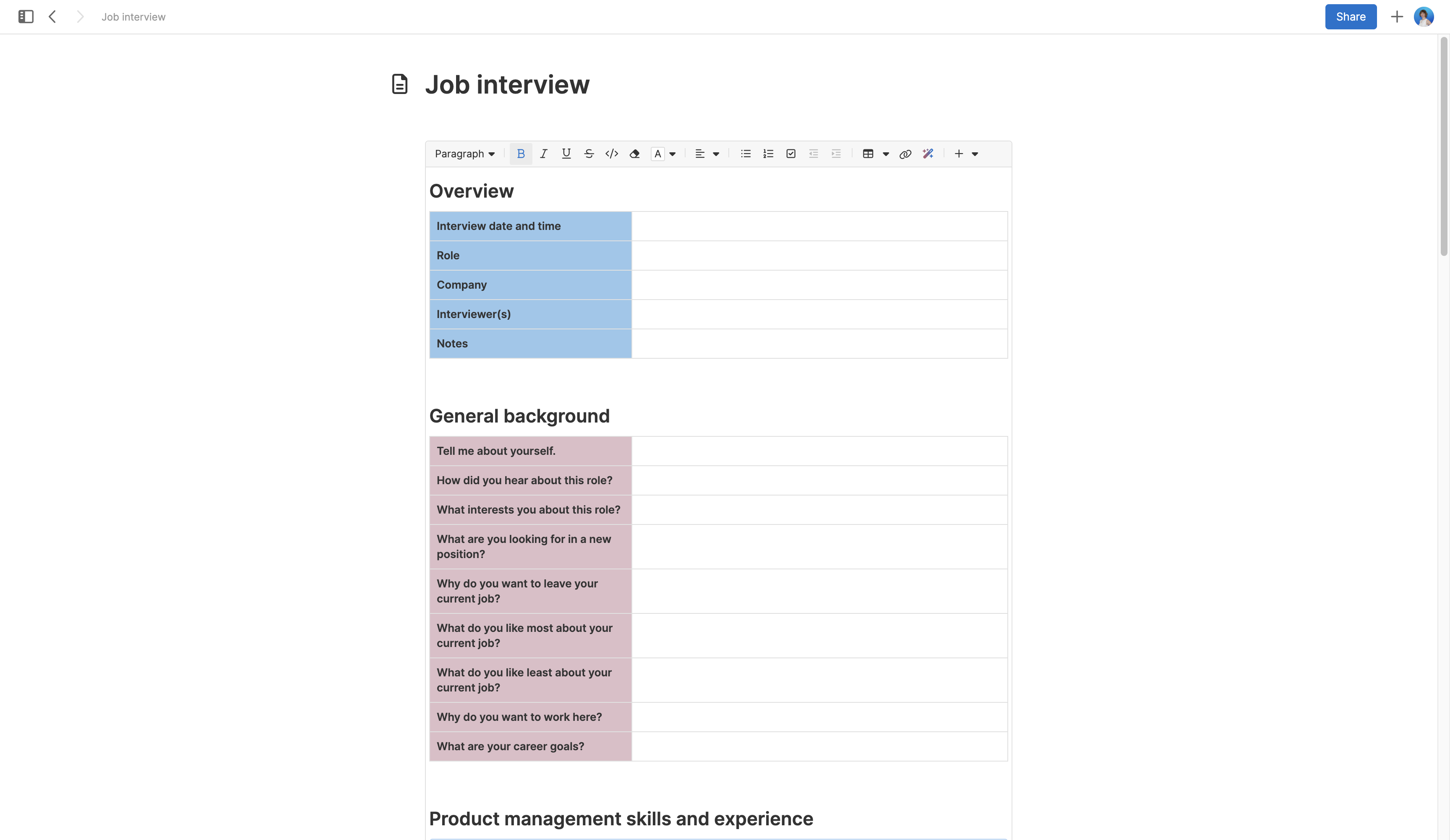
Once you are ready to apply for PM roles, focus on sharpening your interview skills. Review our job interview template to read up on some common (and some unexpected) questions product managers get during interviews — plus some key questions for you to ask as well.
Related: